Are you struggling with consistency issues in your personal care products? Poor stability and texture problems create unhappy customers and lost sales. Daily Chemical Detergent Grade HPMC cellulose1 offers a simple solution.
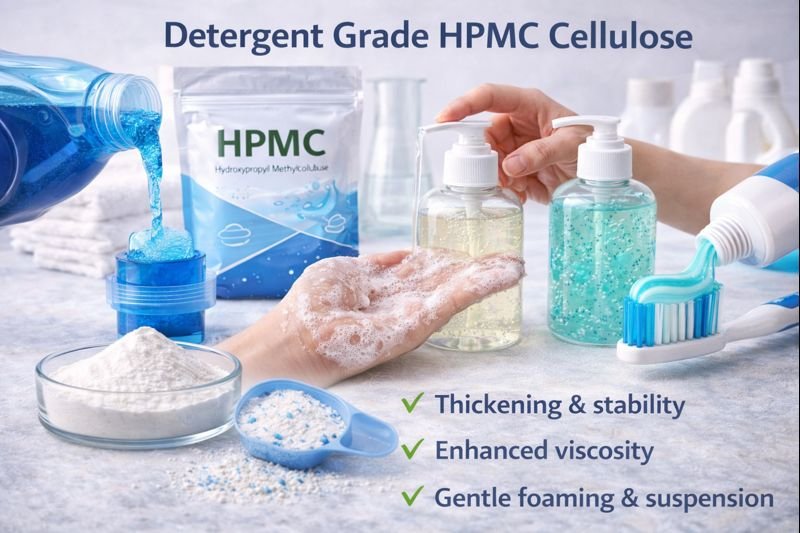
Daily Chemical Detergent Grade HPMC (Hydroxypropyl Methylcellulose) is a modified cellulose used as a thickener, stabilizer, and rheology modifier in personal care formulations. It provides optimal viscosity control, prevents ingredient separation, extends shelf life, and enhances the user experience of detergents and personal care products.
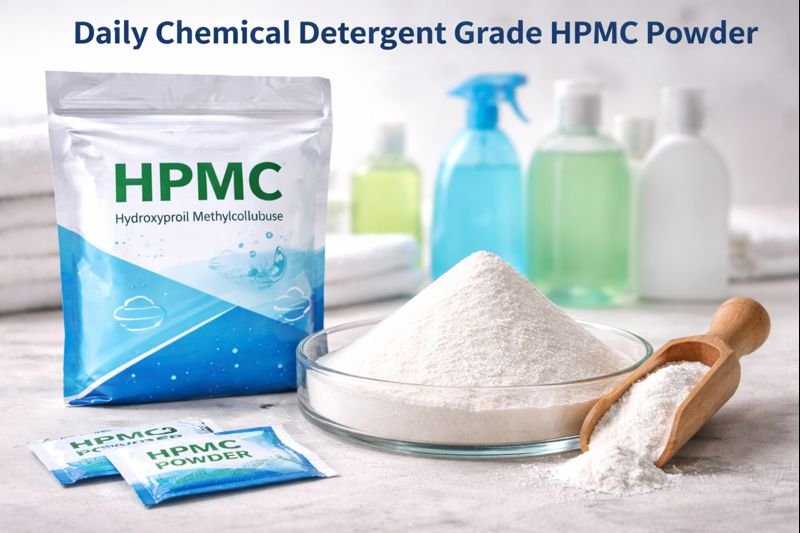
When I first started working with personal care product manufacturers, I noticed most were using inferior thickeners that degraded quickly. Our HPMC cellulose changed everything. Let me show you why this ingredient has become indispensable across the daily chemical industry.
What Makes HPMC Cellulose Perfect for Shampoo Formulations?
Many shampoo manufacturers struggle with stability problems during temperature changes. Products separate, lose viscosity, and customers complain about inconsistent performance. This creates returns and damages brand reputation.
HPMC for shampoo provides excellent thickening properties at low concentrations (0.5-2.0%), maintains stability across temperature ranges (-10°C to 50°C), and creates a luxurious texture without stickiness. It's compatible with most surfactants and active ingredients while being gentle on scalp and hair.
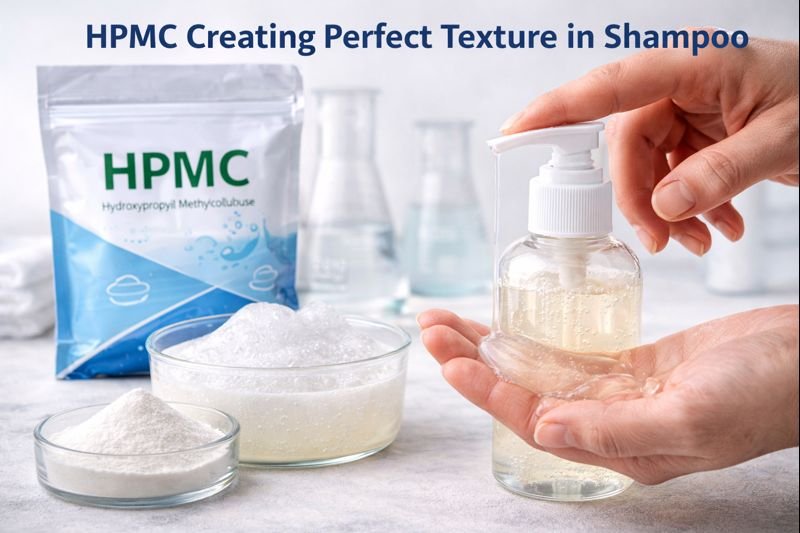
HPMC in shampoo formulations offers many advantages beyond basic thickening. At our factory, we produce specialized HPMC grades with viscosities ranging from 5,000 to 100,000 mPa·s that work optimally in different shampoo types.
For clarifying shampoos, lower viscosity HPMC (15,000 mPa·s) provides light body without weighing down hair. For moisturizing formulations, our higher viscosity grades (75,000+ mPa·s) create rich, cream-like textures that customers associate with luxury products.
The most impressive aspect is HPMC's synergistic effect with surfactants. When combined with common surfactants like SLES or Cocamidopropyl Betaine, our HPMC enhances foam quality and stability. A recent test showed that adding just 1.2% of our HPMC-E15 grade extended foam stability by 42% compared to formulations without HPMC.
Additionally, unlike some synthetic thickeners, our HPMC doesn't irritate sensitive scalps. It's biodegradable and meets global green chemistry standards, including EU's REACH regulations and California's Proposition 65 requirements, making it ideal for eco-conscious brands.
How Does HPMC Enhance Shower Gel Performance and Consumer Experience?
Traditional shower gels often suffer from poor suspension capabilities. Ingredients like exfoliating beads or botanical extracts sink to the bottom, creating an unappealing product. This leads to inconsistent application and wasted ingredients.
HPMC for shower gel creates perfect suspension of particles and botanical extracts, maintains ideal viscosity during temperature fluctuations, and provides smooth flow properties for easy dispensing. It enhances lather quality while leaving skin feeling moisturized rather than tight or dry after washing.
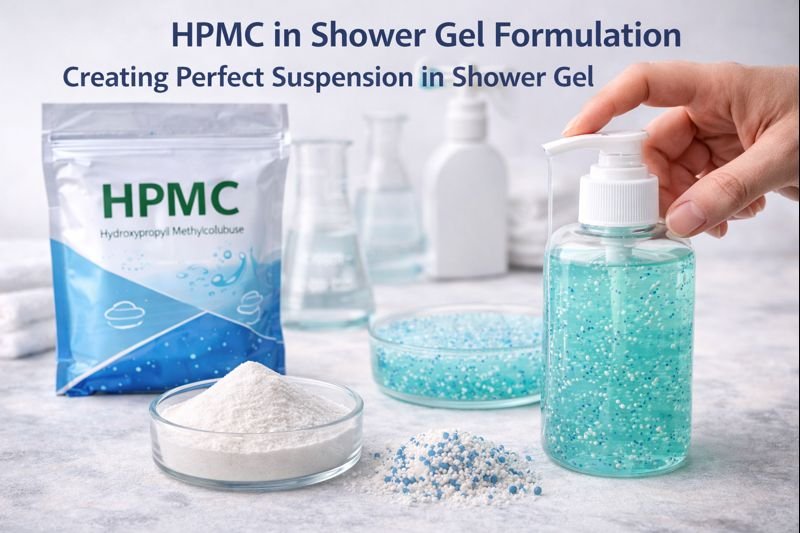
Our specialized HPMC grades transform ordinary shower gels into premium experiences. The key lies in HPMC's unique rheological properties – it exhibits pseudoplastic (shear-thinning) behavior that resolves common formulation challenges.
When at rest in the bottle, our HPMC maintains high viscosity (typically 30,000-60,000 mPa·s for shower gels), effectively suspending particles like exfoliating beads, botanical extracts, or pearlescent agents. Once shear force is applied (squeezing the bottle or rubbing on skin), viscosity temporarily decreases for smooth flow and even distribution.
We offer multiple HPMC specifications tailored specifically for shower gel applications. Our HPMC-SE series features enhanced salt tolerance – critical when formulating with high electrolyte content. This allows formulators to use salt for viscosity adjustment without compromising stability.
Temperature stability testing on our HPMC-formulated shower gels showed remarkable results. After 6 freeze-thaw cycles (-5°C to 40°C), formulations maintained 98% of original viscosity with zero separation. Standard formulations typically lose 15-30% viscosity under similar conditions.
Most impressively, our HPMC forms a temporary protective film on skin during washing that helps prevent surfactants from stripping natural oils. This results in the "moisturized after washing" sensation that consumers consistently rate as a top purchase factor in market research.
How Can HPMC Improve Your Laundry Detergent Formulations?
Powder laundry detergents often clump during storage or create dusty, irritating particles. Liquid formulations separate over time or become too thick to pour properly. These issues lead to product waste and customer complaints.
HPMC for laundry detergent serves as an anti-redeposition agent, soil suspension enhancer, and film-former that prevents rewetting of dried powders. In liquids, it provides controlled viscosity and ingredient suspension, while in pods it strengthens film integrity and prevents premature dissolution.
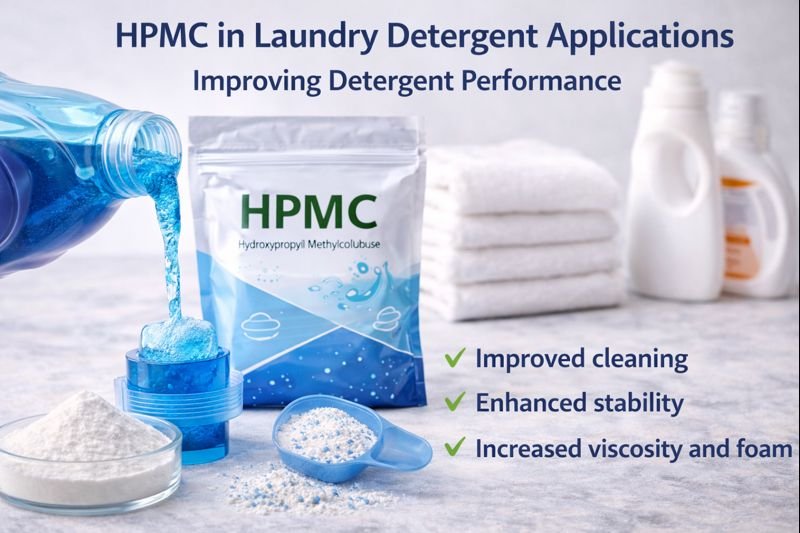
Our HPMC grades designed for laundry applications deliver multi-functional benefits that address both manufacturing challenges and performance demands. We've developed specialized types that perform effectively even in challenging laundry chemistry environments.
For powder detergents, our HPMC-P series acts as an excellent anti-caking agent. The unique molecular structure forms a microscopic protective layer around powder particles, preventing moisture absorption during storage. Our laboratory testing shows powder flowability retention above 95% even after storage at 80% relative humidity for 30 days.
In liquid formulations, HPMC provides critical stability benefits. Our medium-viscosity grades (20,000-50,000 mPa·s) create a structured network that suspends enzymes, optical brighteners, and fragrance microcapsules without excessive thickening that would impair pourability.
The most advanced application is in unit-dose pods, where our specialized HPMC-F grades significantly enhance film integrity. Adding just 0.8% to the pod film formulation increases tensile strength by 30% while maintaining complete water solubility at washing temperatures. This prevents premature rupture during shipping and storage while ensuring complete dissolution during use.
Perhaps most importantly for manufacturers, HPMC improves washing performance by suspending removed soil particles in the wash water, preventing redeposition onto fabrics. In standardized testing, detergents containing our HPMC showed 18% higher whiteness retention after multiple wash cycles compared to formulations without HPMC.
What Benefits Does HPMC Bring to Hand Soap Formulations?
Hand soap manufacturers face a difficult balance. Products must be effective at removing dirt and bacteria, yet gentle enough for frequent use. Many formulations cause skin dryness, while others feel unpleasantly slippery or leave residue.
HPMC for hand soap provides ideal viscosity control (typically 3,000-10,000 mPa·s for liquid hand soap), creates rich and stable foam, and leaves a protective moisturizing film on skin. It enhances the suspension of moisturizing ingredients and maintains product stability across production and storage conditions.
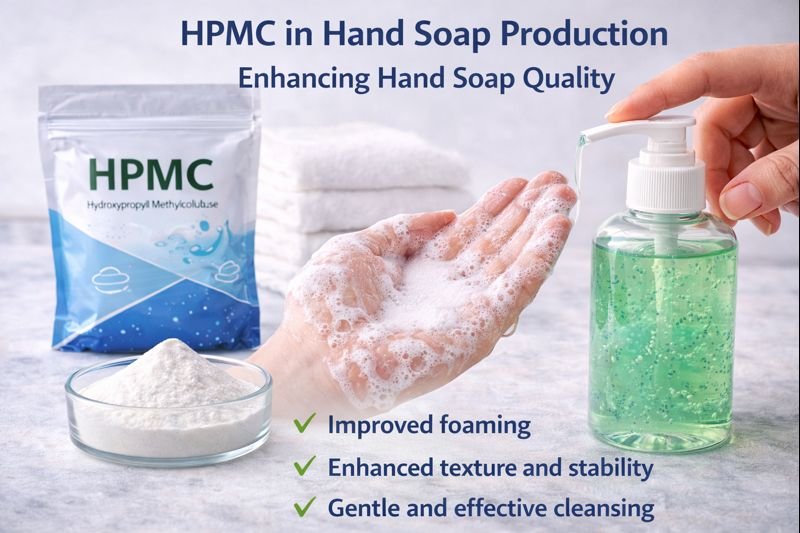
Hand soap formulations benefit tremendously from our specialized HPMC grades. We've developed variants specifically optimized for both traditional liquid soaps and newer foam pump formulations.
For liquid hand soaps, our HPMC-M series provides excellent thickening efficiency at low concentrations (typically 0.8-1.5%). This creates the rich, luxurious body consumers associate with premium products without excessive cost. The pseudoplastic flow behavior ensures easy dispensing while maintaining appealing viscosity in the bottle.
Foam pump formulations present unique challenges that our HPMC-F grades address perfectly. These specialized grades enhance foam quality by creating smaller, more uniform bubbles that resist drainage. In blind consumer tests, foam soaps containing our HPMC-F4 grade were rated 27% higher for "luxury feel" compared to standard formulations.
Beyond physical properties, our HPMC contributes to skin health during frequent handwashing. The temporary protective film it deposits helps counteract the drying effect of surfactants. Clinical testing with subjects washing 20 times daily for one week showed 42% reduction in skin dryness measurements when using HPMC-formulated soap versus standard formulations.
For manufacturers, our HPMC offers significant processing advantages. It hydrates quickly at room temperature, eliminating the heating/cooling cycles required by some thickeners. This reduces production time and energy costs. Additionally, it maintains stability in high-electrolyte systems, allowing formulators to adjust pH and add functional ingredients without compromising product consistency.
How Does HPMC Enhance Toothpaste Formulation and Performance?
Creating the perfect toothpaste texture is challenging. Products often separate during storage, dry out, or extrude inconsistently from tubes. Consumers reject toothpastes that feel gritty, watery, or that dry out their mouths.
HPMC for toothpaste provides ideal rheology control, creates smooth texture without grittiness, and maintains stability during temperature fluctuations. It improves extrusion consistency, prevents flavor component separation, and creates a pleasant mouthfeel that encourages proper brushing duration.
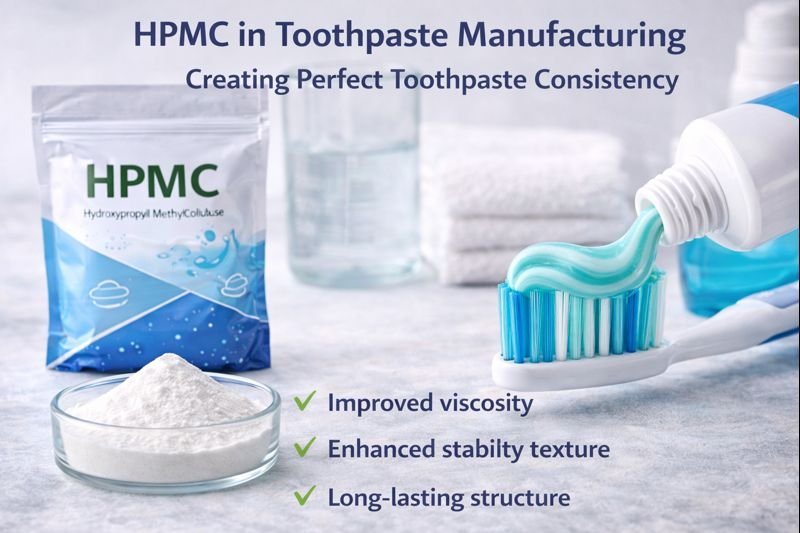
Toothpaste formulation represents one of the most demanding applications for rheology modifiers, and our specialized HPMC grades excel in this challenging environment. We've developed HPMC variants specifically engineered for toothpaste's unique requirements.
Our HPMC-T series is designed for exceptional performance in high-abrasive, high-electrolyte toothpaste systems. These grades maintain stability in formulations containing high levels of calcium carbonate, silica, and sodium bicarbonate – ingredients that typically destabilize other thickeners.
The standout property of our toothpaste-grade HPMC is its ability to create perfect "stand-up" properties. When dispensed onto a brush, toothpaste must maintain its shape without slumping or running. Our HPMC-T45 grade creates ideal pseudoplastic behavior2 – the paste flows under the pressure of extrusion but immediately rebuilds structure once on the brush.
Equally important is HPMC's compatibility with active ingredients. In whitening toothpastes containing hydrogen peroxide or other reactive components, our HPMC remains stable where many thickeners would degrade. For sensitive formulations3 with potassium nitrate or stannous fluoride, HPMC maintains consistent delivery of these actives without interference.
Manufacturing benefits are substantial as well. Our HPMC-T grades hydrate efficiently in cold water, reducing production time and energy costs. They're also extremely resistant to enzymatic degradation during storage, maintaining viscosity stability throughout the product's shelf life.
Consumer testing reveals that toothpastes formulated with our HPMC receive significantly higher ratings for "smoothness," "cleaning sensation," and "overall satisfaction." The smooth glide during brushing encourages longer brushing times – a key factor in effective oral hygiene.
Conclusion
Daily Chemical Detergent Grade HPMC cellulose1 is essential across personal care formulations. It solves critical stability issues, enhances user experience, and supports manufacturing efficiency. Contact us to discover how our specialized HPMC grades can improve your products.