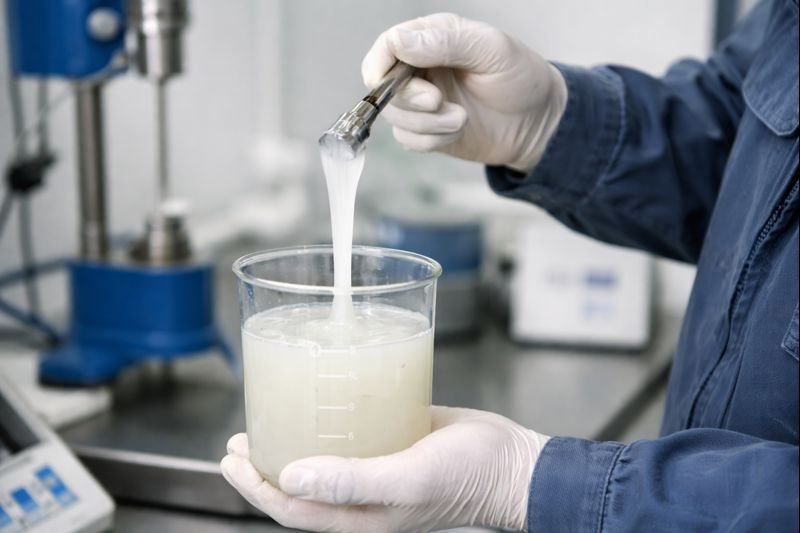
Are you overpaying for unnecessarily high-viscosity HPMC? Many contractors struggle with exterior wall putty that's either too runny or too thick, wasting both money and labor on formulations that crack after drying.
The ideal HPMC viscosity1 for exterior wall putty2 typically falls around 150,000 mPa·s, which provides the optimal balance between proper sag resistance and workability. Higher viscosity doesn't always mean better performance, as excessive thickness can lead to application difficulties and increased internal stress after drying.
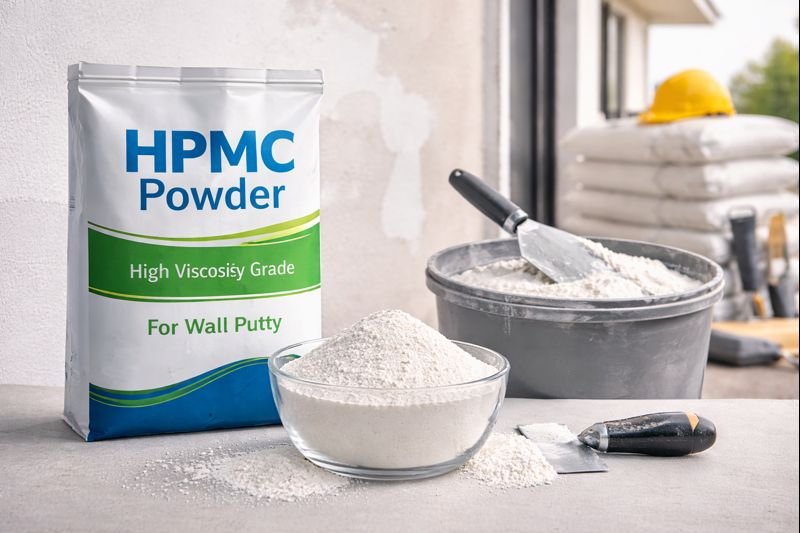
After 15 years of supplying HPMC to major construction projects across Saudi Arabia and the UAE, I've noticed a concerning trend: contractors blindly chasing higher viscosity numbers while overlooking other critical properties. Let me share what really matters for your exterior wall putty performance.
What is the Viscosity of Wall Putty?
Pain point: Contractors often misunderstand wall putty viscosity, leading to application headaches and finished surfaces that don't meet expectations.
Wall putty viscosity typically ranges between 80,000-250,000 mPa·s, depending on its specific application. For exterior wall putties, the viscosity directly affects sag resistance, workability, and the putty's ability to adhere to vertical surfaces without sliding during application.
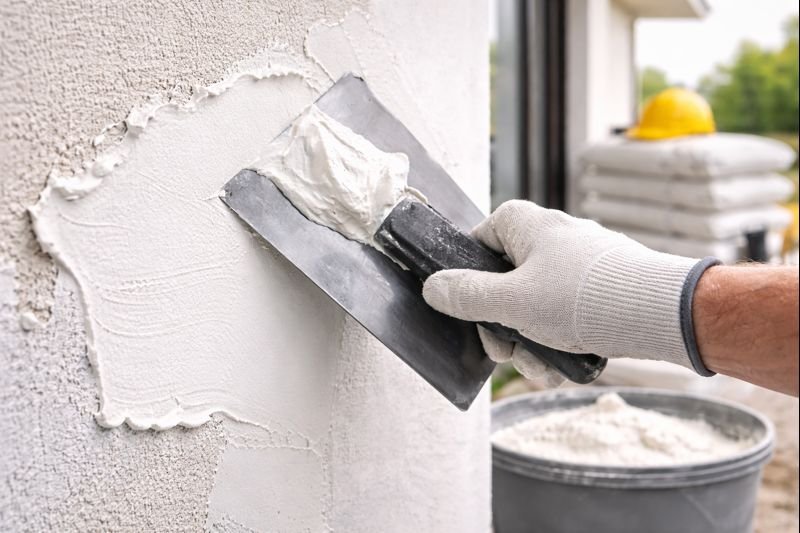
The viscosity of wall putty is fundamentally about finding the right balance. Think of it as the "thickness" or "flowability" of your putty mixture. Too low, and your putty runs down the wall; too high, and it becomes a workout just to apply it.
During my factory visits to clients in Pakistan and India, I've observed how viscosity affects real-world application. Putties with viscosities around 150,000 mPa·s consistently perform best in hot climates where quick drying is a concern. The relationship between viscosity and application temperature is particularly important:
| Temperature Range | Recommended Viscosity | Application Notes |
|---|---|---|
| Below 15°C | 120,000-150,000 mPa·s | Lower viscosity compensates for cold-weather stiffening |
| 15-25°C | 150,000-180,000 mPa·s | Ideal working range for most applications |
| Above 25°C | 150,000-200,000 mPa·s | Slightly higher viscosity may help in very hot conditions |
Remember that viscosity is just one factor in a successful formulation. Water retention capability often proves more decisive in preventing cracks than simply having higher viscosity.
What is the Viscosity Range of HPMC?
Struggle: Selecting the right HPMC viscosity feels overwhelming with so many options available, making it easy to overspend on unnecessarily high viscosities.
Commercial HPMC products typically range from 5,000 to 200,000 mPa·s in viscosity. For exterior wall putties specifically, the most effective range is 100,000-150,000 mPa·s, providing sufficient sag resistance while maintaining good workability and minimizing internal stresses after drying.
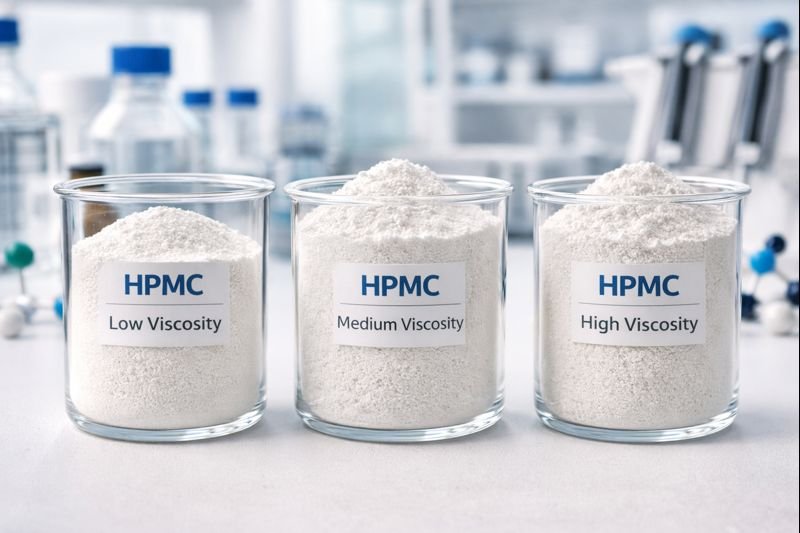
Hydroxypropyl methylcellulose (HPMC) comes in numerous viscosity grades because it serves so many different applications. Understanding this range helps you make cost-effective choices for your specific needs.
In our Kehao production facility, we manufacture HPMC across the entire viscosity spectrum, but I've noticed a consistent pattern among our most successful exterior wall putty clients. Those who achieve the best balance of performance and cost typically select products in the 100,000-150,000 mPa·s range.
Higher isn't always better - this is crucial to understand. When you exceed 200,000 mPa·s, several problems emerge:
- Application Difficulty: Workers must exert excessive force to spread the putty
- Air Entrapment: Thicker putties tend to trap more air bubbles
- Internal Stress: After drying, very high viscosity formulations can develop stronger internal stresses
- Cost Inefficiency: Higher viscosity grades command premium prices without proportional performance benefits
The methoxyl content and hydroxypropoxyl substitution levels of your HPMC also significantly impact performance beyond just viscosity numbers:
| HPMC Property | Typical Range for Exterior Putty | Effect on Performance |
|---|---|---|
| Methoxyl Content | 19-24% | Affects water retention and workability |
| Hydroxypropoxyl Content | 7-12% | Influences compatibility with other additives |
| Particle Size | 100-200 mesh | Impacts dissolution speed and final consistency |
My technical team has found that medium-viscosity HPMC with optimized substitution levels often outperforms higher-viscosity products with less optimal chemical structures.
What is the Usage Rate for Hydroxypropyl Methylcellulose?
Concern: Using too little HPMC causes sagging, while using too much wastes money and can lead to cracking—finding the right dosage seems like guesswork.
For exterior wall putties, the typical usage rate of HPMC ranges from 0.2% to 0.4% of the total dry mixture weight. A properly formulated putty with 150,000 mPa·s HPMC usually requires about 0.3% dosage to achieve optimal workability, sag resistance, and crack prevention.
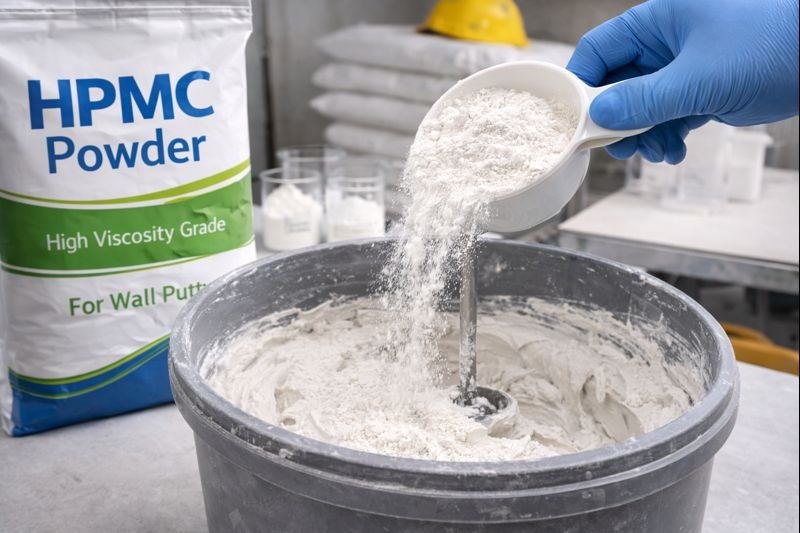
Getting the dosage right is perhaps even more important than selecting the proper viscosity grade. This is where many exterior putty formulations go wrong, either through overdosing to compensate for lower quality HPMC or underdosing to save on costs.
When I consult with mortar factories in the Middle East, I often find they're using high-viscosity HPMC at unnecessarily high dosages. By shifting to a 150,000 mPa·s product with better water retention properties, they can often reduce their dosage while maintaining or improving performance.
The relationship between HPMC viscosity and dosage follows a generally inverse pattern:
| HPMC Viscosity | Typical Dosage Range | Cost-Performance Notes |
|---|---|---|
| 75,000 mPa·s | 0.35-0.45% | Higher dosage required, but lower unit cost |
| 150,000 mPa·s | 0.25-0.35% | Optimal balance point for most formulations |
| 200,000+ mPa·s | 0.15-0.25% | Lower dosage but higher unit cost - rarely economical |
Several factors affect the optimal dosage, including:
- Filler Fineness: Finer calcium carbonate3 requires more HPMC
- Application Thickness: Thicker applications may need slightly higher dosages
- Climate Conditions: Higher temperatures and lower humidity may require adjustments
- Other Additives: Interactions with redispersible polymer powder4s can affect optimal HPMC levels
In our laboratory testing with clients' actual formulations, we've consistently found that a 0.3% dosage of 150,000 mPa·s HPMC with optimized water retention provides the best overall performance for exterior wall putties in most climate zones.
Which Putty is Best for Exterior Walls?
Dilemma: With countless options claiming to be "exterior grade," how can you identify a truly durable formulation that won't crack or peel prematurely?
The best exterior wall putty contains properly dosed HPMC (around 150,000 mPa·s) combined with redispersible polymer powder4 (2-3%), provides excellent water retention (>95%), and demonstrates good water resistance after curing. The formulation should balance workability with crack resistance rather than focusing solely on high viscosity.
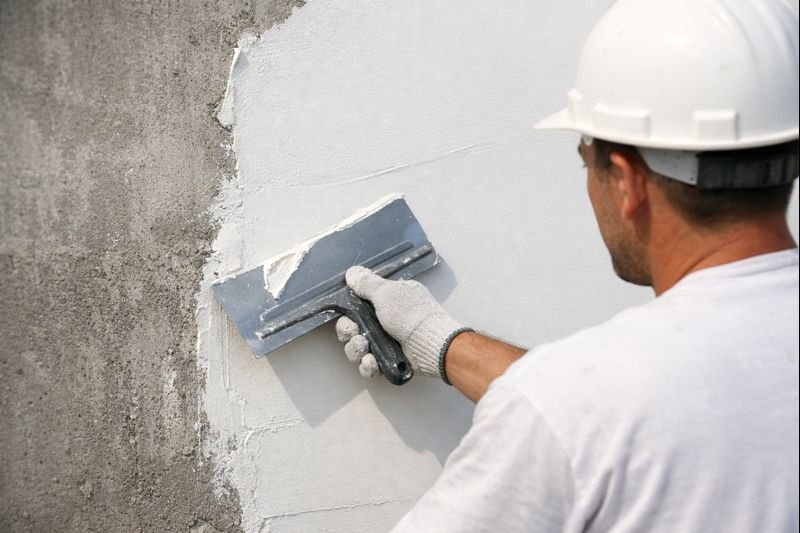
After supplying HPMC to hundreds of putty manufacturers across developing markets, I've observed that the most successful exterior wall putties share several key characteristics beyond just HPMC viscosity.
The best exterior wall putties prioritize water retention capacity over simple thickness. This critical property prevents premature water loss, which is the leading cause of cracking in exterior applications. Many manufacturers make the mistake of using higher viscosity HPMC thinking it will prevent cracking, when in fact, a medium-viscosity HPMC with superior water retention would perform better at a lower cost.
Key components of an ideal exterior wall putty include:
| Component | Optimal Range | Function |
|---|---|---|
| HPMC (150,000 mPa·s) | 0.3-0.35% | Water retention, workability, sag resistance |
| Redispersible Polymer Powder | 2-3% | Flexibility, adhesion, water resistance |
| Calcium Carbonate (Fine) | 85-90% | Base material, affects smoothness |
| White Cement | 5-10% | Binding strength, durability |
| Other Additives | 1-2% | Various performance enhancements |
Climate adaptability is another crucial factor. In our testing facility, we simulate various climate conditions to ensure putty performance across different environments. A truly excellent exterior putty maintains consistent performance from Saudi Arabia's desert heat to Vietnam's tropical humidity.
The processing method also matters significantly. The highest quality exterior putties undergo thorough dry-mixing processes that ensure complete homogeneity of all components. This prevents performance inconsistencies across batches and application areas.
Conclusion
For exterior wall putty, HPMC with 150,000 mPa·s viscosity at 0.3% dosage offers the optimal balance of performance and cost. Focus on water retention capacity rather than chasing higher viscosity numbers that increase costs without improving results.
FAQ
Can I reduce HPMC dosage by using higher viscosity grades?
Yes, but it's rarely cost-effective. Higher viscosity grades cost more per kilogram, and the potential dosage reduction doesn't usually offset this increased unit cost.
Does climate affect what HPMC viscosity I should use?
Yes. Hotter, drier climates may benefit from slightly higher viscosity (150,000-180,000 mPa·s) with excellent water retention properties to prevent premature drying.
Why does my high-viscosity putty still crack after drying?
High viscosity alone doesn't prevent cracking. Poor water retention, inadequate polymer content, or excessive internal stress can all cause cracking regardless of viscosity.
How can I test if my current HPMC has good water retention?
Apply a thin layer of your putty mixture to an absorbent substrate. Good water retention formulations will remain workable for at least 20-30 minutes without skinning over or losing plasticity.
-
Understanding the ideal viscosity helps in selecting the right product for optimal performance. ↩
-
Explore best practices to ensure durability and effectiveness in your wall applications. ↩
-
Discover how calcium carbonate affects the smoothness and quality of wall putty. ↩
-
Learn how this additive enhances flexibility and adhesion in wall putty. ↩ ↩