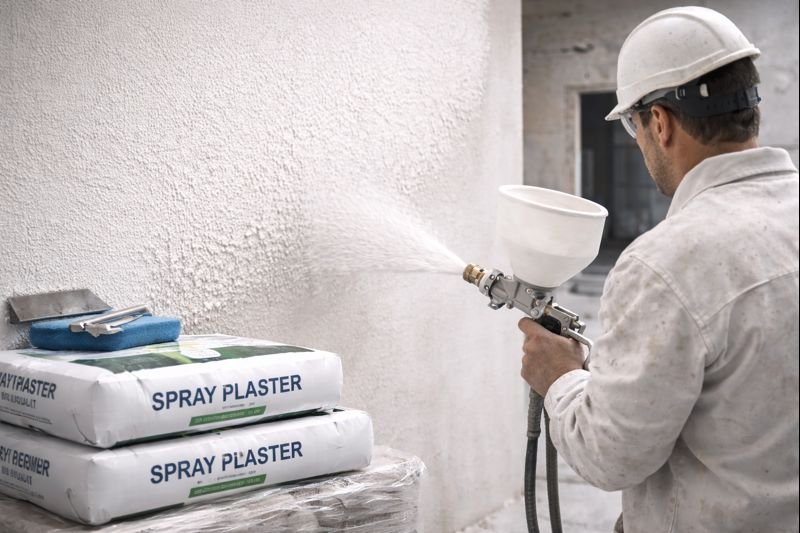
Are you frustrated with clogged spray guns and uneven wall finishes? Improper HPMC particle size1 is likely sabotaging your spray plaster application, wasting valuable time and materials while compromising quality.
The ideal particle size for HPMC in spray plaster applications2 is 100-mesh (149 microns) or finer. This fine powder dissolves almost instantly when mixed with water, preventing "fish eye" lumps and nozzle blockages while ensuring smooth pumping and optimal water retention properties.
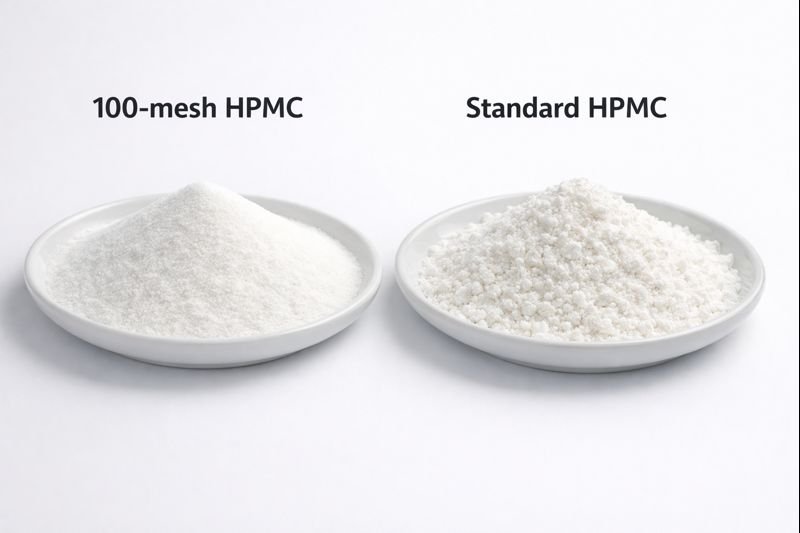
As the owner of Kehao, one of China's leading HPMC manufacturers3, I've seen firsthand the dramatic difference particle size makes in spray plaster applications2. The entire spray process happens in seconds - mixing dry powder with water and pumping it through the gun. This leaves no room for slow-dissolving materials. Let me share why 100-mesh makes all the difference.
What is the particle size of HPMC?
Do your spray guns keep clogging despite using premium HPMC? Standard 80-mesh HPMC particles are simply too large for the rapid dissolution needed in spray applications, causing frustrating downtime and quality issues.
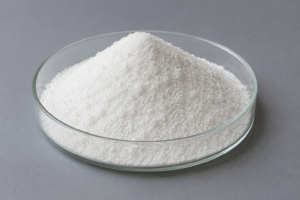
HPMC particle size1 typically ranges from 40-mesh (420 microns) to 120-mesh (125 microns). The mesh number indicates how many openings appear in one linear inch of screening material - higher numbers mean finer particles. For spray plaster applications, 100-mesh (149 microns) or finer is optimal.
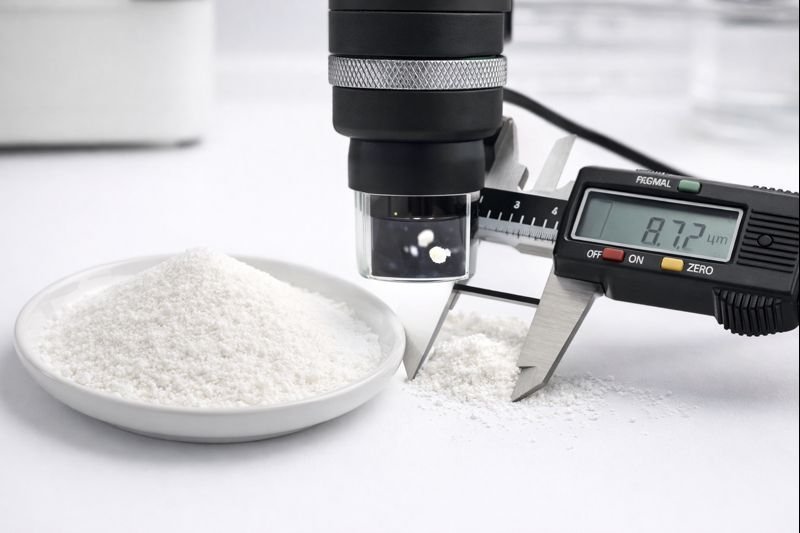
The particle size of HPMC directly impacts its dissolution rate and application performance. In my factory, we use advanced milling equipment to precisely control particle size distribution. This matters because spray plaster applications present unique challenges compared to hand-applied mortars.
Particle Size Distribution Effects
| Mesh Size | Microns | Dissolution Rate | Suitability for Spray Applications |
|---|---|---|---|
| 40-60 mesh | 420-250 microns | Very slow | Not suitable - severe clogging |
| 80 mesh | 177 microns | Moderate | Marginally suitable - frequent clogs |
| 100 mesh | 149 microns | Fast | Excellent - minimal clogging |
| 120 mesh | 125 microns | Very fast | Optimal - no clogging |
When I visit clients struggling with spray applications, I often find they're using standard 80-mesh HPMC. The difference when switching to our 100-mesh product is immediately apparent - smoother operation, fewer work stoppages, and better wall finishes. The finer powder distributes more evenly in the mix and dissolves almost instantly, eliminating the formation of troublesome gel lumps that plague coarser materials.
What is the role of HPMC in Spray Plaster?
Is your spray plaster sliding down walls or drying too quickly? These common problems stem from poor water retention and workability - precisely the issues that properly sized HPMC addresses.
HPMC serves as a critical water retention agent, thickener, and binder in spray plaster. It prevents water from evaporating too quickly or being absorbed by the substrate, maintains optimal viscosity for spraying, and provides anti-sagging properties that keep the plaster adhered to vertical surfaces.
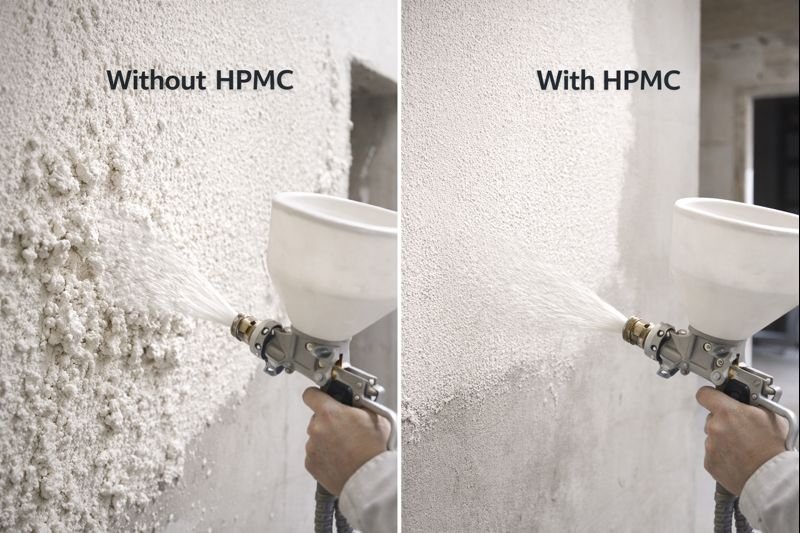
The unique demands of machine-applied plaster amplify the importance of HPMC's role. During my 15 years in this industry, I've observed that spray applications require HPMC to perform its functions almost instantaneously, unlike hand applications where there's more working time.
Critical Functions of HPMC in Spray Plaster
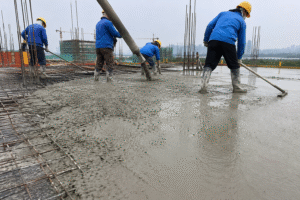
Spray plaster systems pump material through hoses and nozzles at high pressure, requiring perfectly dissolved HPMC to ensure smooth flow. With our 100-mesh HPMC, you get immediate functionality across all key performance areas:
-
Water Retention: Finer particles create a more uniform cellulose network that holds water molecules more effectively, preventing premature drying on hot or porous surfaces.
-
Rheological Properties: The spray pattern and coverage depend heavily on viscosity. 100-mesh HPMC dissolves completely to provide consistent rheology, eliminating the variability caused by partially dissolved larger particles.
-
Adhesion Enhancement: When properly dissolved, HPMC forms hydrogen bonds with both the substrate and other components in the plaster, maximizing adhesion strength.
-
Workability Time: The water-retaining film forms more quickly and uniformly with finer particles, extending the critical working time for smoothing and finishing.
During factory trials with various customers, we've consistently observed that the same formulation performs dramatically better with 100-mesh HPMC compared to coarser grades, especially in pumping ease and finish quality.
What is the extended release of HPMC?
Have you noticed inconsistent setting times in your spray plaster? The problem may be in how your HPMC dissolves and releases its properties - another area where particle size plays a crucial role.
Extended release in HPMC refers to how it gradually dissolves and releases its functional properties over time. With spray applications, we need the opposite - immediate release. 100-mesh HPMC provides this quick dissolution while still maintaining extended functional performance after application.
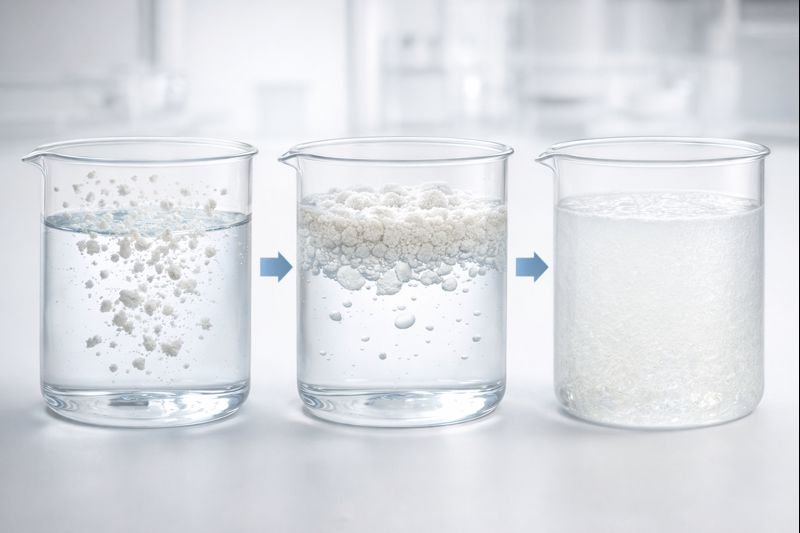
The dissolution mechanism makes all the difference in spray applications. I remember visiting a customer in Saudi Arabia who couldn't understand why his spray system worked perfectly in the morning but became problematic as the day progressed. The issue was clear to me immediately.
Controlled Dissolution Dynamics
The dissolution profile of HPMC is a balancing act between immediate availability and sustained performance. Larger particles create a problematic two-phase system in spray applications:
| Dissolution Phase | 80-Mesh Performance | 100-Mesh Performance |
|---|---|---|
| Initial (0-5 sec) | Partial dissolution, surface gelation | Near-complete dissolution |
| Middle (5-30 sec) | Internal portions still undissolved | Complete hydration and network formation |
| Extended (30+ sec) | Continued slow release, unpredictable behavior | Stable performance, consistent properties |
With 100-mesh HPMC, the dissolution is nearly instantaneous but the functional properties remain stable throughout the application and drying process. This gives you the best of both worlds - immediate functionality for smooth pumping and spraying, plus extended water retention and workability after the material hits the wall.
In our laboratory tests, we've measured dissolution rates that show 100-mesh HPMC reaches 90% dissolution in under 5 seconds, while 80-mesh achieves only 60% dissolution in the same timeframe. This difference is critical when the material must pass through a spray nozzle mere seconds after mixing.
What is the mechanism of action of HPMC4?
Does your spray plaster lack the smooth, consistent texture clients demand? Understanding how HPMC actually works at the molecular level reveals why particle size dramatically affects performance.
HPMC works through a hydration mechanism where water molecules bind to hydroxypropyl and methyl cellulose chains, creating a three-dimensional network. Finer particles present more surface area for this reaction, allowing faster and more complete hydration in the brief mixing window available in spray applications.
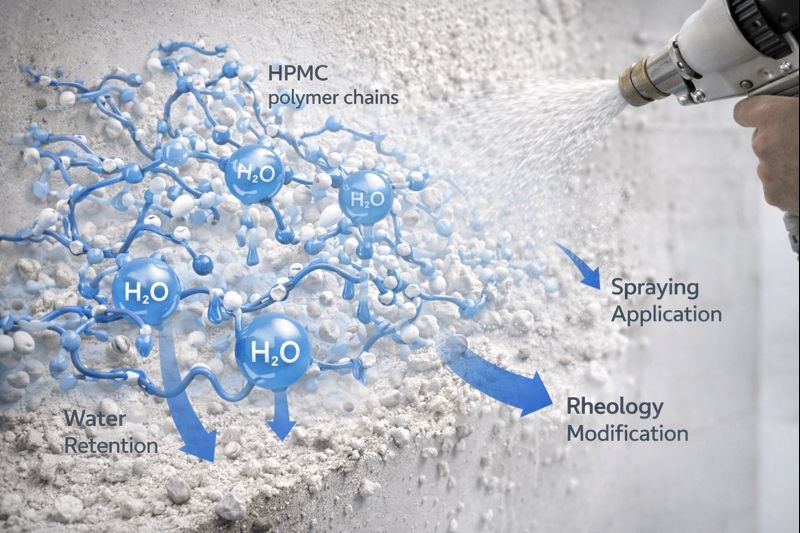
The science behind this is fascinating. When water contacts HPMC powder, it must first penetrate the particle before hydration can occur. With 100-mesh particles, this happens almost instantaneously due to the increased surface-to-volume ratio.
Molecular Interaction Process
The mechanism involves several stages that occur simultaneously but at different rates depending on particle size:
- Surface Wetting: Water first contacts the outer surface of HPMC particles
- Water Penetration: Water diffuses into the particle structure
- Polymer Hydration: Water molecules bind to the hydrophilic groups
- Chain Unfolding: Cellulose chains extend and unfold in the solution
- Network Formation: Hydrated chains interact to form a three-dimensional gel matrix
With finer 100-mesh particles, all these stages happen much more rapidly and uniformly. In our research laboratory, we've used high-speed cameras to observe the dissolution process, and the difference is striking. While 80-mesh particles often show a "skin" of gel forming around an undissolved core (creating the dreaded "fish eyes"), 100-mesh particles dissolve more uniformly from all sides.
This complete dissolution creates a more consistent molecular network throughout the spray plaster, enhancing all functional properties. The water retention capability improves because more HPMC molecules are fully hydrated and available to bind water. Anti-sag properties are enhanced because the gel network forms more completely and rapidly, providing immediate structure to the freshly sprayed material.
When adjusting formulations for customers switching to our 100-mesh product, we often find they can reduce the overall HPMC dosage while achieving better performance - a significant cost saving that further justifies the premium for finer-ground material.
Conclusion
Choosing 100-mesh HPMC for spray plaster isn't just a technical detail—it's essential for success. The finer particles dissolve instantly, eliminate clogging, ensure smooth application, and create superior finishes. This simple change can transform your spray plaster operation.
FAQ
Can I use standard HPMC for spray applications?
Standard 80-mesh HPMC will cause frequent clogging and uneven finishes in spray applications. 100-mesh or finer is strongly recommended.
Is 100-mesh HPMC more expensive?
Yes, typically 5-10% more expensive due to additional processing, but the productivity gains and reduced waste typically provide excellent return on investment.
Does particle size affect HPMC's chemical properties?
No, the chemical properties remain the same. Only the dissolution rate and physical performance are affected by particle size.
Can finer HPMC reduce overall dosage requirements?
Yes, many customers find they can reduce HPMC content by 5-15% when switching to 100-mesh, offsetting the higher unit cost.
How can I tell if my current HPMC is causing spray problems?
Check for "fish eyes" (small gel lumps) in the mix, frequent nozzle clogs, and uneven wall coverage. These are telltale signs of inadequate HPMC dissolution.
-
Understanding the ideal particle size can help you achieve better results in spray plaster applications. ↩ ↩
-
Learn effective techniques to enhance your spray plaster application process. ↩ ↩
-
Explore top manufacturers to find quality HPMC for your applications. ↩
-
Explore the science behind HPMC's effectiveness in plaster applications. ↩