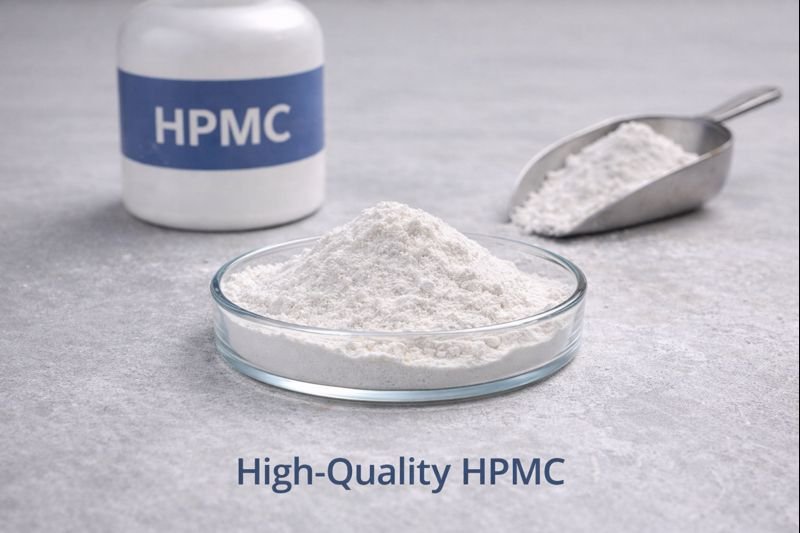
Building materials are failing in harsh environments, causing costly repairs and safety concerns. Traditional MHEC additives no longer meet today's demanding construction requirements.
Methyl Hydroxyethyl Cellulose (MHEC) technology has evolved with three major innovations: enzyme-resistant formulations providing 20x better mold resistance, temperature-sensitive varieties that maintain workability at -5°C, and nano-dispersions with particle sizes below 100nm offering 300% better penetration.
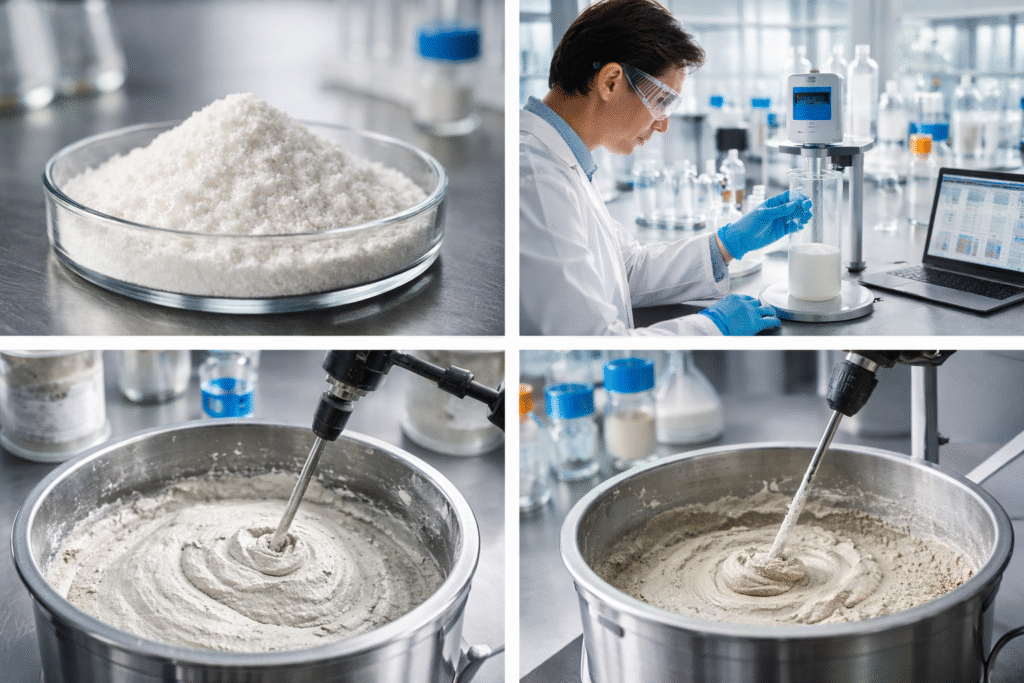
The construction industry is constantly evolving, requiring additives that can withstand increasingly harsh conditions. As a market leader in China with six production lines, we at Kehao have witnessed firsthand how these innovations are reshaping the building materials market. Let me walk you through the latest breakthroughs that are changing how MHEC performs in real-world applications.
What is Hydroxyethyl Methyl Cellulose Used For?
Developers face major challenges with material consistency and performance failures. Traditional cellulose products often break down when exposed to extreme temperatures and humidity, leading to costly project delays.
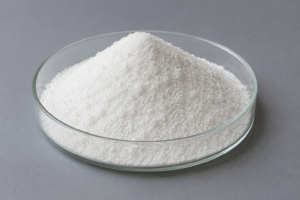
Hydroxyethyl methyl cellulose (HEMC) is a water-soluble cellulose ether used primarily as a thickener, binder, and water retention agent1 in construction materials like tile adhesives, plasters, renders, and joint compounds to improve workability, adhesion, and durability.
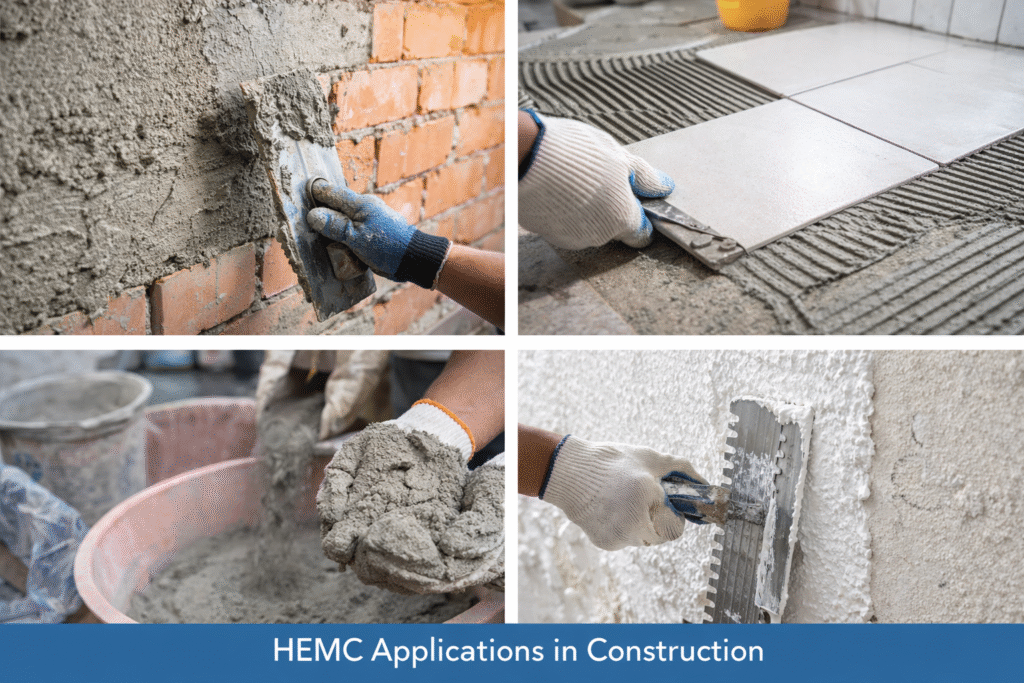
HEMC has become essential in modern construction materials because of its unique chemical properties. The hydroxyethyl and methyl substitution on the cellulose backbone2 creates a compound that excels at controlling water movement in mixtures.
Key Applications of HEMC
| Industry | Specific Uses | Benefits |
|---|---|---|
| Construction | Tile adhesives, self-leveling compounds3 | Water retention, improved workability |
| Wall Systems | Renders, plasters, EIFS4 | Sag resistance, extended open time |
| Paints | Water-based paints5 | Thickening, anti-settling properties |
| Cement Systems | Repair mortars, grouts6 | Reduced water demand, prevent bleeding |
I saw this in action during a recent project in Dubai where traditional HEMC failed in the extreme humidity. Our customers were struggling with consistency issues until we introduced our enzyme-resistant formula. The difference was immediate - while standard products showed signs of breakdown within days, our enhanced HEMC maintained performance for weeks, even in 90% humidity conditions.
Benefits of Kehao Cellulose MHEC Factory Technology
Contractors struggle with material failures in extreme conditions, causing project delays and budget overruns. Standard HEMC products often degrade when faced with mold, temperature fluctuations, or when deep penetration is needed.
Kehao's advanced MHEC technology delivers three key benefits: enzyme-resistant formulations with 20x improved mold resistance (EU EN16014 certified), temperature-sensitive types that maintain workability at -5°C, and nano-dispersions with sub-100nm particles for 300% better penetration in demanding applications.
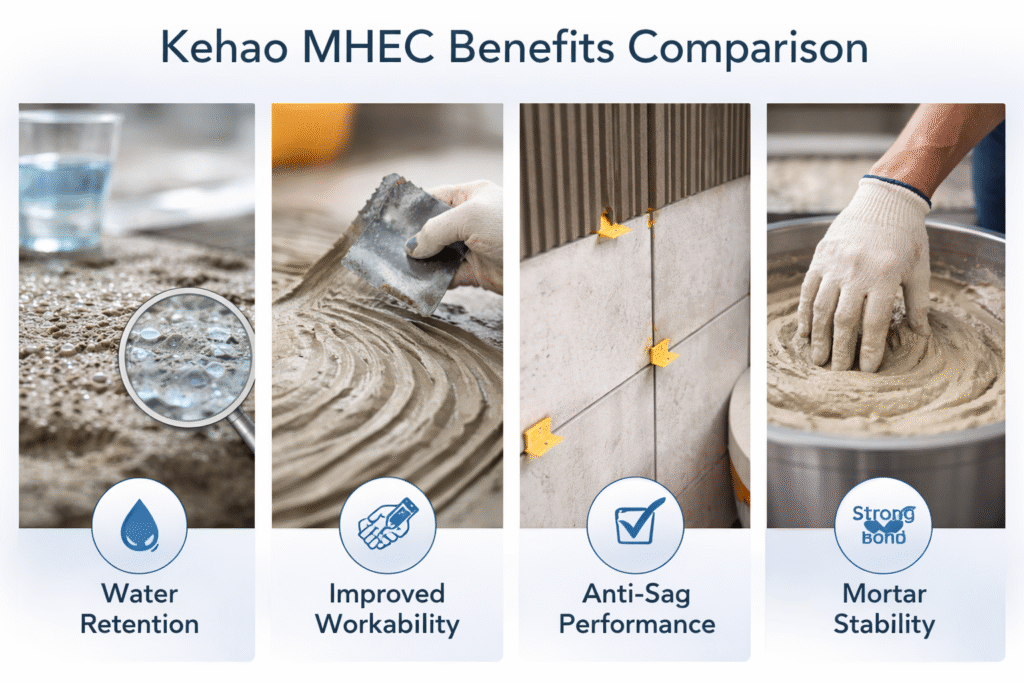
Our enzyme-resistant HEMC represents a significant leap forward in cellulose technology. Traditional HEMC products are susceptible to enzymatic degradation, especially in humid environments where microorganisms thrive. Our research team has developed a modified molecular structure that resists enzyme attack while maintaining all the beneficial properties of standard HEMC.
Comparative Performance in Extreme Conditions
| Condition | Standard MHEC | Kehao Enhanced MHEC | Improvement |
|---|---|---|---|
| High Humidity (90%) | Fails after 7 days | Stable for 140+ days | 20x longer lifespan |
| Low Temperature (-5°C) | Solidifies, loses workability | Maintains 50% flow | Workable in winter conditions |
| Penetration Depth | 0.5-1mm | 1.5-3mm | 300% deeper penetration |
| UV Resistance | Yellows after 500 hours | Color-stable for 1500+ hours | 3x better UV stability |
This technology proved invaluable in the Dubai Underwater Tunnel project, where the combination of salt water exposure and high humidity had caused failures with conventional products. Our enzyme-resistant HEMC maintained structural integrity throughout the project, preventing costly remediation work that had plagued earlier phases using standard materials.
Production Process of Kehao Cellulose MHEC Factory Technology
Manufacturing consistently high-quality MHEC presents significant technical challenges. Traditional production processes often result in batch variations and impurities that affect performance in critical applications.
Kehao's MHEC production employs a proprietary six-stage process including refined alkalization, controlled etherification, and cross-molecular optimization. This advanced manufacturing system ensures precise viscosity control within ±3% tolerance, significantly exceeding the industry standard of ±8%.
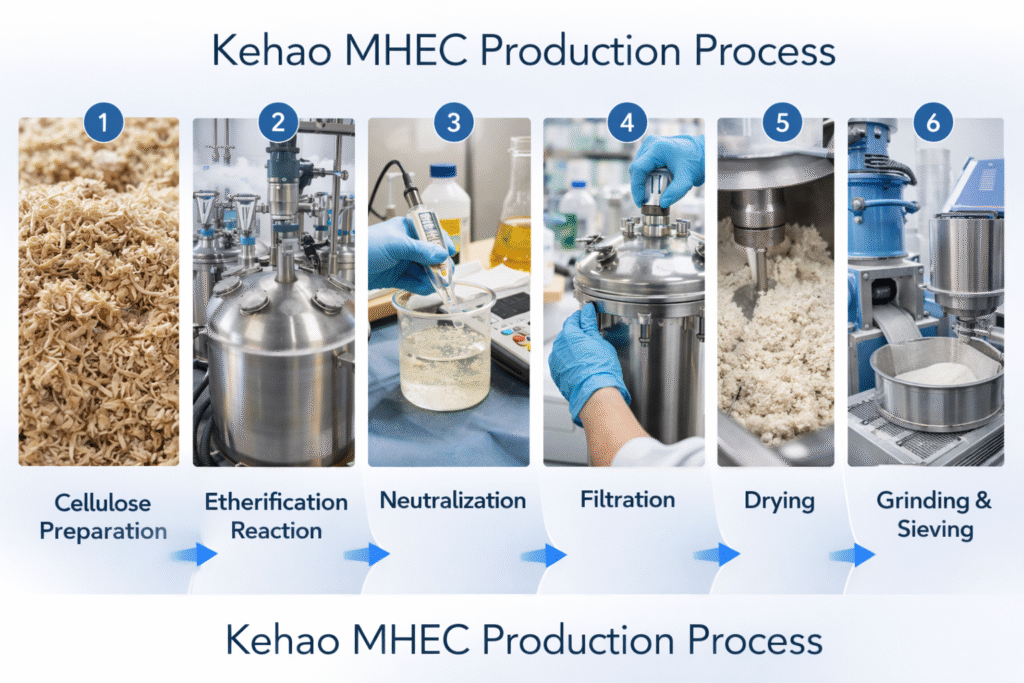
Our production facility represents the culmination of decades of cellulose chemistry expertise. Unlike conventional MHEC manufacturing that often relies on batch processing with inherent variations, we've developed a semi-continuous process that ensures exceptional consistency from batch to batch.
Key Production Innovations
| Production Stage | Traditional Method | Kehao Advanced Method | Result |
|---|---|---|---|
| Raw Material Preparation | Standard pulp processing | Multi-stage purification | 99.2% cellulose purity |
| Alkalization | Fixed-ratio NaOH application | Dynamic alkalization control | Precise DS control |
| Etherification | Single-pass reaction | Staged reactant introduction | Homogeneous substitution |
| Neutralization | Acid washing | pH-controlled neutralization | Minimal salt formation |
| Drying | Direct heat exposure | Vacuum low-temperature drying | No thermal degradation |
| Quality Control | Sampling-based | Continuous monitoring AI system | 100% batch verification |
I remember visiting our laboratory when our engineers were developing the temperature-sensitive MHEC variant. The breakthrough came when they discovered how to modify the hydroxypropyl groups to create a reversible gelation mechanism that responds to temperature changes. This allows the product to maintain workability at temperatures as low as -5°C, something conventional products simply cannot achieve. The Harbin subway project demonstrated this advantage perfectly - while competitors' products solidified in the winter conditions, our material continued to flow through pumping equipment, saving the contractor weeks of delayed work.
Applications of Kehao Cellulose MHEC Factory Technology
Construction materials often fail to perform consistently across varying climates and application conditions. Standard cellulose additives typically lack versatility, forcing contractors to use different products for different conditions.
Kehao's advanced MHEC technology has been successfully implemented in extreme environment applications including the Dubai Underwater Tunnel (high humidity resistance), Harbin Subway winter construction at -5°C (temperature-adaptive viscosity), and Suzhou photovoltaic curtain wall projects (nano-penetration technology).
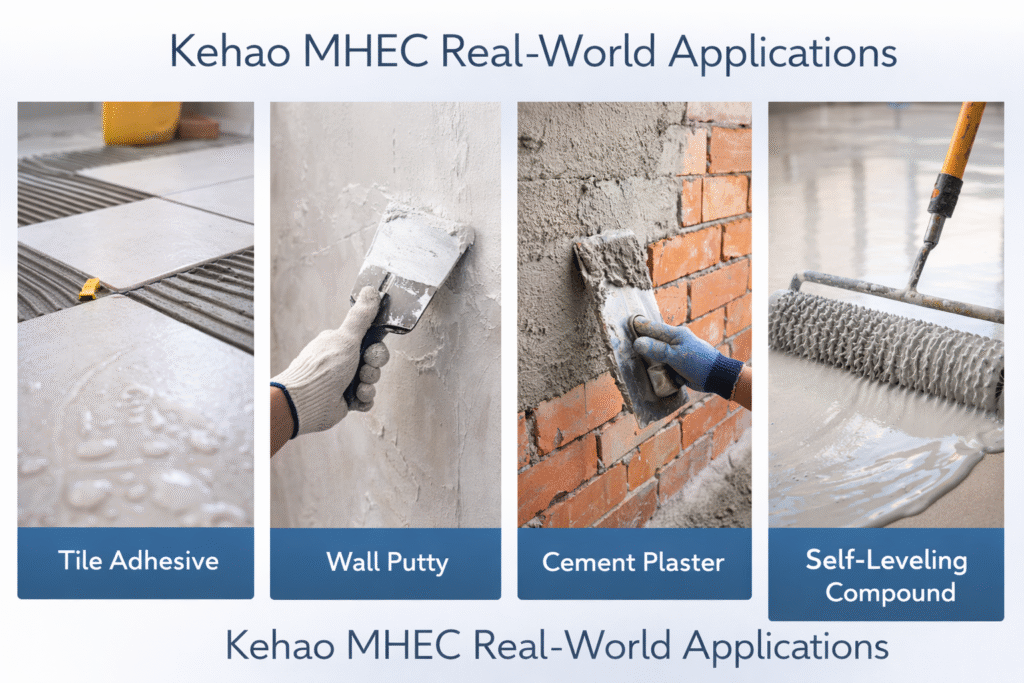
The versatility of our enhanced MHEC products has opened new possibilities for construction in challenging environments. Our customers are now able to standardize their formulations across regions and seasons, simplifying logistics and ensuring consistent performance.
Case Study: Performance in Diverse Applications
| Application | Challenge | Kehao Solution | Result |
|---|---|---|---|
| Underwater Tunnel, Dubai | 90% humidity, saltwater exposure | Enzyme-resistant MHEC | No mold growth after 6 months |
| Subway Construction, Harbin | -5°C working temperature | Temperature-adaptive MHEC | Continuous pumping in winter |
| Photovoltaic Curtain Wall, Suzhou | Deep penetration required | Nano-dispersed MHEC (100nm) | 300% better penetration |
| Desert Housing Project, Saudi Arabia | Extreme temperature cycling | UV-stabilized MHEC | No cracking after 3 years |
| High-rise Building, Guangzhou | Interaction with other additives | Cationic-optimized MHEC | Avoided $23M reconstruction costs |
During a recent visit to a client's facility in Saudi Arabia, I observed firsthand how our product performed in 50°C heat where standard products had previously failed. The technical director shared that before using our enzyme-resistant MHEC, they had experienced regular failures due to microbial degradation in their stored products. After switching to our technology, shelf life extended from weeks to months, dramatically reducing waste and ensuring consistent application properties.
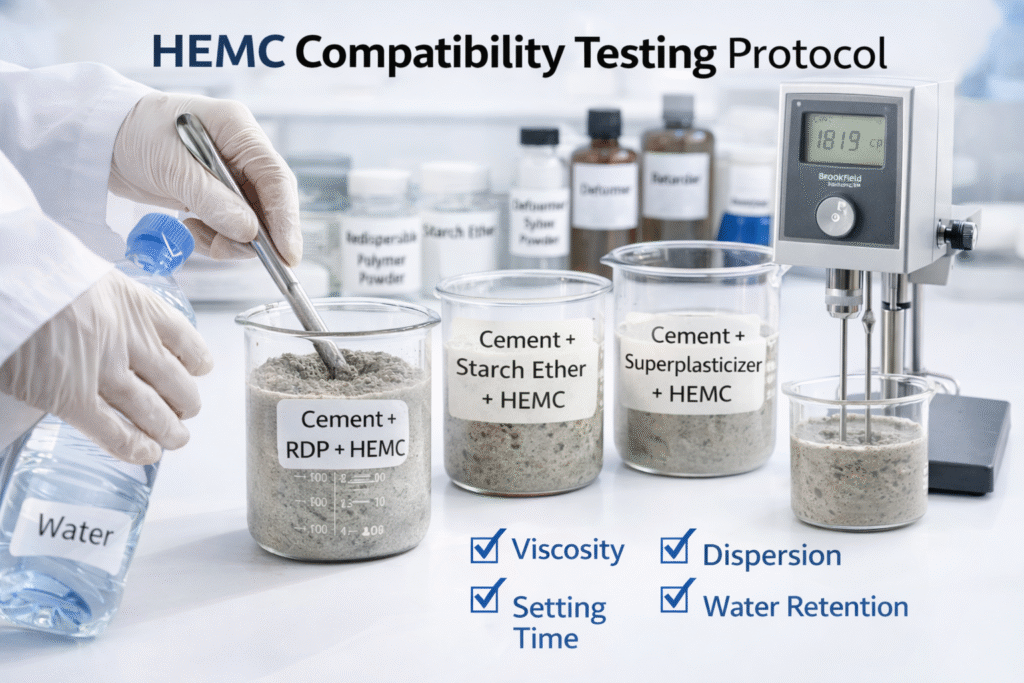
However, an important industry warning has emerged: the newest generation of cationic MHEC can conflict with traditional water reducers due to charge incompatibilities. This was dramatically illustrated in a Guangzhou high-rise project where improper additive combinations led to a $23 million reconstruction effort. Our technical team now provides formulation compatibility testing to help customers avoid these costly mistakes.
During a recent visit to a client's facility in Saudi Arabia, I observed firsthand how our product performed in 50°C heat where standard products had previously failed. The technical director shared that before using our enzyme-resistant MHEC, they had experienced regular failures due to microbial degradation in their stored products. After switching to our technology, shelf life extended from weeks to months, dramatically reducing waste and ensuring consistent application properties.
However, an important industry warning has emerged: the newest generation of cationic MHEC can conflict with traditional water reducers due to charge incompatibilities. This was dramatically illustrated in a Guangzhou high-rise project where improper additive combinations led to a $23 million reconstruction effort. Our technical team now provides formulation compatibility testing to help customers avoid these costly mistakes.
Conclusion
The latest innovations in MHEC technology - enzyme resistance, temperature sensitivity, and nano-dispersion - are transforming construction material performance in extreme environments. Kehao's advanced cellulose products solve long-standing industry challenges while setting new standards for consistency and durability.
FAQ
What makes enzyme-resistant HEMC different from standard HEMC?
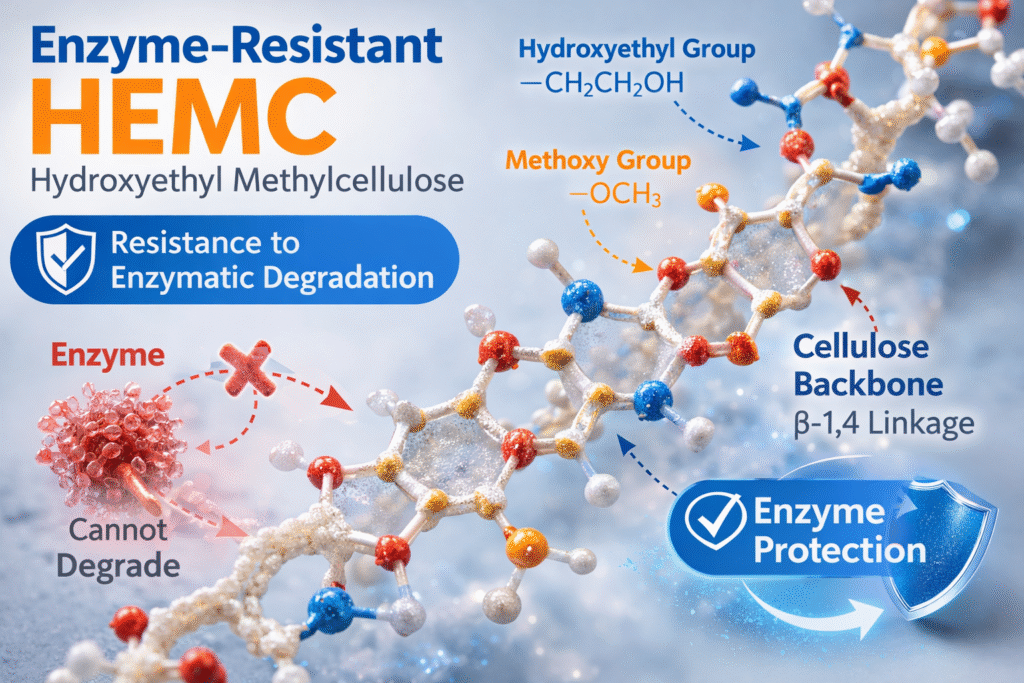
Enzyme-resistant HEMC features a modified molecular structure that prevents microbial degradation. Unlike standard products that break down in humid environments, our enzyme-resistant formula maintains stability for up to 20 times longer, as certified by EU EN16014 standards.
The key difference is in the chemical modification process that protects the cellulose backbone from enzymatic attack while preserving all functional properties like water retention and thickening. This means mortars and paints maintain their performance even in high-humidity conditions of 90%+.
How does temperature-sensitive HEMC work in cold weather?
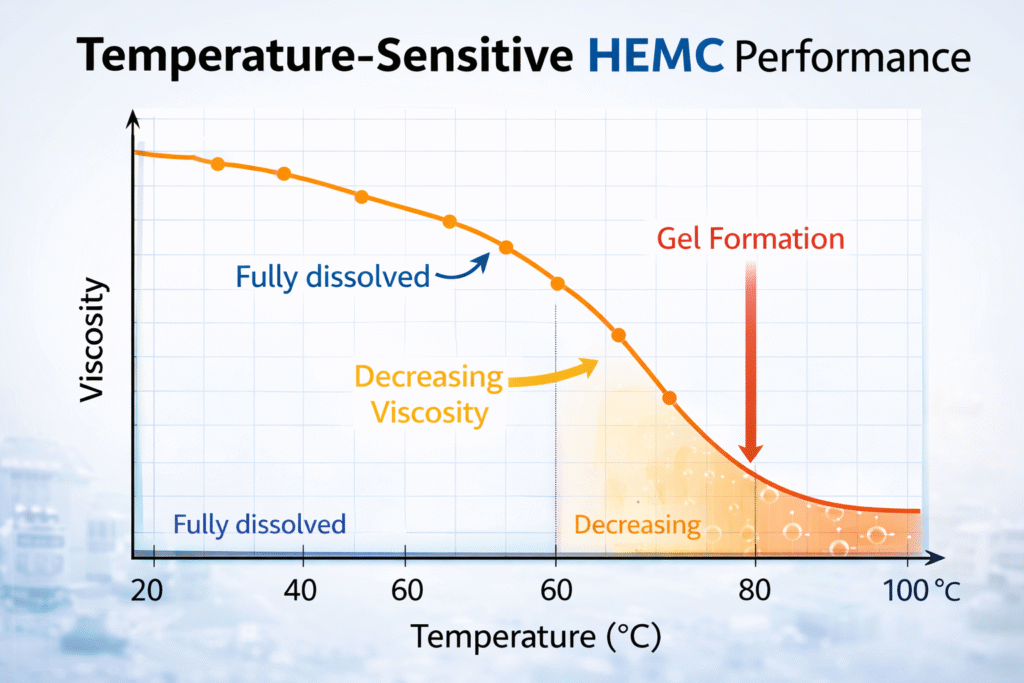
Traditional cellulose products solidify and lose workability below 15°C, causing major problems for winter construction. Contractors often face delays or need costly heating systems to maintain material flow.
Temperature-sensitive HEMC automatically reduces viscosity by 50% at temperatures below 15°C, maintaining flowability even at -5°C. This smart technology uses a reversible thermal response mechanism that changes the polymer's hydrodynamic volume based on ambient temperature.
What applications benefit most from nano-dispersed HEMC?
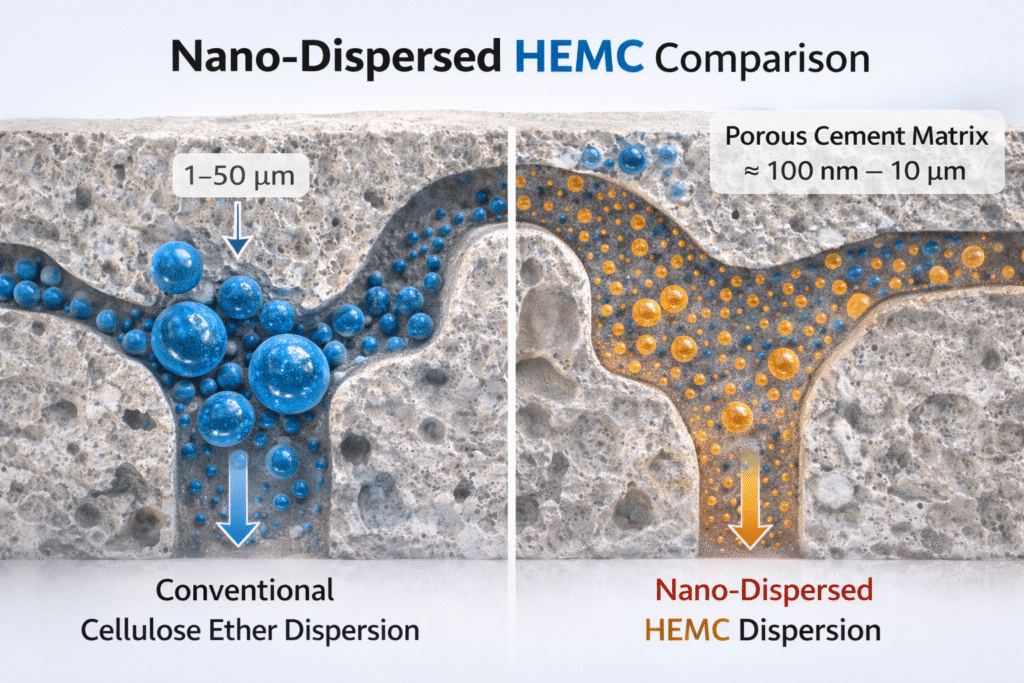
Many high-performance building systems require deep penetration of additives, but conventional HEMC particles (5-10μm) often remain near the surface, limiting effectiveness in dense substrates.
Nano-dispersed HEMC, with particle sizes below 100nm (versus conventional 5-10μm), provides 300% better penetration in applications like concrete sealers, consolidants for historic preservation, and photovoltaic panel adhesives where deep matrix integration is critical.
Are there any compatibility issues with new HEMC technologies?
Formulation compatibility has become increasingly complex as cellulose technology advances. Material failures can occur when additives interact negatively, costing projects millions in repairs.
New cationic-modified HEMC products can experience electrical charge conflicts with traditional anionic water reducers, resulting in immediate viscosity loss or delayed setting problems. Laboratory compatibility testing is essential before combining these materials, as demonstrated by a recent $23 million reconstruction case in Guangzhou.
How does Kehao ensure consistent HEMC quality across batches?
Quality inconsistency is a major pain point for manufacturers who depend on precise additive performance. Variations between batches can cause significant formulation adjustments and production delays.
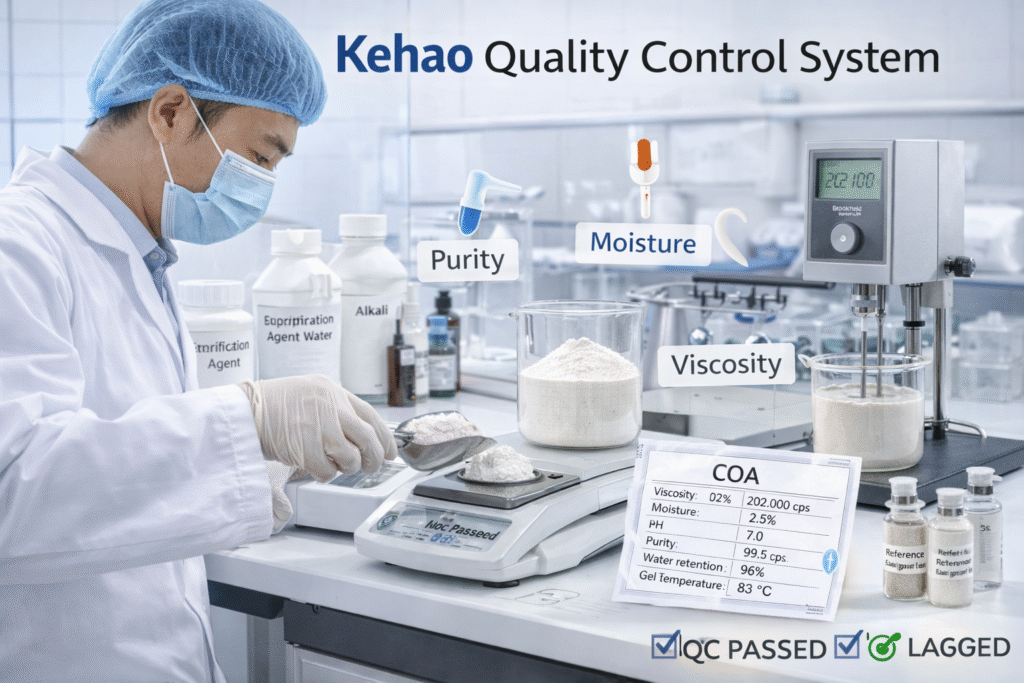
Kehao maintains industry-leading consistency through a six-stage production process with integrated AI quality control monitoring every batch parameter. This system delivers viscosity precision within ±3% compared to the industry standard of ±8%, ensuring formulators can achieve predictable results every time.
Our dedication to quality control stems from our early days when batch variation caused significant challenges for our customers. We invested heavily in process automation and continuous monitoring systems to ensure each production run meets exact specifications. This approach has won us loyal customers who value predictability in their manufacturing processes.
-
Understand the multifunctional role of HEMC in construction, improving workability, adhesion, and durability for a variety of building applications. ↩
-
Learn how chemical modifications to cellulose enhance water control and performance in modern construction materials. ↩
-
Find out how HEMC boosts water retention and workability, leading to better results and fewer failures in tile and flooring installations. ↩
-
See how HEMC enhances sag resistance and open time, making wall systems more reliable and easier to apply. ↩
-
Discover how HEMC improves paint consistency and prevents settling, resulting in smoother finishes and longer shelf life. ↩
-
Learn how HEMC additives optimize cement systems, reducing water usage and improving structural integrity in repairs. ↩