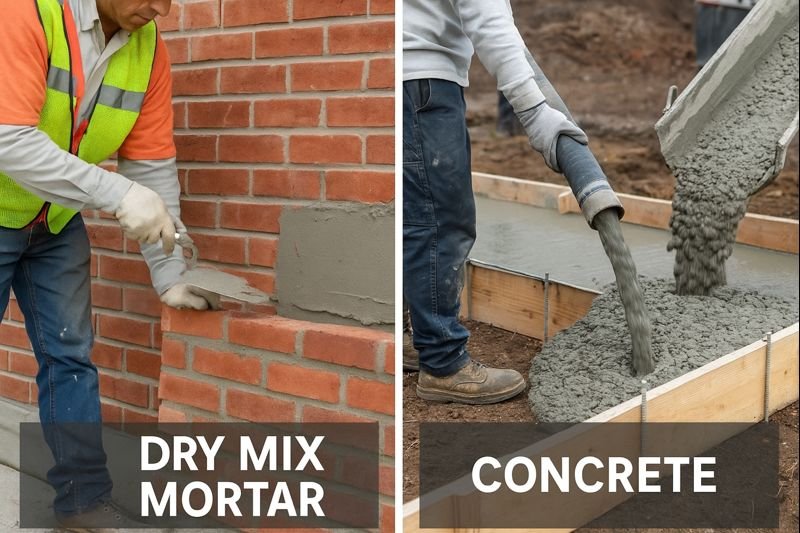
You're about to order construction materials, but confusion strikes. Dry mix mortar or concrete? Make the wrong choice, and your project could literally crumble. Let's clear this up.
Dry mix mortar1 and concrete serve different construction purposes. Concrete forms load-bearing structures like beams and foundations, containing large aggregates for strength. Mortar acts as "glue" for bricks and tiles, using only sand as aggregate for bonding and leveling surfaces.
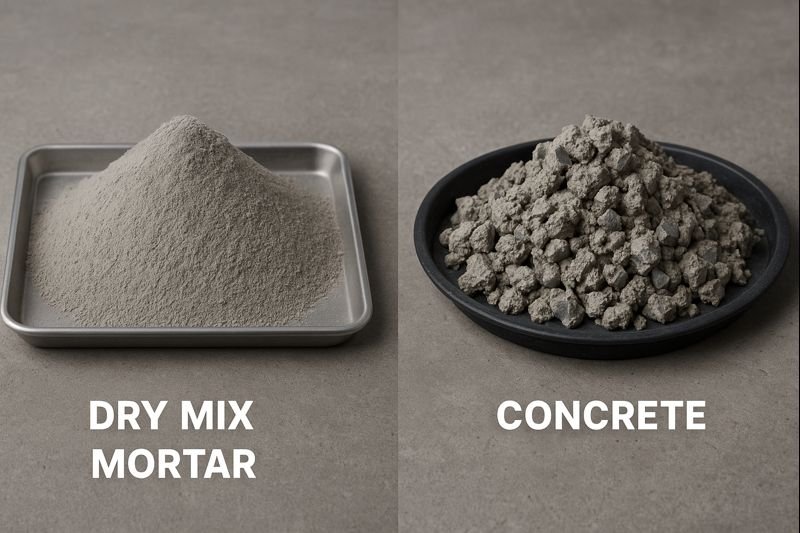
I've worked with both materials for years, and the confusion between them is common even among experienced builders. The differences go beyond just ingredients - they affect everything from production methods to final costs. Let's break down what makes each unique and when to use them.
The Production is Different?
Traditional mortar mixing on-site often leads to inconsistent quality. Workers guess proportions by "feel," resulting in batches that vary in strength. Dry mix mortar solves this with factory precision.
Dry mix mortar1 is factory-produced with precise proportions of cement, sand, and additives, packed in bags ready for water addition on-site. Concrete production involves mixing cement with sand, water, and crucial coarse aggregates like gravel that give it structural strength.
Dry mix mortar manufacturing requires sophisticated equipment to ensure consistency. The process starts with raw material testing, followed by precise batching, thorough mixing, and quality testing before packaging. Modern plants use computerized systems to maintain exact formulations.
The additives make a big difference too. Dry mix mortar often contains cellulose ethers like HPMC2 to improve water retention and workability. Other additives include redispersible polymer powders3 for flexibility and adhesion strength.
Concrete production, on the other hand, focuses more on structural integrity. The mix ratios are calculated based on required compressive strength. While site-mixed concrete is common, ready-mix delivered by truck ensures better quality control.
Key Production Comparison
| Feature | Dry Mix Mortar | Concrete |
|---|---|---|
| Main components | Cement, fine sand, additives | Cement, sand, water, coarse aggregates |
| Mixing precision | High (factory-controlled) | Variable (site-mixed) to high (ready-mix) |
| Additives | HPMC, redispersible powder, cellulose | Water reducers, superplasticizers |
| Packaging | Bags (25-40kg) | Bulk or ready-mix delivery |
The Usage is Different?
I once watched workers try to use concrete for tile adhesion. The large aggregates created lumps, tiles fell off, and the project needed complete rework. Using the right material for each job is critical.
Dry mix mortar serves as the "glue" in construction - bonding bricks, setting tiles, and creating smooth wall finishes. Concrete functions as the "skeleton," forming load-bearing elements like foundations, columns, beams, and slabs that provide structural integrity.
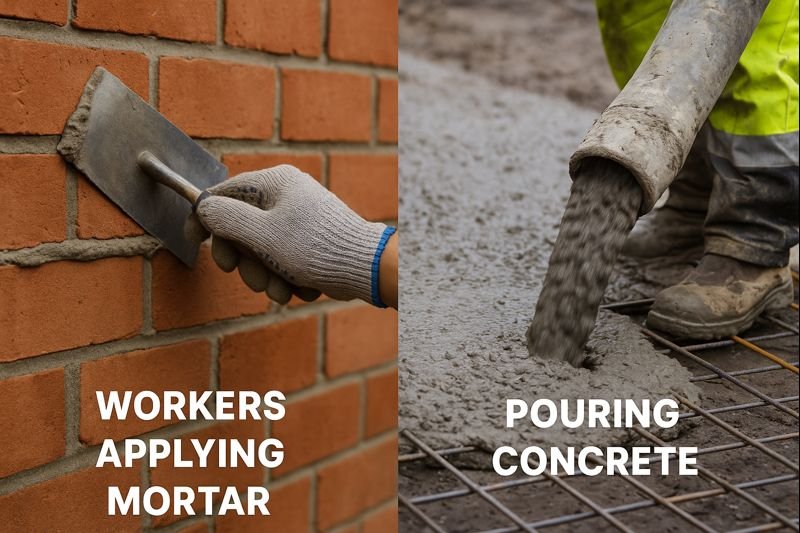
Dry mix mortar's versatility is impressive. It comes in various specialized formulations for specific applications. Masonry mortar bonds bricks and blocks, while plastering mortar creates smooth wall finishes. Tile adhesives provide strong bonding for ceramic and porcelain surfaces, and repair mortars fix damaged concrete structures.
What makes each type different is the additive package. For example, tile adhesives4 contain more polymer powders for flexibility and adhesion. Plastering mortars include air-entraining agents for workability. Waterproof mortars contain hydrophobic components to resist moisture penetration.
Concrete applications focus on strength and durability. Structural engineers calculate the exact requirements based on load factors and environmental conditions. For foundations, high-density concrete with water-resistant properties is needed. For exposed structures like bridges, freeze-thaw resistant formulations are essential.
The application methods differ significantly too. Mortar is typically applied in thin layers using trowels or spraying equipment. Concrete requires formwork to hold its shape until setting and often needs vibration to remove air pockets.
Common Applications Comparison
| Application | Dry Mix Mortar | Concrete |
|---|---|---|
| Wall construction | Brick/block bonding | Load-bearing walls |
| Flooring | Tile setting, self-leveling | Structural slabs, foundations |
| Surface finishing | Plastering, rendering | Typically covered by other materials |
| Repair work | Patch repairs, surface leveling | Structural repairs, reinforcement |
The Cost is Different?
Last year, I compared prices for a commercial project. The concrete cost seemed lower initially, but for non-structural applications, using mortar ultimately saved money through reduced labor and waste.
Dry mix mortar typically costs more per volume than concrete due to its specialized additives and processing. However, the total project cost analysis should include labor efficiency, waste reduction, quality consistency, and application-specific requirements.
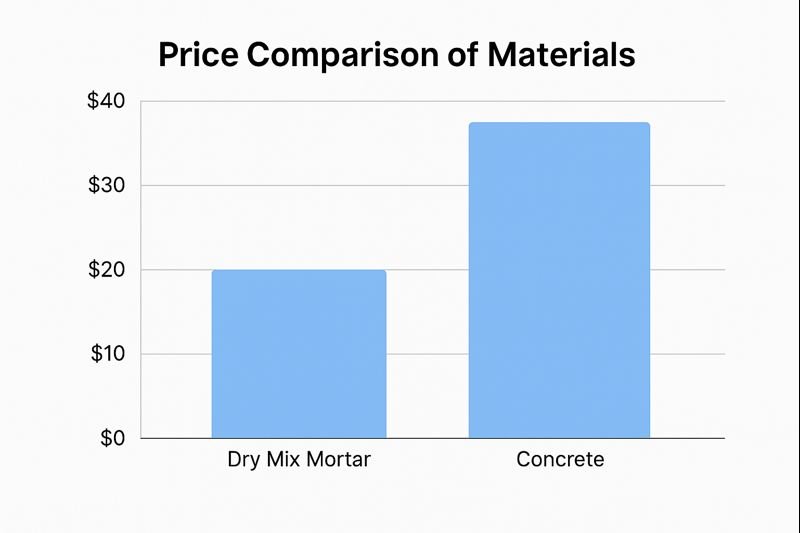
The price difference between these materials stems from several factors. Dry mix mortar requires more processing steps and often contains sophisticated additives like hydroxypropyl methylcellulose (HPMC2) and redispersible polymer powders3 that enhance performance but increase manufacturing costs.
Labor costs also vary significantly between the materials. Dry mix mortar reduces on-site mixing time and labor, potentially offsetting its higher material cost. One study I read showed that using dry mix mortar can reduce labor time by up to 30% compared to traditional site-mixed mortar.
Material wastage is another important cost consideration. Pre-mixed products typically result in less waste than site-mixed alternatives. This becomes particularly important on large projects where even small percentage savings translate to significant amounts.
Long-term costs must be considered too. Better quality control in factory-produced dry mix products often leads to more durable constructions with fewer callbacks and repairs. For example, consistent mortar strength reduces the risk of tile delamination or cracked renders that would require expensive remediation.
Different project scales may favor different solutions. Small projects might benefit from the convenience of bagged dry mix products, while large-scale construction often finds bulk concrete more economical. The transportation cost impact increases with distance from production facilities.
Cost Factor Comparison
| Cost Factor | Dry Mix Mortar | Concrete |
|---|---|---|
| Material cost per m³ | Higher | Lower |
| Labor efficiency | Better (pre-mixed) | Variable (depends on mixing method) |
| Waste percentage | Lower (precise quantities) | Higher (especially site-mixed) |
| Quality consistency | High | Variable to high (ready-mix) |
| Long-term durability | Excellent for non-structural | Excellent for structural |
What Are the Disadvantages of Dry Mix Concrete5?
On a recent project, I found bags of dry mix concrete hardened from warehouse humidity. We lost materials and time waiting for replacements, a problem we could have avoided with proper storage.
Dry mix concrete's main disadvantages include limited shelf life (typically 3-6 months), sensitivity to storage conditions, higher cost than site-mixed alternatives, and reduced workability if not used promptly after water addition.
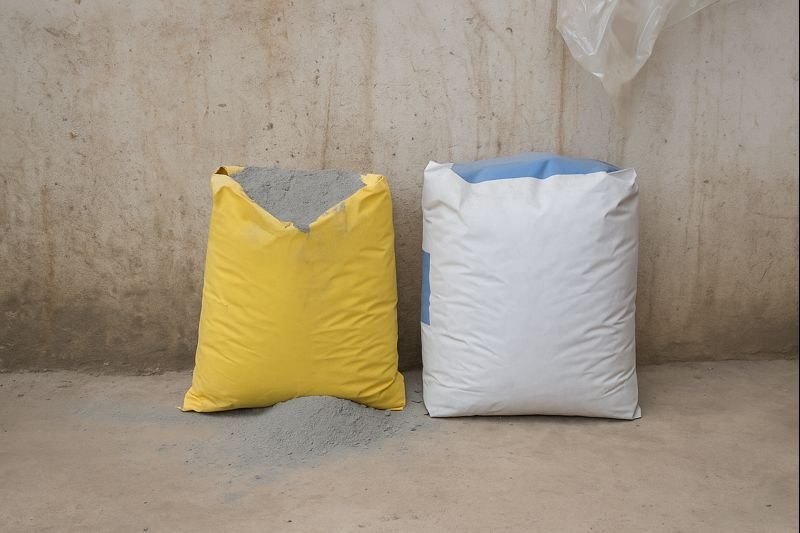
Dry mix concrete presents several challenges that contractors should be aware of before choosing this option. Storage requirements are particularly demanding - bags must be kept completely dry in weatherproof conditions, preferably on pallets above ground level. Even minor moisture exposure can trigger premature cement hydration, creating hardened lumps or completely solidified bags.
Transportation logistics present another challenge. The weight of bagged materials increases handling costs and can cause delivery difficulties to sites with limited access. For large projects, the sheer volume of bags required creates storage space problems on confined construction sites.
The batching limitations are also significant. Most dry mix concrete comes in standard bag sizes, making it difficult to produce precise custom volumes. This often results in either mixing too much (creating waste) or too little (requiring another partial bag mix with potential consistency variations).
Quality concerns exist despite factory production. If manufacturers cut corners with low-grade aggregates or insufficient cement content, the final product may not meet strength requirements. Without on-site quality testing capabilities, contractors often rely solely on manufacturer reputation.
Environmental considerations add another disadvantage. The packaging creates substantial waste, particularly on large projects. Paper bags often become contaminated with cement residue, making them difficult to recycle in many areas.
Disadvantage Assessment
| Disadvantage | Impact Level | Mitigation Strategy |
|---|---|---|
| Limited shelf life | High | Regular stock rotation, just-in-time delivery |
| Storage sensitivity | High | Weatherproof storage facilities, pallets |
| Cost premium | Medium | Volume purchasing, project-specific calculation |
| Packaging waste | Medium | Recycling programs, bulk delivery systems |
| Batching inflexibility | Medium | Careful planning, standardized requirements |
What is the Difference Between Dry Mix and Ready Mix Concrete?
Recently I supervised two identical foundation pours - one using dry mix, one using ready-mix. The ready-mix finished hours earlier with better consistency, though at higher cost.
Dry mix concrete comes in bags requiring on-site water addition and mixing, suitable for small projects with basic equipment. Ready-mix concrete arrives fully mixed in trucks, ready for immediate pouring, offering higher quality control and efficiency for larger projects.

The fundamental difference between these two concrete delivery systems lies in where the mixing occurs. Dry mix concrete places this responsibility on the construction crew, requiring proper equipment, water measurement, and mixing technique to achieve the intended properties. This introduces significant variables that can affect concrete quality.
Ready-mix concrete transfers quality control to specialized production facilities with precise batching systems, laboratory testing capabilities, and professional technicians. Computer-controlled plants measure ingredients by weight rather than volume, significantly improving consistency. Additionally, quality control samples are typically taken before dispatch and upon delivery.
Time considerations heavily favor ready-mix for projects beyond very small scales. Mixing concrete on-site from dry bags is labor-intensive and time-consuming. A typical small electric mixer might handle only two bags simultaneously, making large pours extremely inefficient. Ready-mix trucks can deliver and place several cubic meters within minutes.
Weather impact resistance also differs substantially. On-site mixing during adverse weather conditions can introduce water content variations and temperature issues affecting curing. Ready-mix plants can adjust mix designs for weather conditions and deliver concrete optimized for the specific environmental circumstances at your site.
Logistics planning requirements differ dramatically. Dry mix requires staging areas for bag storage, mixing equipment, and cleanup facilities. Ready-mix requires vehicle access to pour locations, pour sequencing plans, and sometimes pumping equipment, but eliminates on-site material storage needs.
Comparison of Concrete Systems
| Factor | Dry Mix Concrete | Ready Mix Concrete |
|---|---|---|
| Quality control | Variable (crew-dependent) | High (factory-controlled) |
| Project scale suitability | Small to medium | Medium to large |
| Equipment requirements | Mixing equipment, water source | Access for delivery trucks |
| Labor requirements | High | Low |
| Weather vulnerability | High | Moderate |
| Cost structure | Higher materials, lower delivery | Lower materials, higher delivery |
What is Dry Mix Mortar Used For?
A homeowner once asked me why we needed specialized mortar for her bathroom renovation. After explaining how the waterproof tile adhesive mortar would prevent moisture damage, she understood its value beyond just "sticking tiles."
Dry mix mortar serves multiple construction purposes including masonry work6 (brick/block laying), surface rendering, floor screeding, tile adhesion, and specialized applications like waterproofing. Its factory-controlled quality ensures consistent performance for each specific application.
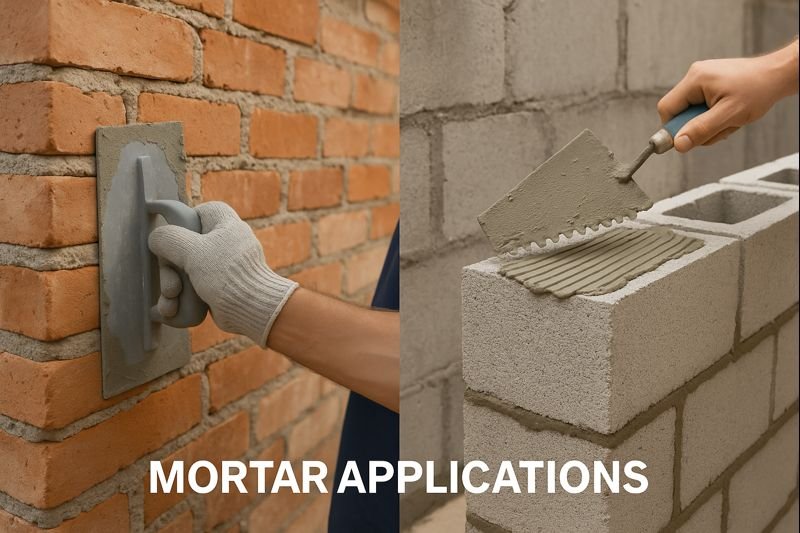
The versatility of dry mix mortar stems from manufacturers' ability to precisely formulate products for specific construction challenges. This specialization has revolutionized modern building practices by replacing general-purpose site-mixed mortars with application-optimized products.
Masonry applications represent perhaps the most traditional use. Specialized dry mix mortars for bricklaying offer calibrated compressive strength, appropriate bond strength, and workability periods suited to professional bricklayers' needs. Some formulations provide enhanced freeze-thaw resistance for exterior walls in cold climates, while others offer higher sulfate resistance for challenging soil conditions.
Surface finishing applications showcase the aesthetic capabilities of dry mix mortars. Rendering mortars create decorative and protective external finishes with various textures and colors. Interior plastering mortars provide the smooth base needed for paint applications. The factory-controlled particle size distribution ensures consistent finish quality impossible with site-mixed alternatives.
Flooring applications demonstrate the technical sophistication of modern dry mix formulations. Self-leveling floor mortars contain specialized flow additives that allow them to seek their own level, creating perfectly flat surfaces ready for final floor coverings. Rapid-setting varieties allow for foot traffic within hours rather than days.
Tile installation systems highlight the importance of application-specific formulations7. Dry mix adhesives range from basic cement-based products for simple applications to highly-specialized formulations for challenging environments like swimming pools or industrial floors subject to thermal cycling and chemical exposure.
Application-Specific Mortar Types
| Application | Specialized Mortar Type | Key Performance Features |
|---|---|---|
| Exterior walls | Weather-resistant masonry mortar | Freeze-thaw durability, water repellency |
| Bathroom tiles | Waterproof tile adhesive | Moisture resistance, mold prevention |
| Industrial flooring | High-strength screed mortar | Abrasion resistance, load bearing capacity |
| Historic restoration | Lime-based repair mortar | Breathability, compatibility with old structures |
| Rapid construction | Quick-setting plaster | Accelerated setting time, early strength gain |
Conclusion
Concrete builds the structure, while dry mix mortar handles the connections and finishes. Understanding these differences helps you choose the right material for each specific construction need, saving time, money, and ensuring quality results.
-
Explore this link to understand the versatile applications of dry mix mortar in construction. ↩ ↩
-
Learn about HPMC and its role in improving mortar properties. ↩ ↩
-
Explore the benefits of redispersible polymer powders in construction applications. ↩ ↩
-
Explore the different types of tile adhesives and their applications. ↩
-
Learn about the essential roles concrete plays in building strong structures. ↩
-
Find out how specialized mortars improve masonry work and ensure durability. ↩
-
Understand the importance of tailored formulations for different construction challenges. ↩