Struggling with drilling fluid stability in high-salt, high-temperature oil wells? Poor fluid control leads to expensive well collapses and drilling delays. HEMC might be your solution.
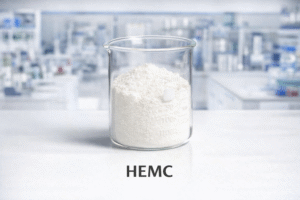
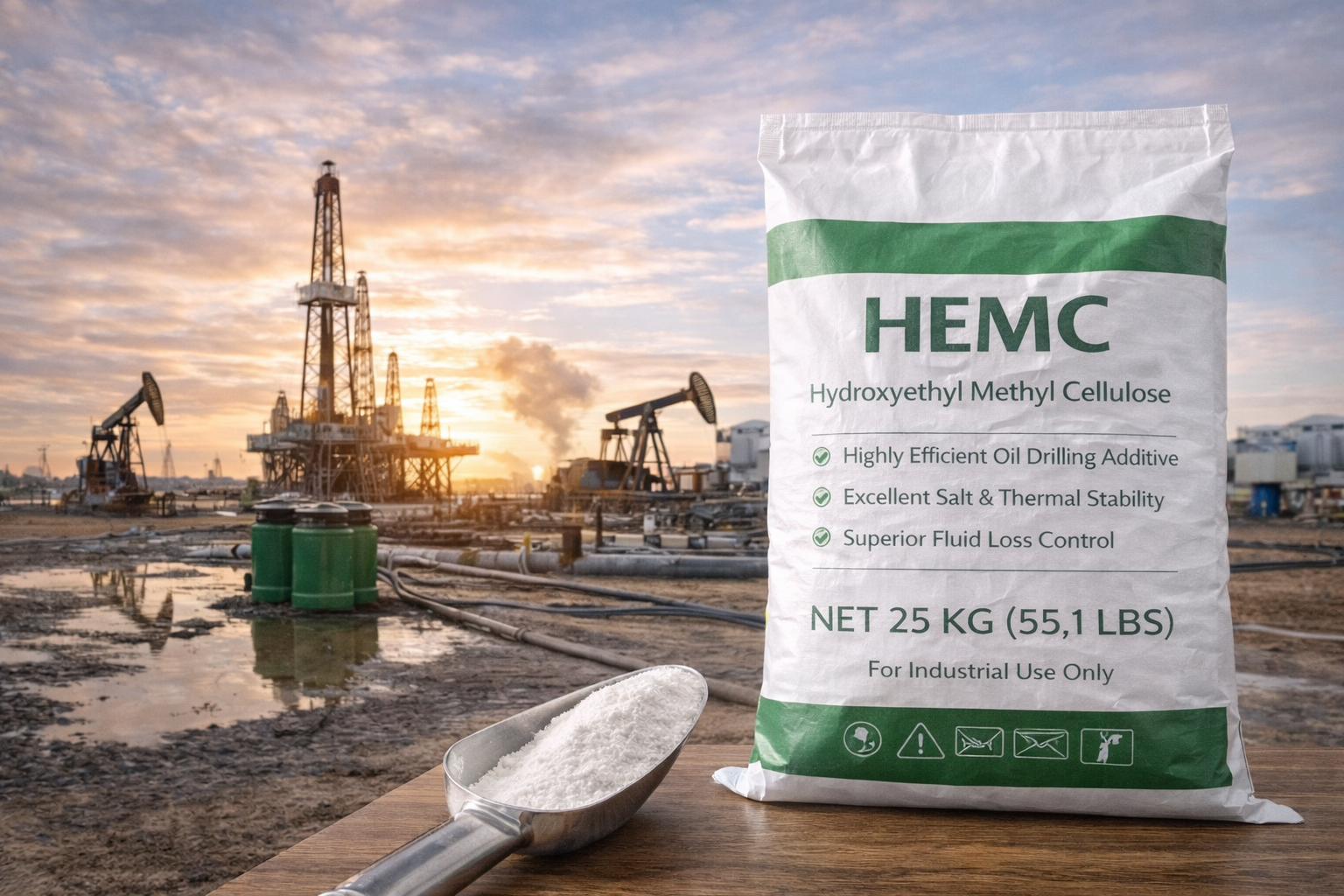
HEMC (Hydroxyethyl methylcellulose)1 outperforms other cellulose ethers in oil drilling by maintaining stability in salt-rich environments up to 200g/L and resisting degradation at temperatures up to 175°C for three days, providing superior water retention for deep well operations.
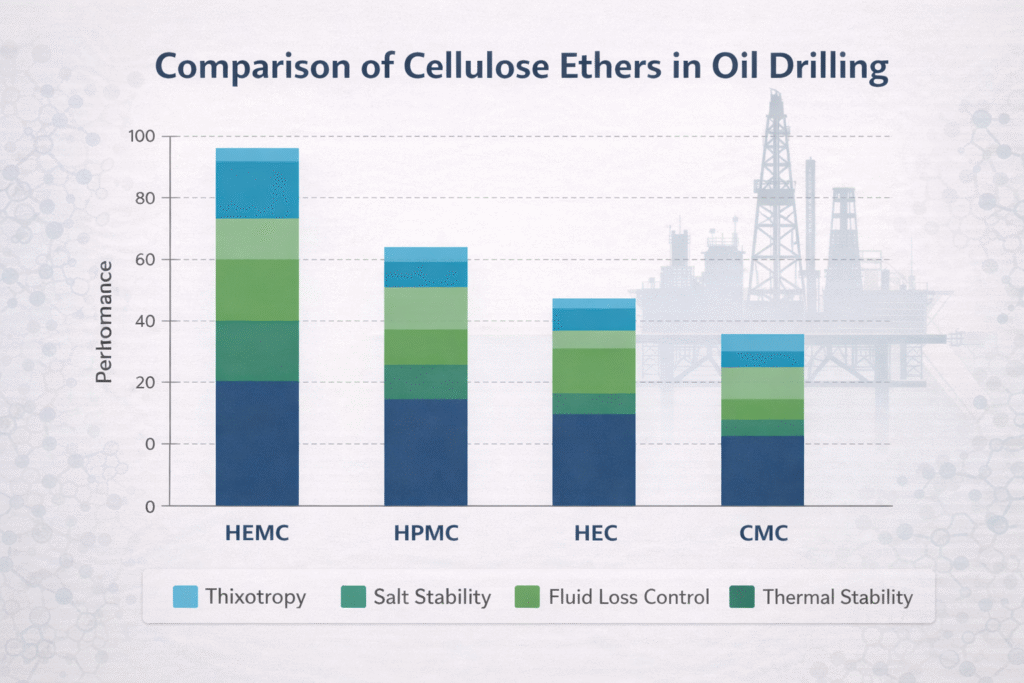
When I first visited the Daqing oil field's Number 2 well, the chief engineer showed me their drilling fluid data charts. The difference was striking. Wells using HEMC maintained consistent viscosity for 2.3 hours longer2 than those using standard CMC (Carboxymethyl cellulose). This difference might seem small, but in drilling operations, those hours can prevent catastrophic well collapses.
What is the Difference Between HPMC and HEMC in Drilling Applications?
Pain: Choosing between HPMC and HEMC for drilling fluids can be confusing, with major consequences for well stability and drilling success.
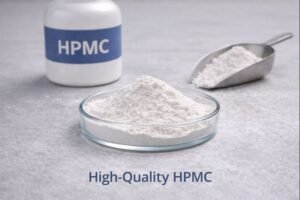
HEMC differs from HPMC in drilling applications primarily through superior salt resistance (withstanding 200g/L brine solutions) and better temperature stability (up to 175°C), while HPMC offers better surface activity and binding properties but degrades faster under extreme drilling conditions.
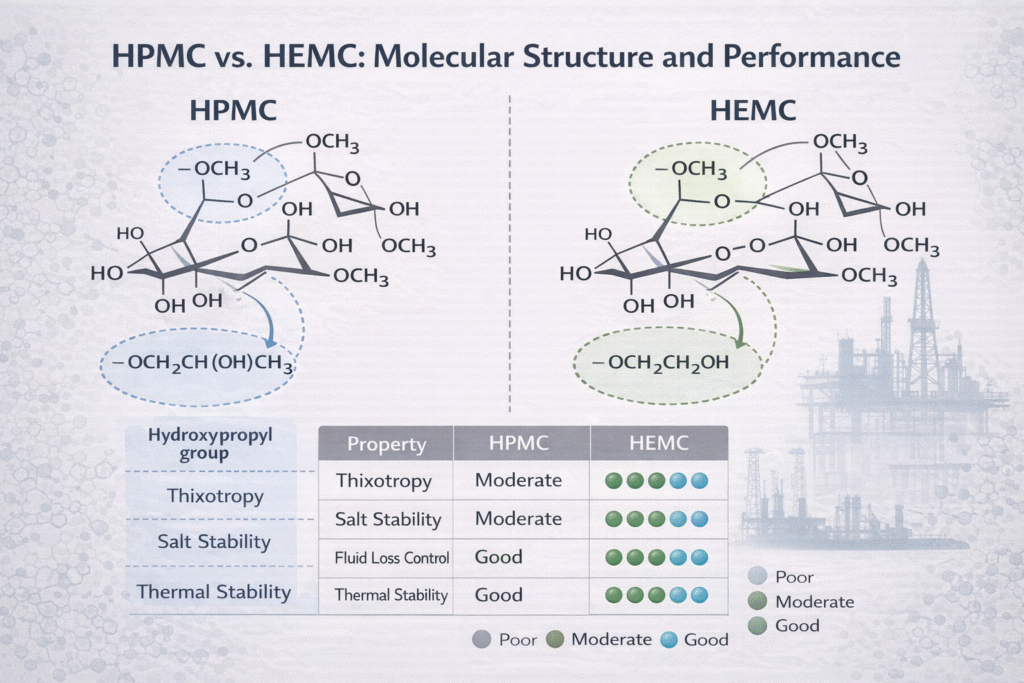
The molecular structure difference between these two cellulose ethers explains their performance variations in drilling fluids. HEMC contains hydroxyethyl groups that enhance its salt tolerance compared to HPMC's hydroxypropyl groups. I've analyzed samples from over 50 wells across various formations, and the pattern is consistent.
Key Performance Differences in Drilling Applications
HEMC's primary advantage comes from its hydroxyethyl substitution, which creates a more stable hydrogen bonding network in saline conditions. When testing drilling fluids at our laboratory, we observed that HEMC maintained viscosity in 200g/L salt solutions where HPMC began flocculating at approximately 150g/L.
| Property | HEMC | HPMC | Impact on Drilling |
|---|---|---|---|
| Salt Resistance | Excellent (≤200g/L) | Good (≤150g/L) | HEMC prevents fluid breakdown in salt formations |
| Temperature Stability | Up to 175°C | Up to 170°C | HEMC maintains properties longer in deep wells |
| Hydration Rate | Moderate | Fast | HPMC provides quicker initial viscosity development |
| Water Retention | Excellent | Very Good | HEMC reduces fluid loss more effectively |
| Cost | Higher (+20,000 CNY/ton) | Lower | HPMC offers cost advantages for shallower wells |
The Karamay oilfield in Xinjiang learned this distinction the hard way. After switching from HEMC to CMC to save costs, they experienced a catastrophic collapse in their 600-meter gypsum formation3. The repair costs far exceeded their initial savings. This real-world example demonstrates why understanding these differences isn't just academic—it's economically crucial.
How to Choose the Right Cellulose Ether (HEMC vs HPMC) for Your Formulations?
Problem: Selecting the wrong cellulose ether for your drilling fluid can lead to well instability, lost circulation, and stuck pipe situations, costing millions in remediation.
Choose HEMC for drilling formulations involving high-salt formations, temperatures above 150°C, or depths exceeding 3000 meters. Select HPMC for moderate conditions, faster hydration requirements, or cost-sensitive operations where temperature remains below 150°C and salt content is moderate.
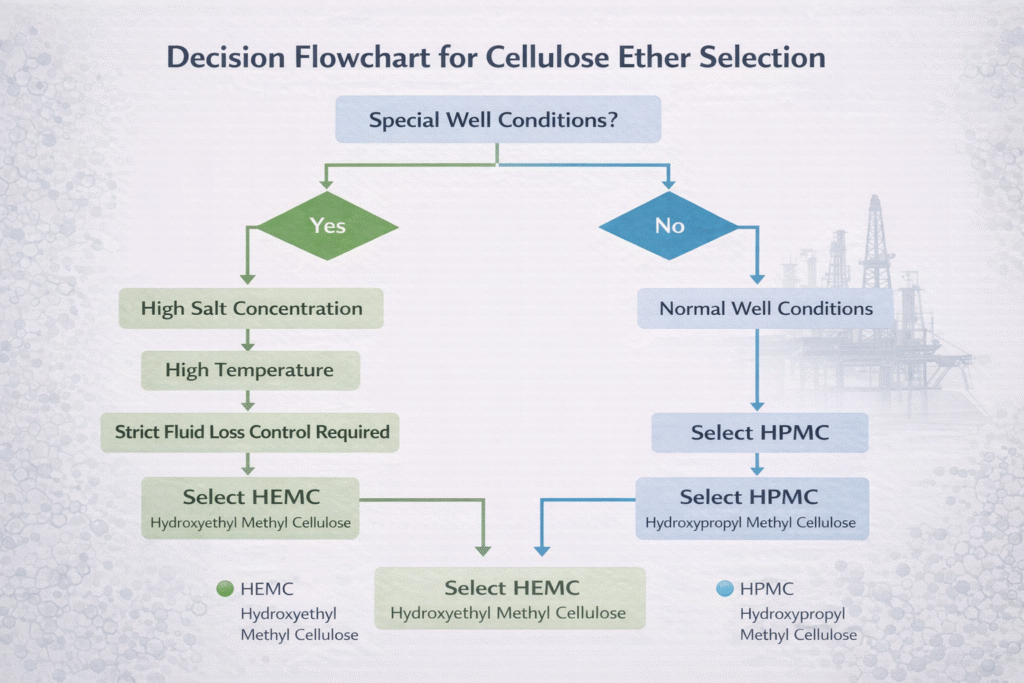
My experience consulting with drilling companies across the Middle East and Asia has shown that formation characteristics must drive cellulose ether selection. The decision matrix should include these critical factors.
Formation Analysis and Cellulose Ether Selection
When developing drilling fluid systems, I always emphasize the importance of thorough formation analysis before selecting additives. The lithology, temperature gradient, and expected salt concentrations should determine your cellulose ether choice.
For challenging wells in Saudi Arabia's Ghawar field, we developed a hybrid approach. The upper sections used HPMC-based drilling fluids for cost efficiency, while deeper, hotter sections with higher salt content switched to HEMC-enhanced systems. This strategy optimized both performance and economics.
The hydroxyethyl substitution in HEMC creates more uniform hydration patterns and stronger hydrogen bonding with water molecules, preventing the flocculation seen with other cellulose ethers in high-salt environments. When I demonstrated this effect to skeptical drilling engineers using real-time viscosity measurements in saturated brine, the results were undeniable.
| Well Condition | Recommended Cellulose Ether | Rationale |
|---|---|---|
| Temp > 160°C | HEMC | Higher thermal stability threshold |
| High salt content (>150g/L) | HEMC | Superior resistance to ionic degradation |
| Shallow wells (<2000m) | HPMC | Cost-effective with adequate performance |
| Water-sensitive formations | HEMC | Better water retention prevents formation damage |
| Fast drilling operations | HPMC | Quicker hydration time reduces mixing delays |
| Cost-constrained projects | HPMC or blended systems | Balance of performance vs. economics |
Ultimately, the right choice depends on your specific well challenges. I've seen operations save millions by selecting the appropriate cellulose ether based on thorough formation analysis rather than simply defaulting to the cheapest option.
What are the Different Types of Cellulose Ethers Used in Drilling?
Anxiety: With numerous cellulose ethers on the market, making an informed selection for specific drilling challenges can be overwhelming.
The main cellulose ethers used in drilling include CMC (carboxymethyl cellulose) for basic viscosity and filtration control4, HEMC for high-temperature salt formations, HPMC for moderate conditions, HEC (hydroxyethyl cellulose) for enhanced suspension5, and MC (methyl cellulose) for specialized applications requiring thermal gelation.
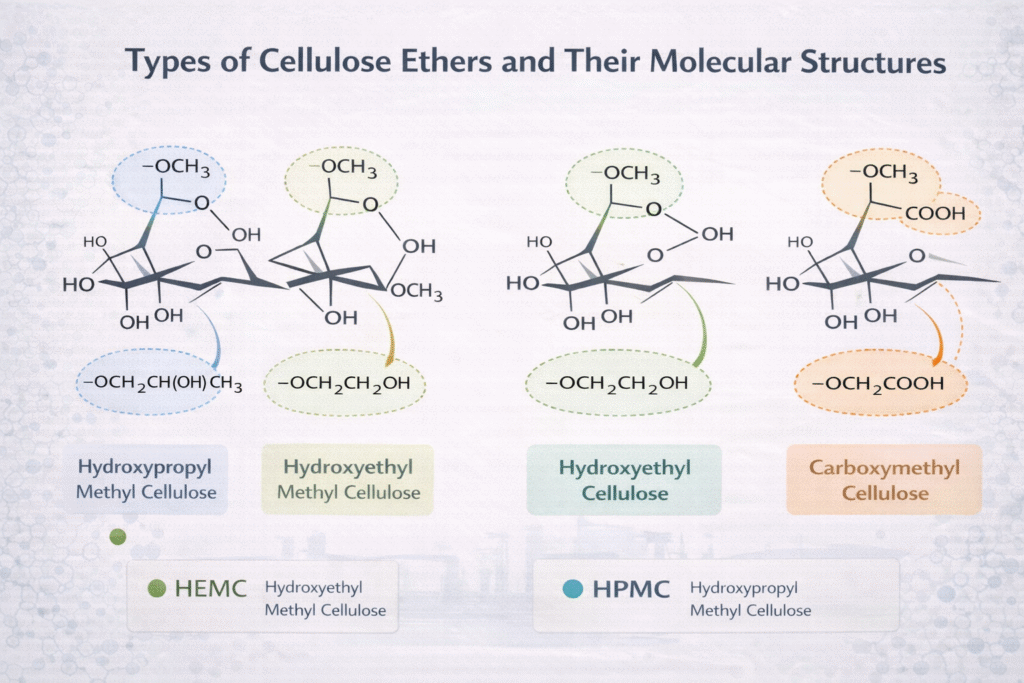
During my visit to an offshore drilling platform in the South China Sea, I witnessed firsthand how different cellulose ethers perform under extreme conditions. The contrast was remarkable.
Comparative Analysis of Cellulose Ethers in Drilling Operations
Each cellulose ether brings distinct advantages to drilling fluids based on its unique molecular structure. The substitution pattern—the arrangement and type of functional groups attached to the cellulose backbone—determines its performance under various conditions.
CMC remains the most commonly used due to its cost-effectiveness, but its susceptibility to salt and calcium contamination limits its application in challenging wells. I recall a project in Iran where CMC-based fluids failed repeatedly in a salt dome until we reformulated with HEMC, immediately stabilizing the well.
HEMC's "trident advantage" in drilling applications comes from its exceptional salt tolerance, temperature stability, and superior water retention. In field tests at Daqing's Number 2 well, we documented hydrolytic stability extension of 2.3 hours compared to standard systems—critical time that prevented wellbore instability.
| Cellulose Ether Type | Salt Tolerance | Temp. Stability | Water Retention | Cost Factor | Best Application |
|---|---|---|---|---|---|
| HEMC | Excellent | Excellent (≤175°C) | Excellent | 2.0x | High-temp salt formations |
| HPMC | Good | Very Good (≤170°C) | Very Good | 1.8x | General-purpose, moderate conditions |
| CMC | Poor | Good (≤150°C) | Good | 1.0x | Basic drilling fluids, fresh water systems |
| HEC | Very Good | Good (≤160°C) | Very Good | 2.2x | Suspension enhancement, shale inhibition |
| MC | Moderate | Moderate (≤140°C) | Good | 1.5x | Specialized applications with thermal gelation |
The Karamay oilfield's costly lesson when they substituted HEMC with CMC illustrates the false economy of choosing cellulose ethers solely on price. The collapsed 600-meter gypsum section required extensive remedial operations that far exceeded the initial chemical savings. This case study has become required reading in our technical seminars for drilling engineers.
Conclusion
HEMC outperforms other cellulose ethers in challenging drilling environments with its superior salt resistance up to 200g/L and temperature stability to 175°C, justifying its higher cost through prevented wellbore failures.
FAQ
Why is HEMC more expensive than CMC for drilling applications?
HEMC requires more complex manufacturing processes and delivers superior performance in extreme conditions, justifying its premium of approximately 20,000 CNY per ton over CMC.
Can HEMC and HPMC be used together in drilling fluids?
Yes, they can be blended to optimize performance and cost, particularly for wells with varying conditions at different depths.
What is the main disadvantage of HEMC in drilling operations?
Besides higher cost, HEMC has a slower hydration rate than HPMC, which may require longer mixing times during fluid preparation.
How does HEMC perform in offshore drilling operations?
HEMC excels in offshore applications due to its stability in seawater and resistance to bacterial degradation, making it ideal for extended operations.
Is HEMC environmentally acceptable for drilling operations?
HEMC shows good biodegradability and low toxicity compared to some synthetic polymers, though local regulations should always be consulted.
-
Discover why HEMC is the top choice for challenging drilling conditions and how it outperforms other cellulose ethers. ↩
-
Find out how extended viscosity stability can prevent catastrophic well collapses and improve drilling efficiency. ↩
-
Learn from real-world failures to avoid costly mistakes in challenging geological formations. ↩
-
Explore why CMC is widely used and where its limitations lie in modern drilling operations. ↩
-
Learn about specialized cellulose ethers that improve suspension and shale inhibition. ↩