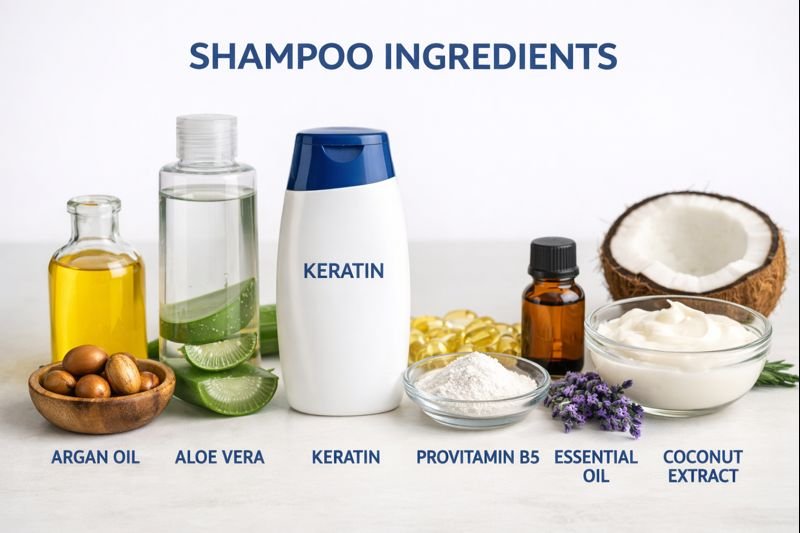
Hair looking lifeless? Your shampoo ingredients might be to blame. Many consumers grab bottles off shelves without understanding what goes into these products, potentially causing more harm than good.
A quality shampoo typically contains 7-12 key ingredients including water (80%), cleansing agents like sulfates, conditioning agents such as silicones1, thickeners like HPMC or Carbopol, salt, preservatives, and active ingredients targeting specific hair concerns.

I've spent years working with chemical ingredients for personal care products, and I'm always surprised at how little most buyers know about what's in their daily hair care. Let me break down the essential ingredients you should understand before your next purchase.
What Are Sulfates in Shampoo and Why Should You Care?
Every time I see someone scrubbing up a rich lather, I wonder if they know what's creating those bubbles. Sulfates in your shampoo might be stripping more than just dirt from your hair.
Sulfates are detergents like Sodium Lauryl Sulfate (SLS)2 and Sodium Laureth Sulfate (SLES)3 that create foam and remove oil and dirt. While effective cleansers, they can strip natural oils, irritate sensitive scalps, and fade color-treated hair with regular use.

Sulfates work as surfactants, meaning they lower the surface tension between liquids and solids. This property makes them excellent at removing oils from your hair and scalp. However, this cleansing power comes at a cost.
Different types of sulfates offer varying levels of harshness:
- Sodium Lauryl Sulfate (SLS)2: The most aggressive, excellent for very oily hair but potentially irritating
- Sodium Laureth Sulfate (SLES)3: A milder option as it undergoes ethoxylation
- Ammonium Lauryl Sulfate: Slightly gentler than SLS but still powerful
For consumers with sensitive skin, colored hair, or naturally dry hair, sulfate-free alternatives might be better choices. These gentler cleansers like cocamidopropyl betaine or sodium cocoyl isethionate don't create as much foam but preserve more of your hair's natural moisture.
I once worked with a formulation team creating sulfate-free shampoos, and the challenge was always maintaining that psychologically satisfying foam while using milder ingredients. Many consumers don't realize that foam isn't actually necessary for cleaning!
Why Is Water The Main Ingredient in Your Shampoo?
I often find it funny when people are surprised that water tops the ingredients list. The liquid in your bottle isn't just a carrier - it's the foundation of your entire product.
Water typically constitutes 70-80% of shampoo formulations, serving as the primary solvent that dissolves and carries other ingredients. Its quality affects product stability, and manufacturers use purified water to prevent contamination and ensure consistent product performance.

The water in your shampoo isn't just any water - it's highly purified through processes like deionization, distillation, or reverse osmosis. This level of purity is crucial because minerals or contaminants can interact with other ingredients, affecting everything from shelf life to performance.
Water's role goes beyond just being a cheap filler. It:
- Dissolves water-soluble ingredients
- Creates the right viscosity for application
- Helps distribute active ingredients evenly
- Enables the foam generation consumers expect
- Facilitates the rinse-off process
In our factory, water quality testing is one of our most rigorous quality control steps. Even slight variations in mineral content can affect how ingredients like HPMC perform in the final product. We test for pH, hardness, microbial content, and dissolved solids to ensure consistency across production batches.
The percentage of water also varies by shampoo type - clarifying shampoos typically have higher water content, while moisturizing formulas may contain less water to make room for conditioning agents.
How Do Silicones Affect Your Hair Care Routine?
Many of my clients debate whether to include silicones in their formulations. These synthetic polymers offer instant benefits but come with potential drawbacks that divide hair care enthusiasts.
Silicones in shampoo are synthetic polymers that coat hair strands, creating a smooth, shiny surface that reduces frizz and makes combing easier. Common types include dimethicone4 and cyclomethicone, which provide immediate visual improvements but may cause buildup over time without proper cleansing.

Silicones create that immediate "wow effect" consumers love when trying a new shampoo. They work by forming a hydrophobic (water-repelling) layer that smooths down the hair's cuticle.
Different silicones serve different purposes in formulations:
| Silicone Type | Water Solubility | Benefits | Potential Issues |
|---|---|---|---|
| Dimethicone | Non-water soluble | Long-lasting protection, high shine | Most likely to cause buildup |
| Cyclomethicone | Evaporates after use | Lightweight, doesn't cause buildup | Less conditioning benefit |
| Amodimethicone | Positively charged, attaches to damaged areas | Targeted conditioning | Can build up on very damaged hair |
| PEG-modified silicones | Water-soluble | Easier to wash out | Less durable protection |
The silicone debate often centers around buildup. Heavy silicones can accumulate over time, especially for those who don't use clarifying shampoos occasionally. This buildup can eventually weigh hair down and prevent moisture from penetrating the hair shaft.
From my experience working with product formulators, the key is balance. Modern formulations often use water-soluble silicones or combine them with ingredients that prevent excessive buildup.
What Role Does Glycol Distearate Play in Shampoo Appearance?
I remember visiting a major shampoo manufacturing facility and watching as glycol distearate transformed a clear liquid into a pearly, luxurious-looking product. This ingredient plays a fascinating role in consumer perception.
Glycol distearate is a wax-like substance added to create the pearly, opaque appearance associated with premium shampoos. While primarily aesthetic, it also functions as a mild conditioner and thickener. This ingredient doesn't affect cleaning performance but significantly impacts consumer perception of product quality.
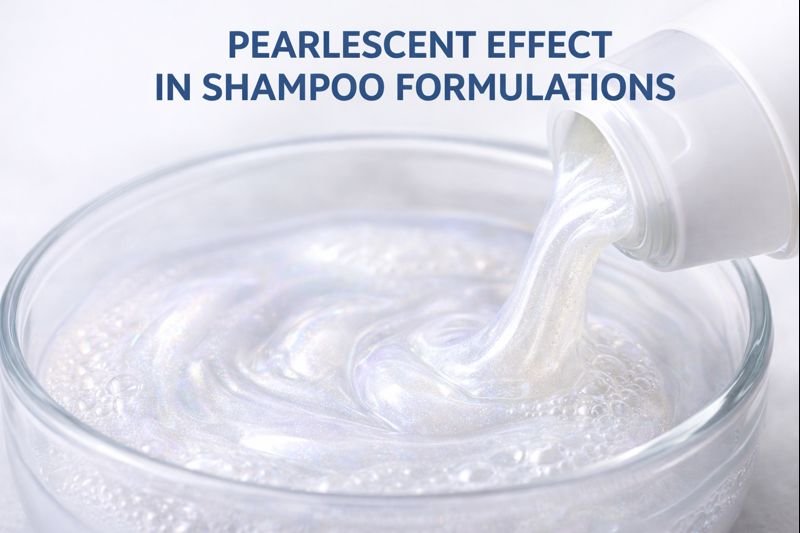
The psychology behind glycol distearate's use fascinates me. Studies show consumers perceive pearlescent shampoos as more luxurious and effective, even though this appearance has no impact on cleansing ability.
Beyond its visual appeal, glycol distearate does offer some functional benefits:
- Helps stabilize the emulsion of oil and water-based ingredients
- Provides a slight conditioning effect
- Contributes to the product's viscosity
- Helps suspend other ingredients throughout the formula
During formulation, the concentration of glycol distearate requires careful balancing - too much creates an overly opaque product that consumers may perceive as heavy or greasy, while too little fails to create the desired pearl effect.
Some natural and transparent formula trends are moving away from pearlizing agents, embracing clear formulas that highlight their natural ingredient content. However, for mainstream products, that pearly glow remains a powerful visual cue that influences purchasing decisions.
Why Is Sodium Chloride Added to Your Shampoo?
Common table salt in shampoo? When I explain this to people, they're often confused. Yet sodium chloride plays a crucial role in creating the texture consumers expect.
Sodium chloride (table salt) is primarily added to shampoos as an inexpensive thickening agent, especially in formulations containing sulfates. It adjusts viscosity to create the ideal pouring consistency consumers expect. However, it can be drying for some hair types and is often avoided in moisturizing formulations.
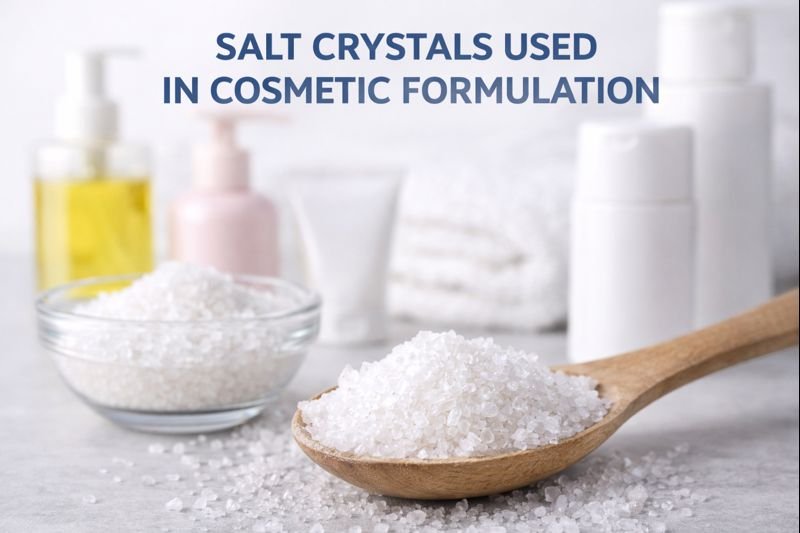
The science behind salt thickening is fascinating. In sulfate-based shampoos, salt affects the electrical charges of surfactant molecules, causing them to align in structures called micelles that increase the overall viscosity.
The concentration of salt in formulations is critical:
- Too little: Runny, watery product that consumers perceive as cheap
- Optimal amount: Thick, pourable consistency that stays on the hand
- Too much: Over-thickened product or one where salt crystals might reform
For consumers with dry hair or scalps, high-salt formulations may exacerbate these conditions. This is why sodium chloride is typically limited or eliminated in:
- Moisturizing formulas
- Curly hair products
- Color-safe shampoos
- Sensitive scalp formulations
In our manufacturing facility, we carefully test each batch's viscosity through quality control procedures to ensure consistency. Some premium formulations have moved away from salt thickening toward more sophisticated thickeners like HPMC, which brings additional benefits beyond just viscosity control.
How Does Daily Chemical Grade HPMC Improve Your Shampoo?
Working directly with HPMC production, I've seen firsthand how this versatile cellulose derivative transforms shampoo formulations. Its multi-functional properties make it increasingly popular in premium hair care.
Hydroxypropyl methylcellulose (HPMC)5 is a plant-derived thickener and stabilizer that improves shampoo texture without drying effects. Unlike salt, it adds moisturizing properties while maintaining viscosity. Daily Chemical Grade HPMC creates smooth-flowing formulas with enhanced feel and helps suspend specialty ingredients throughout the product.

HPMC stands out from traditional thickeners because it's non-ionic, meaning it doesn't interact negatively with other charged ingredients in the formula. This compatibility makes it valuable for complex formulations with multiple active ingredients.
The benefits of HPMC in shampoo extend beyond basic thickening:
| Function | Benefit |
|---|---|
| Thickening | Creates ideal viscosity without salt's drying effects |
| Stabilization | Prevents separation of ingredients during shelf life |
| Suspension | Keeps particles like exfoliants or treatment ingredients evenly distributed |
| Film-forming | Leaves a light, non-greasy protective film on hair |
| Moisture retention | Helps retain water, adding hydration benefits |
Different grades of HPMC offer varying viscosities and properties. Daily Chemical Grade HPMC is specifically formulated for personal care applications with controlled substitution patterns that optimize performance in shampoo systems.
In our production facility, we precisely control the manufacturing conditions of HPMC to ensure consistent molecular weight and substitution degree. These parameters directly affect how the polymer behaves in the final shampoo formulation. The ability to customize HPMC properties makes it valuable for formulators creating specialized shampoos for different hair types and concerns.
What Makes Carbopol Essential for Specialty Shampoos?
During a recent product development project, our team struggled with a gel shampoo formula until we incorporated Carbopol. This synthetic polymer solved multiple formulation challenges at once.
Carbopol (carbomer) is a synthetic polymer that creates clear gel textures in shampoo formulations. When neutralized to the correct pH, it forms a stable gel network that suspends ingredients, provides exceptional thickness control, and creates a luxurious feel even in sulfate-free formulations.

Carbopol's unique thickening mechanism sets it apart from other ingredients. While dormant as an acidic powder, it activates when neutralized to a slightly alkaline pH (typically 5.5-7.0), expanding into a three-dimensional gel network.
This behavior makes Carbopol particularly valuable for:
- Clear gel shampoos where transparency is desired
- Sulfate-free formulations that lack natural thickening response
- Formulas containing high levels of oils or conditioning agents
- Specialty treatments where prolonged scalp contact is beneficial
One interesting application I've worked with is the development of exfoliating scalp treatments. Carbopol's ability to suspend physical exfoliants like jojoba beads or fruit granules prevents them from settling during shelf storage.
The concentration of Carbopol required is remarkably small - typically 0.3-1.0% - making it cost-effective despite being more expensive by weight than salt or HPMC. However, formulating with Carbopol requires precise pH adjustment and specialized mixing equipment to fully hydrate the polymer and eliminate clumps.
For manufacturers, Carbopol presents some processing challenges, including longer production times and careful pH monitoring. These challenges explain why Carbopol-thickened products often command premium prices in the market.
How Do Fiber Actives Transform Specialized Shampoos?
The most exciting development I've seen in recent years is the incorporation of fiber actives into shampoo formulations. These specialized ingredients target specific hair concerns with science-backed results.
Fiber actives are specialized ingredients that target specific hair structure concerns like breakage, thinning, or damage. These include proteins (keratin, wheat, silk), vitamins (panthenol, biotin), botanical extracts, and specialized polymers. They work by penetrating or coating the hair fiber to deliver targeted treatment effects.

The evolution of protein technology in shampoos particularly fascinates me. Earlier formulations used large protein molecules that could only coat the hair surface. Modern hydrolyzed proteins are engineered at specific molecular weights to penetrate the hair cuticle and provide internal strengthening.
Common fiber actives include:
| Active Type | Examples | Primary Benefit |
|---|---|---|
| Hydrolyzed Proteins | Keratin, silk, wheat, collagen | Strengthens hair structure and reduces breakage |
| Vitamins | Panthenol (B5), biotin (B7), tocopherol (E) | Improves elasticity and moisture retention |
| Amino Acids | Arginine, cysteine | Building blocks for hair repair |
| Specialized Polymers | Polyquaternium series, PVP | Creates protective films and adds volume |
| Botanical Extracts | Aloe vera, green tea, chamomile | Provides antioxidant protection and soothes scalp |
The challenge with fiber actives lies in their delivery system. For these specialized ingredients to work, they must either:
- Deposit on the hair during the short washing cycle
- Penetrate the cuticle before being rinsed away
- Remain on the hair after rinsing
This is where formulation expertise becomes crucial. By adjusting pH, incorporating specific cationic (positively charged) compounds, or using specialized encapsulation technologies, manufacturers can enhance the deposition of these valuable actives.
In our work with specialized formulations, we've found that combining the right fiber actives with appropriate thickening systems like HPMC can significantly improve performance by extending contact time and enhancing ingredient delivery.
Conclusion
Understanding the key ingredients in your shampoo helps you make better choices for your specific hair needs. From cleansing sulfates to conditioning silicones to specialized fiber actives, each component serves a purpose in creating an effective formula for healthy, beautiful hair.
-
Explore the benefits and drawbacks of silicones to make better hair care choices. ↩
-
Learn about SLS to make informed choices about your hair care products and their effects. ↩ ↩
-
Discover the differences between SLES and SLS to find a gentler shampoo option. ↩ ↩
-
Find out how dimethicone can enhance your hair's appearance and its potential downsides. ↩
-
Understand how HPMC improves shampoo texture and performance for better hair care. ↩