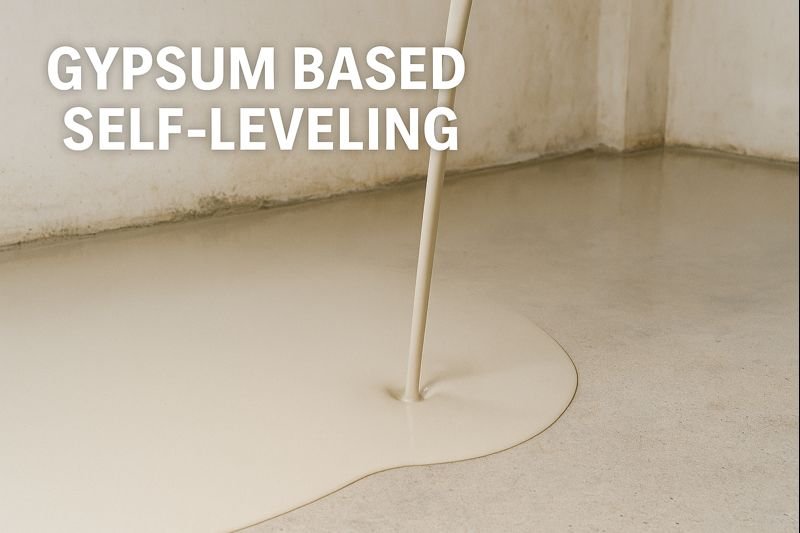
Uneven floors make installations a nightmare. Gaps between flooring materials create squeaking, cracking, and early wear that ruins your expensive materials and creates unhappy customers.
Gypsum-based self-leveling compounds1 provide exceptional dimensional stability with nearly zero shrinkage, creating perfectly flat, crack-free surfaces ideal for luxury flooring installations. These compounds excel in dry indoor environments but must be kept away from moisture to maintain their integrity.
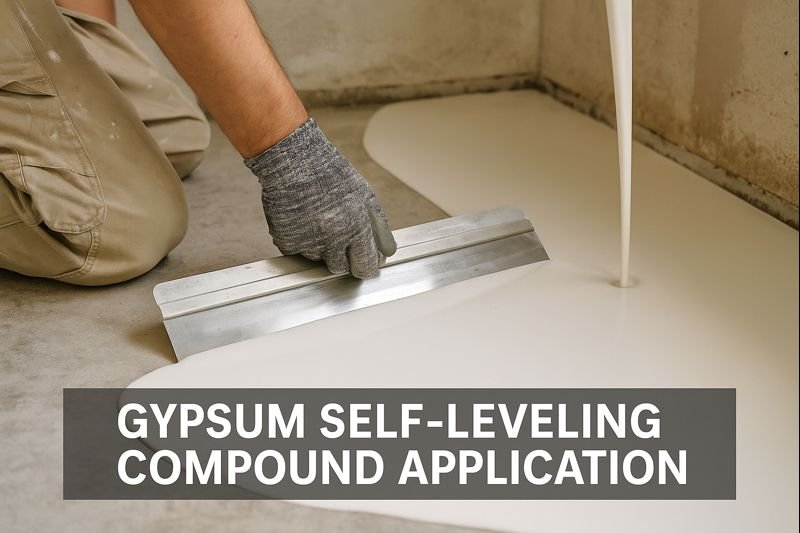
When I first used gypsum-based self-leveling compounds, I was amazed by how they transformed irregular floors into glass-smooth surfaces overnight. This technology has become essential in modern construction, but many still don't understand its advantages and limitations.
What Are the Advantages and Features of Gypsum-Based Self-Leveling Mortar?
Irregular subfloors can ruin expensive flooring installations. Even small imperfections lead to premature wear, unsightly gaps, and customer callbacks that damage your reputation.
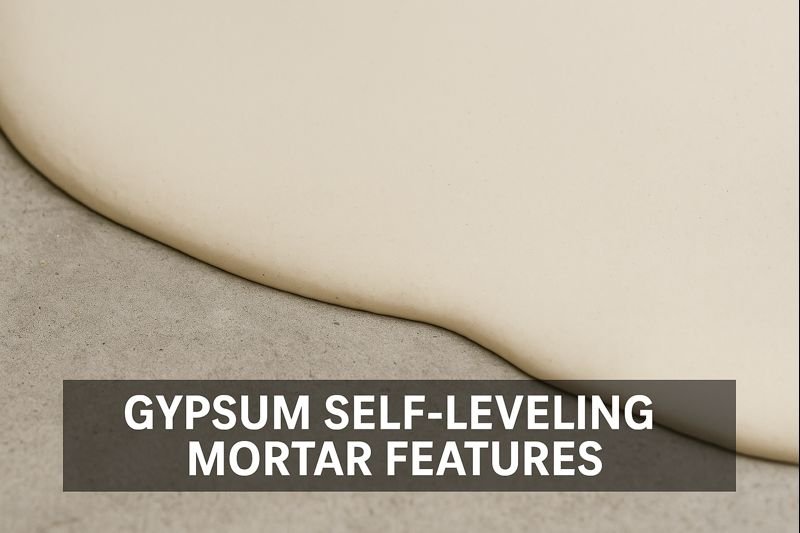
Gypsum-based self-leveling compounds1 offer remarkable dimensional stability with virtually zero shrinkage. Unlike cement-based alternatives, they won't crack or deform after curing, creating an "iron plate" level surface that's perfect for luxury flooring materials requiring precise flatness.
Key Advantages of Gypsum-Based Self-Leveling Compounds
Dimensional stability stands out as the primary benefit of these compounds. In my experience working with hundreds of flooring projects, this is what makes gypsum-based products truly superior. When a self-leveling compound shrinks during curing, it creates stress that leads to cracking and warping - exactly what you're trying to fix in the first place!
Gypsum-based formulations nearly eliminate this problem through their unique chemical structure. This stability makes them ideal companions for sensitive flooring materials like:
| Flooring Type | Why Gypsum Base Works Best |
|---|---|
| Wood Flooring | Prevents squeaking and gaps from forming |
| PVC/Vinyl | Eliminates telegraphing of subfloor imperfections |
| Linoleum | Provides continuous support to prevent wear spots |
| Heated Floors | Excellent thermal conductivity with minimal expansion |
Another major advantage is rapid installation and curing speed. Most gypsum-based compounds can accept foot traffic within 2-4 hours and are ready for flooring installation within 24-48 hours. This dramatically speeds up construction schedules, especially in renovation projects where time equals money.
I've also found that gypsum compounds are significantly lighter than cement-based alternatives, reducing the structural load on buildings - a critical factor in multi-story renovations where weight restrictions apply.
Comparison with Traditional Cement-Based Self-Leveling
I've watched contractors struggle with cement-based products for years. They shrink, crack, and often leave installers frustrated with uneven results that require costly fixes.
Cement-based self-leveling compounds typically shrink 1/8" per 100 ft², creating stress cracks and edge curling. Gypsum-based alternatives shrink less than 0.02%, maintaining flatness and preventing cracks even in large areas, though they cost 20-30% more and cannot withstand moisture exposure.
 "Side-by-side comparison of gypsum vs cement self-leveling")
Detailed Comparison Analysis
When selecting between gypsum and cement-based self-leveling compounds, several factors determine which is most appropriate for your specific project needs. I've compiled this comprehensive comparison based on both laboratory testing and real-world application experience:
| Property | Gypsum-Based | Cement-Based |
|---|---|---|
| Shrinkage | <0.02% | 0.10-0.15% |
| Crack Resistance | Excellent | Fair to Good |
| Moisture Sensitivity | High | Low |
| Cost | Higher | Lower |
| Installation Speed | Faster (2-4 hrs) | Slower (12-24 hrs) |
| Weight | Lighter | Heavier |
| Thickness Range | 1/8" to 2" | 1/4" to 3" |
| Environmental Impact | Lower carbon footprint | Higher carbon footprint |
The fundamental chemical difference explains these performance variations. Cement-based products rely on hydraulic reactions that continue for days or weeks, causing gradual shrinkage as they cure. Gypsum compounds, however, form crystal structures that stabilize much faster with minimal dimensional change.
I've had projects where cement-based compounds developed cracks within days, requiring expensive repairs before final flooring could be installed. The extra cost of gypsum-based products is easily justified when you consider the potential expense of callbacks and reputation damage.
Construction Method
First-time users of gypsum self-leveling compounds often make costly mistakes. Improper subfloor preparation leads to delamination, while inaccurate water ratios create weak spots that crack under load.
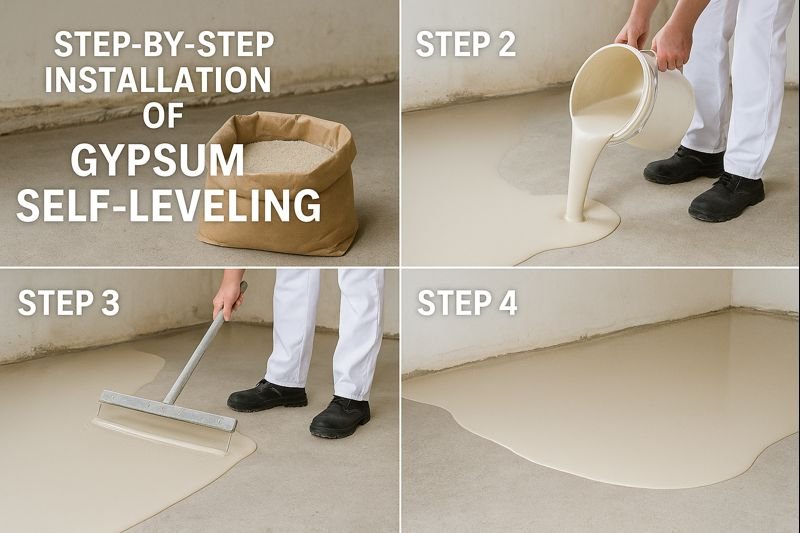
Proper installation of gypsum-based self-leveling compounds requires rigorous subfloor preparation, including cleaning, priming, and sealing all penetrations. Mixing must follow exact water ratios using mechanical mixers, followed by immediate pouring and minimal tooling for self-leveling action to occur properly.
Professional Installation Process
The success of any self-leveling installation begins long before the material is mixed. In my years overseeing these installations, I've developed a systematic approach that ensures consistent results:
1. Substrate Preparation
Thorough preparation is non-negotiable. The substrate must be:
- Structurally sound with no movement
- Completely clean of dust, oil, and debris
- Properly primed with compatible primer
- Sealed at all edges and penetrations to prevent leakage
- Within acceptable moisture parameters (typically below 2%)
2. Material Preparation and Mixing
Precise measurement is crucial for gypsum-based compounds. Here's my time-tested procedure:
| Step | Details | Why It Matters |
|---|---|---|
| Water Measurement | Use graduated containers | Ensures consistent performance |
| Temperature Control | Water and room at 65-75°F | Affects flow and cure time |
| Mixing Equipment | Use high-speed drill (650+ RPM) | Achieves proper suspension |
| Mixing Time | 2-3 minutes until lump-free | Prevents weak spots |
| Working Time | 15-20 minutes | Plan accordingly |
After hundreds of installations, I've found that many contractors try to extend working time by adding additional water - this severely weakens the final product and must be avoided completely.
3. Application Techniques
The pour sequence significantly impacts the final result. For optimal flow and finish:
- Pour in ribbon-like patterns working from one end of the room
- Use a gauge rake to establish proper depth
- Use a smoothing tool to break surface tension
- Avoid overworking the material
- Maintain minimum thickness (typically 1/8" or 3mm)
- Protect from air currents during initial set
These compounds require minimum intervention once poured - their self-leveling properties work best when allowed to settle naturally.
Conclusion
Gypsum-based self-leveling compounds1 provide unmatched dimensional stability and smooth finishes for interior dry areas, making them ideal for luxury flooring despite higher costs and moisture sensitivity.