Adding concrete admixtures is hard without knowing what they are. Many builders waste time and money using the wrong products for their projects. I've seen this problem too many times.
Concrete admixtures1 are materials added to concrete mixtures in small quantities to modify properties of fresh or hardened concrete. They're classified into chemical, mineral, and specialty types based on their functions like water reduction, air entrainment, setting time control, or strength enhancement.
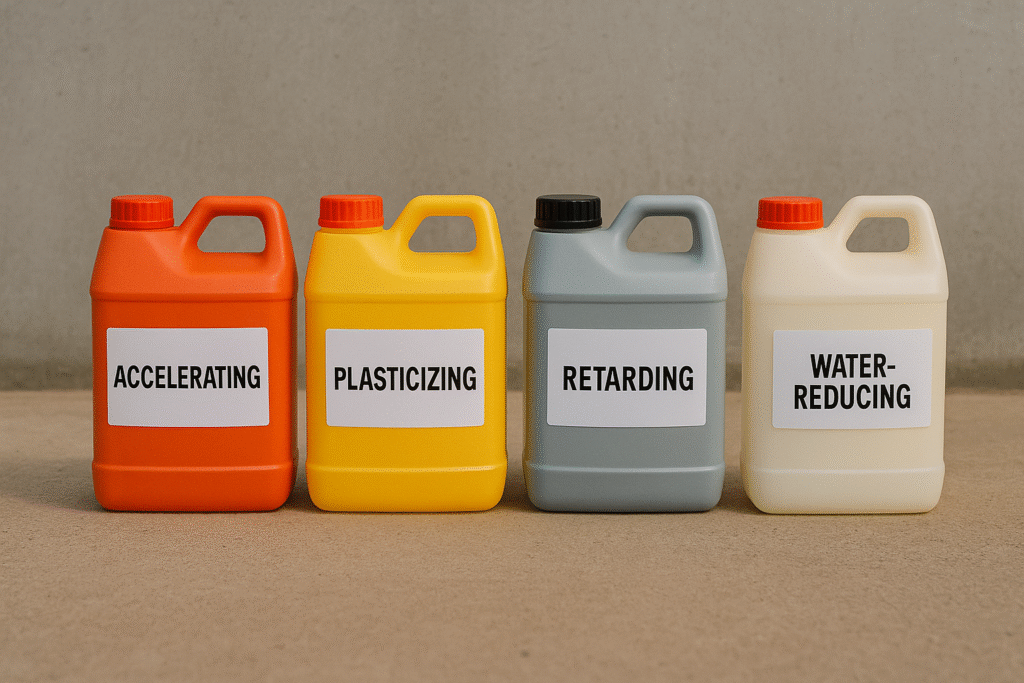
I've been in the concrete industry for years now, and one thing I've learned is that understanding admixtures is key to successful construction projects. Let me walk you through what these materials are and how they can transform your concrete work.
What Are the Main Types of Chemical Admixtures for Concrete?
Pain point: Using the wrong chemical admixture can ruin an entire concrete pour. I've seen contractors lose thousands of dollars because they didn't know which admixture to use.
Chemical admixtures are substances that enhance concrete properties through chemical reactions. The five main types are water reducers, superplasticizers, accelerators, retarders, and air-entraining agents. Each type serves specific functions like improving workability, strength, or durability under different conditions.
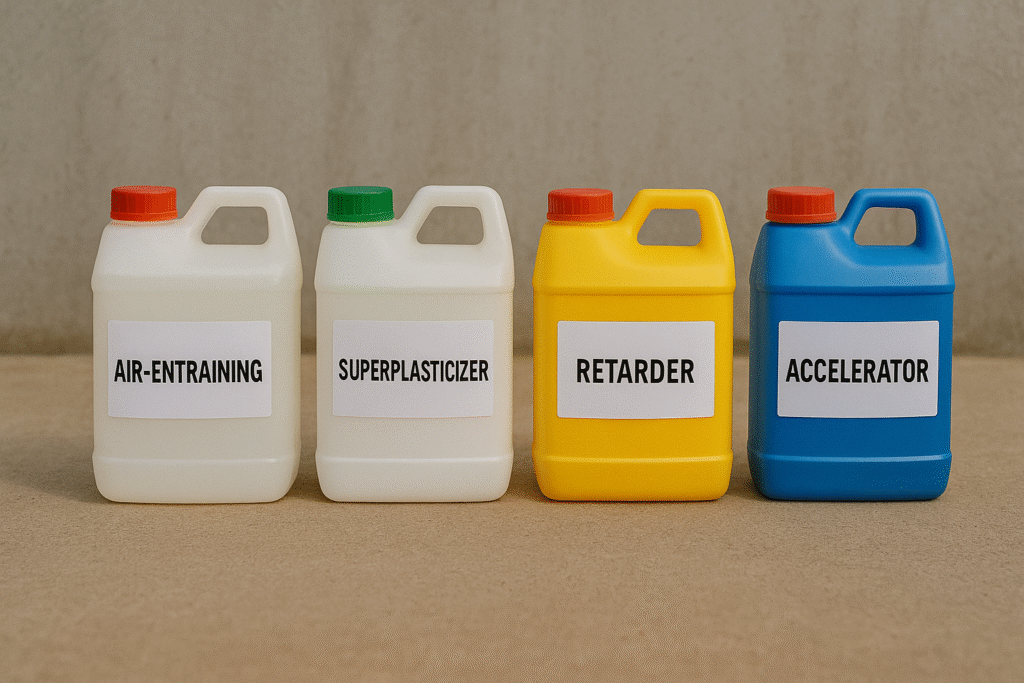
When working with chemical admixtures2, understanding their specific properties and applications becomes essential for optimal concrete performance. Water reducers are my go-to when I need to decrease water content while maintaining workability, which typically improves strength and durability. Superplasticizers take this further, allowing for dramatic water reduction (up to 30%) while creating highly flowable concrete that's perfect for dense reinforcement areas.
Accelerators and retarders control setting time in opposite ways. In cold weather, I use accelerators to speed up hydration and hardening. For hot conditions or when working with large pours, retarders help by delaying setting time, giving workers more time to place and finish the concrete properly.
Air-entraining agents create microscopic air bubbles that significantly improve freeze-thaw resistance. I've found these particularly valuable in cold climates where concrete would otherwise deteriorate quickly from freezing cycles.
Comparison of Chemical Admixture Effects
| Admixture Type | Primary Function | Typical Dosage | Best Used For |
|---|---|---|---|
| Water Reducers | Reduce water content by 5-10% | 0.2-0.5% by cement weight | Improving strength while maintaining workability |
| Superplasticizers | Reduce water content by 12-30% | 0.5-2% by cement weight | High-strength concrete, self-compacting mixes |
| Accelerators | Speed up setting and strength gain | 1-3% by cement weight | Cold weather concreting, early strength needs |
| Retarders | Delay setting time | 0.1-0.5% by cement weight | Hot weather concreting, large pours, long transport |
| Air-entrainers | Create microscopic air bubbles | 0.05-0.1% by cement weight | Freeze-thaw resistance, improved workability |
What Mineral Admixtures Can Improve Concrete Performance?
The problem with plain cement concrete is its environmental impact and sometimes limited durability. I once worked on a project where we could have saved 20% of the cement cost if we had used mineral admixtures properly.
Mineral admixtures are finely divided materials added to concrete to improve properties or reduce costs. They include supplementary cementitious materials like fly ash, silica fume, ground granulated blast-furnace slag (GGBFS), and natural pozzolans. These materials enhance concrete durability, workability, and reduce environmental impact.
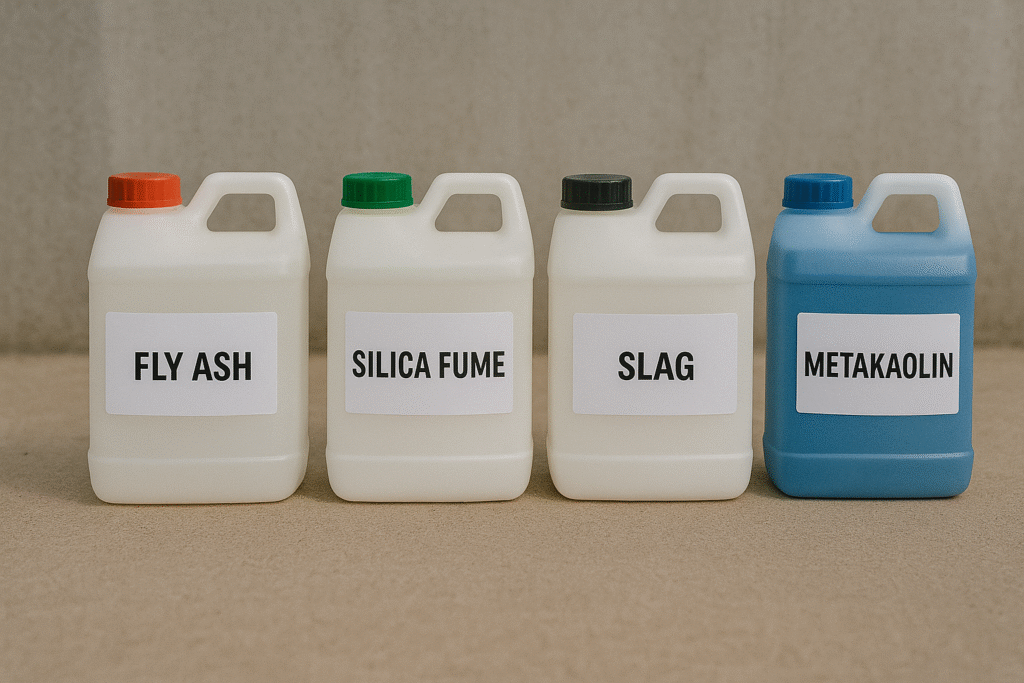
Mineral admixtures represent one of the most significant advancements in modern concrete technology. Using these materials has transformed how I approach concrete mix design, especially for challenging projects requiring enhanced durability or sustainability. Fly ash, a byproduct of coal combustion plants, has become my preferred choice for many applications because it improves workability while reducing heat of hydration, which helps prevent thermal cracking in mass concrete structures.
Silica fume, though more expensive, creates extremely dense and impermeable concrete. I've specified it for bridge decks and marine structures where exceptional resistance to chloride penetration is essential. The microscopic particles fill spaces between cement particles, creating a much tighter microstructure.
GGBFS dramatically improves sulfate resistance and reduces alkali-silica reaction potential. On projects where concrete will be exposed to sulfate-rich soils or where reactive aggregates are unavoidable, I routinely replace 30-50% of cement with slag to prevent long-term deterioration.
These materials not only enhance concrete performance but also significantly reduce the environmental footprint by allowing lower portland cement content. I've calculated carbon footprint reductions of up to 40% on projects using optimized mineral admixture combinations while achieving equivalent or superior performance compared to traditional concrete.
Benefits of Mineral Admixtures
| Mineral Admixture | Key Benefits | Typical Replacement Rate | Best Applications |
|---|---|---|---|
| Fly Ash | Improved workability, reduced heat of hydration, enhanced long-term strength | 15-35% | General construction, mass concrete |
| Silica Fume | Very high strength, extremely low permeability | 5-10% | Marine structures, bridges, parking decks |
| GGBFS | Improved sulfate resistance, reduced heat of hydration | 20-70% | Underground structures, marine applications |
| Natural Pozzolans | Enhanced durability, ASR mitigation | 10-25% | Decorative concrete, sustainable construction |
How Do Specialty Admixtures Solve Specific Concrete Challenges?
Dealing with waterproofing, shrinkage, and corrosion has always been challenging. I remember one underground project that failed because we didn't use the right specialty admixtures to handle water pressure.
Specialty admixtures address specific concrete challenges beyond basic properties. These include corrosion inhibitors that protect reinforcement, shrinkage reducers that minimize cracking, waterproofing admixtures that decrease permeability, coloring agents that provide aesthetics, and fibers that enhance toughness and crack resistance.
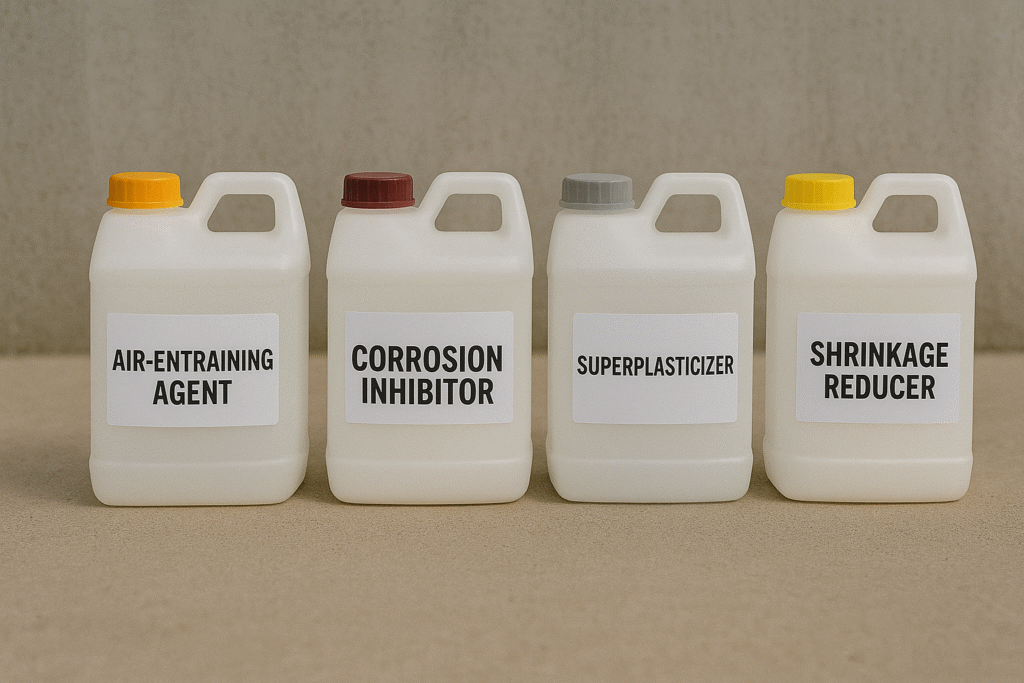
Specialty admixtures have been game-changers for solving complex concrete problems that traditional admixtures can't address. I recall a parking structure project where corrosion inhibitors significantly extended service life by protecting reinforcing steel from chloride attack. These admixtures work by forming a protective film on steel surfaces or by neutralizing chloride ions before they can damage the reinforcement.
Shrinkage-reducing admixtures have saved me countless repair costs on large slabs by minimizing cracking. They work by reducing capillary tension in pore water during drying, which significantly decreases the shrinkage potential. On one warehouse floor project, we reduced shrinkage-related cracking by approximately 50% compared to similar previous projects.
Waterproofing admixtures have transformed how I approach below-grade construction. These products either contain hydrophobic materials that repel water or reactive components that block pores through crystallization. I've used crystalline waterproofing admixtures to create foundations that remain dry even under significant hydrostatic pressure.
For decorative applications, integral coloring admixtures provide more durable and consistent results than surface-applied colors. By distributing pigments throughout the concrete mix, the color remains even if surface abrasion occurs.
Fiber reinforcement represents another important category that provides three-dimensional reinforcement throughout the concrete matrix. Depending on the fiber type (steel, synthetic, glass, natural), they can increase impact resistance, control plastic shrinkage cracking, or even replace traditional steel reinforcement in some applications.
Common Specialty Admixture Applications
| Admixture Type | Function | Typical Applications | Key Benefits |
|---|---|---|---|
| Corrosion Inhibitors | Protect reinforcing steel | Parking structures, marine environments, bridges | Extended service life, reduced maintenance |
| Shrinkage Reducers | Minimize drying shrinkage | Large slabs, walls, tanks | Reduced cracking, fewer control joints needed |
| Waterproofing Admixtures | Decrease permeability | Foundations, tanks, tunnels | Eliminated membrane systems, self-healing of micro-cracks |
| Coloring Agents | Provide integral color | Decorative concrete, architectural elements | Permanent coloration, wear resistance |
| Fibers | Enhance toughness | Industrial floors, shotcrete, precast elements | Impact resistance, crack control, reduced steel reinforcement |
Conclusion
Concrete admixtures1 transform ordinary mixes into high-performing materials. Understanding their types and functions helps you choose the right admixture for your specific needs, ensuring better concrete performance and durability.