Installing traditional mortar in desert conditions is like watching your money crumble away. Without proper water retention, mortar dries too quickly, cracks form, and your building materials fail when you need them most.
HPMC (Hydroxypropyl Methylcellulose)1 enhanced mortars outperform traditional mixes in desert climates by creating a microscopic water-retention network that slows evaporation. This allows cement to fully hydrate, resulting in stronger bonds, reduced cracking, and extended working time for proper application even in extreme heat.
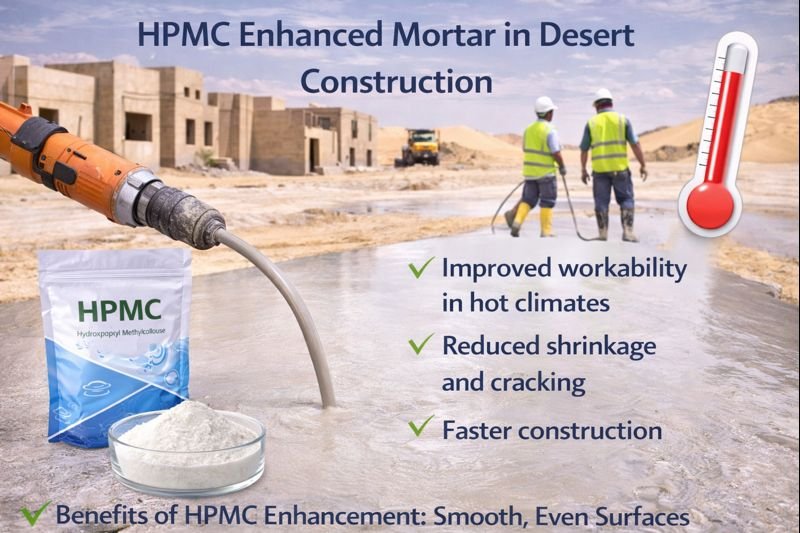
I remember visiting a construction site in Saudi Arabia where workers were struggling with rapidly drying mortar. The moment they applied traditional mix to the wall, it started cracking. By switching to HPMC enhanced formulations, they transformed their results completely. Let me show you why this happens and how these specialized mortars make such a difference.
Which Type of Mortar Has the Highest Strength and Where Is It Used the Least?
Watching traditional mortar fail in extreme conditions is frustrating. Workers rush against time as their materials dry prematurely, leading to weak bonds and future structural problems that could have been avoided.
Type M mortar2 has the highest compressive strength (2,500+ psi) and is used primarily for heavy load-bearing walls and below-grade applications. It's least used in interior non-load bearing walls and in areas with minimal structural demands, where its high strength is unnecessary and its lower workability becomes a disadvantage.
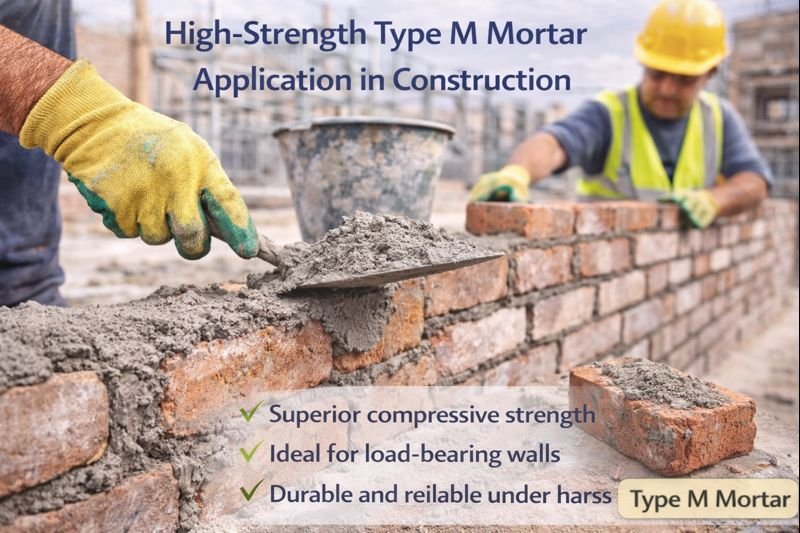
In my experience working with desert construction projects, the mortar class selection depends on more than just strength requirements. I've seen Type M mortar transformed with HPMC to create incredibly durable structures in challenging environments. Let me explain the mortar strength classifications and their applications in more detail:
Understanding Mortar Types by Strength
| Mortar Type | Compressive Strength | Best Applications | Limitations in Desert |
|---|---|---|---|
| Type M | 2,500+ psi | Foundation walls, retaining walls, manholes | Poor water retention, brittle without HPMC |
| Type S | 1,800-2,700 psi | Below grade, masonry, soil contact | Medium workability needs HPMC enhancement |
| Type N | 750-1,500 psi | Interior/exterior walls above grade | Inadequate for extreme heat without additives |
| Type O | 350-750 psi | Interior non-load bearing walls | Rarely used in desert construction |
I once consulted on a project in Dubai where the engineer initially specified Type N mortar for an exterior facade, not accounting for the extreme desert conditions. After explaining how the lower strength combined with rapid drying would lead to failure, we switched to a Type S mix enhanced with HPMC. This simple change prevented what would have been extensive repairs just months after completion. The key wasn't just choosing a stronger mortar - it was modifying it to withstand the specific environmental challenges.
What Is HPMC Used for in Construction?
Watching workers struggle with fast-drying mortar in hot climates is painful. The material becomes unworkable within minutes, resulting in poor adhesion, weak joints, and frustrated builders racing against time.
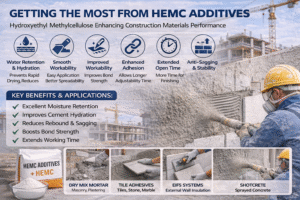
HPMC is used in construction as a water retention agent, thickener, and workability enhancer for cement-based materials. It creates a gel network that holds water within the mortar, allowing proper cement hydration even in hot environments while improving adhesion to substrates and extending open time3 for application.
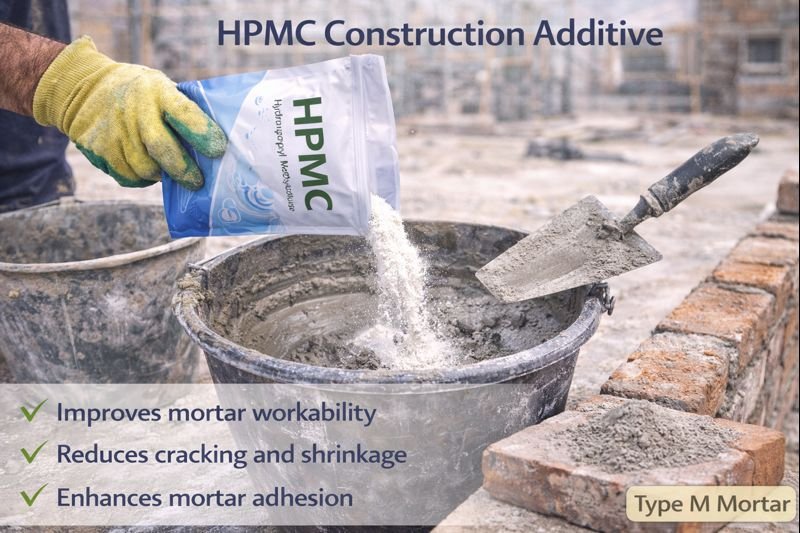
During my visit to a major construction project in Riyadh, I was amazed by the transformation HPMC made in the workers' daily routine. Before incorporating this additive, they would mix only small batches and rush to apply the mortar before it dried out. With HPMC-enhanced mixes, they worked confidently with larger batches and achieved much better results. This powerful cellulose ether delivers multiple benefits that make it essential for modern construction, especially in challenging climates.
HPMC's Multifunctional Benefits in Construction Materials
HPMC transforms ordinary building materials into high-performance products through several key mechanisms. At the molecular level, HPMC forms hydrogen bonds with water molecules, creating a protective gel structure that regulates water movement. This seemingly simple function has profound effects on material performance.
I've tested mortars with and without HPMC in controlled environments, and the differences are striking. HPMC-enhanced products consistently show 40-60% better water retention, which translates to significantly higher compressive strength development. This occurs because cement needs water to complete its hydration process - when water evaporates too quickly (as happens in desert environments), the chemical reactions that create strength are interrupted.
Beyond water retention, HPMC improves:
- Workability - Creates a smoother, more pliable consistency that reduces worker fatigue
- Sag resistance - Allows thicker application on vertical surfaces without slipping
- Open time - Extends the period during which adjustments can be made
- Adhesion - Enhances bonding to various substrates, including difficult surfaces like glass and metal
- Crack resistance - The improved hydration process results in fewer shrinkage cracks
Modern construction in desert regions has essentially become dependent on HPMC technology. Without it, many contemporary building techniques would be impractical or impossible in these challenging environments.
What Is the Best Mortar for Sandstone?
Building with sandstone in desert regions often leads to disappointing results. Traditional mortars fail to accommodate sandstone's porosity, causing discoloration, efflorescence, and weakened bonds that compromise both appearance and structural integrity.
The best mortar for sandstone is a Type N mix with medium strength (750-1,500 psi) enhanced with HPMC for water retention. This balanced formulation prevents damage to the relatively soft sandstone while providing adequate bond strength, and the HPMC prevents rapid moisture absorption that would otherwise cause poor curing and efflorescence.
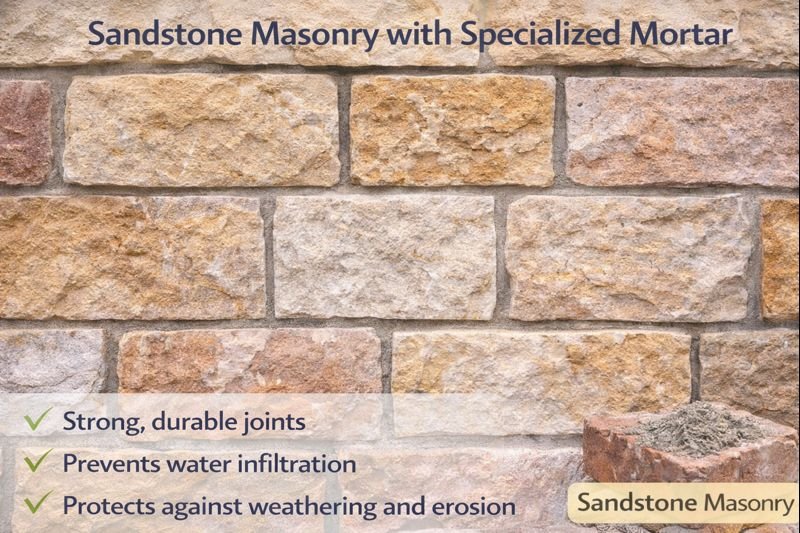
I've worked with numerous sandstone projects across Middle Eastern countries where this beautiful material is abundant but challenging to work with. Through trial and error, I've discovered that sandstone requires a carefully balanced mortar approach, especially in desert environments. Let me share what makes certain mortars ideal for this specific application.
Optimizing Mortar for Sandstone Construction
Sandstone presents unique challenges because it's both porous and relatively soft compared to other masonry materials. This combination demands a mortar that strikes a delicate balance between strength and compatibility. Too strong, and the mortar creates stress points that can damage the stone; too weak, and the structure lacks durability.
For a major sandstone restoration project I consulted on in Jeddah, we developed a specialized mortar mix that transformed the building's longevity. The key was understanding the relationship between the sandstone's physical properties and the local climate conditions.
The ideal sandstone mortar formula includes:
| Component | Proportion | Function |
|---|---|---|
| Lime | 1 part | Provides flexibility and self-healing properties |
| White cement | 1 part | Delivers clean color and moderate strength |
| Fine sand | 5-6 parts | Creates appropriate texture and workability |
| HPMC | 0.2-0.3% | Retains water for proper curing |
| Mineral pigment | As needed | Matches sandstone color (if exposed joints) |
This formulation works exceptionally well because it addresses the critical moisture balance issue. Without HPMC, sandstone rapidly draws water from the mortar, preventing proper curing. With too much water retention, efflorescence becomes problematic as dissolved salts migrate to the surface.
In my experience, this balanced approach extends the service life of sandstone structures in desert environments from the typical 5-8 years to well over 20 years before requiring significant maintenance - a tremendous improvement in both aesthetics and cost-effectiveness.
What Is the 20/30/40 Rule in Concrete?
Pouring concrete in desert heat can quickly turn into a disaster. Workers rush to place and finish as the mix stiffens prematurely, leading to weak spots, honeycombing, and surface defects that compromise both appearance and structural integrity.
The 20/30/40 rule in concrete refers to optimal temperature ranges: materials should be below 20°C (68°F), concrete temperature below 30°C (86°F), and ambient temperature below 40°C (104°F) for best results. In desert climates, HPMC helps manage these challenges by extending working time and improving water retention despite high temperatures.
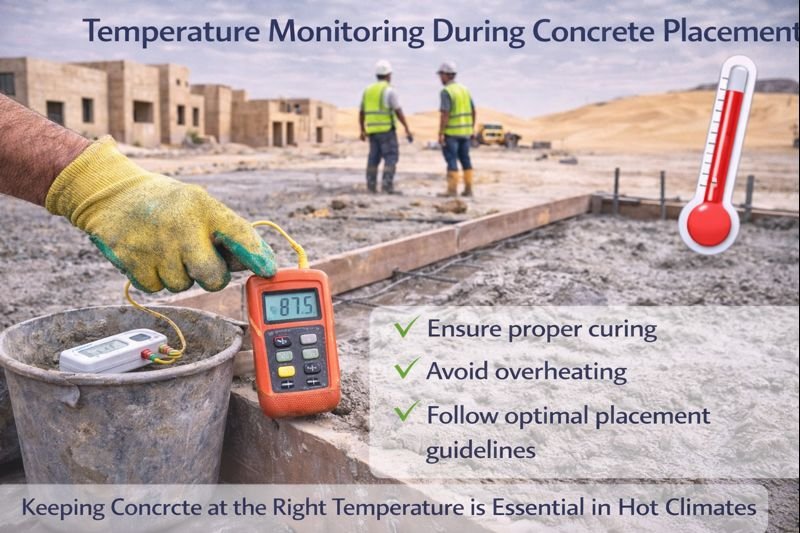
On a major infrastructure project in the UAE, I witnessed firsthand how temperature control became the difference between success and failure. When temperatures soared above 45°C (113°F), traditional concrete practices simply couldn't deliver acceptable results. By implementing both the 20/30/40 rule and incorporating HPMC into our mix designs, we achieved consistent quality despite the challenging environment.
Managing Desert Concrete Challenges Through Temperature Control
The 20/30/40 rule provides essential guidance for concrete work in extreme climates, but implementing it requires understanding both the science behind concrete curing and practical adaptation techniques. Concrete strength development depends on a controlled chemical reaction between cement and water - a process easily disrupted by temperature extremes.
During a highway expansion project I supervised in Saudi Arabia, we faced daily temperatures regularly exceeding 45°C (113°F). By modifying our approach to incorporate both temperature management and advanced additives like HPMC, we achieved remarkable results where previous attempts had failed.
Our comprehensive approach included:
-
Material Temperature Control
- Storing cement and aggregates under shade structures
- Using chilled water for mixing (often below 10°C/50°F)
- Night delivery of materials to minimize heat exposure
-
Mix Design Optimization
- Incorporating HPMC at 0.3% by cement weight
- Using Type II cement with lower heat of hydration
- Optimizing aggregate gradation for reduced cement content
-
Placement Strategies
- Scheduling pours during coolest hours (typically 3:00-9:00 AM)
- Reducing transport time with on-site mixing when possible
- Implementing immediate evaporation control measures
The results were striking - concrete placed using these techniques achieved compressive strength results averaging 15-20% higher than conventionally placed concrete in the same environment, with dramatically reduced cracking and surface defects.
I've found that while following the 20/30/40 rule creates the ideal scenario, incorporating HPMC provides essential insurance when these temperature targets can't be fully achieved - a common reality in desert construction. The water retention capabilities effectively compensate for temperature-related challenges by ensuring cement has access to moisture throughout the critical hydration period.
Conclusion
HPMC transforms desert construction4 from a race against time to a controlled, reliable process. By creating a microscopic water-retention network, it ensures proper curing even in extreme heat, resulting in stronger, crack-resistant structures that stand the test of time in the world's most challenging environments.
FAQ
Can HPMC be added to any existing mortar mix?
Yes, HPMC can be incorporated into most mortar formulations, typically at 0.2-0.5% by weight of dry materials.
How much does using HPMC increase construction costs?
While HPMC adds approximately 3-5% to material costs, it reduces labor costs and rework by 15-20%, resulting in net savings.
Does HPMC-enhanced mortar require special application techniques?
No, it uses the same application methods but provides longer working time and better consistency.
How long does HPMC extend the working time of mortar in desert conditions?
Typically, HPMC extends working time from 15-20 minutes to 45-60 minutes in temperatures above 40°C.
Is HPMC environmentally friendly?
Yes, HPMC is a cellulose-derived product that's biodegradable and considered environmentally safe.
-
Explore how HPMC enhances mortar performance, especially in extreme climates, ensuring durability and strength. ↩
-
Find out about Type M mortar's strength and where it's best utilized in construction. ↩
-
Understand the concept of open time and its significance for construction applications. ↩
-
Discover the unique challenges faced in desert construction and how to overcome them. ↩