Are you struggling with mortar cracking, tiles falling off, or inconsistent workability in your construction projects? These common problems often trace back to one critical but overlooked component - the water-retaining agent in your mortar mix.
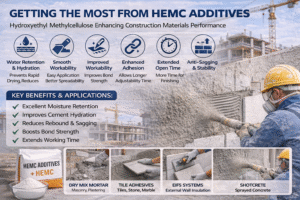
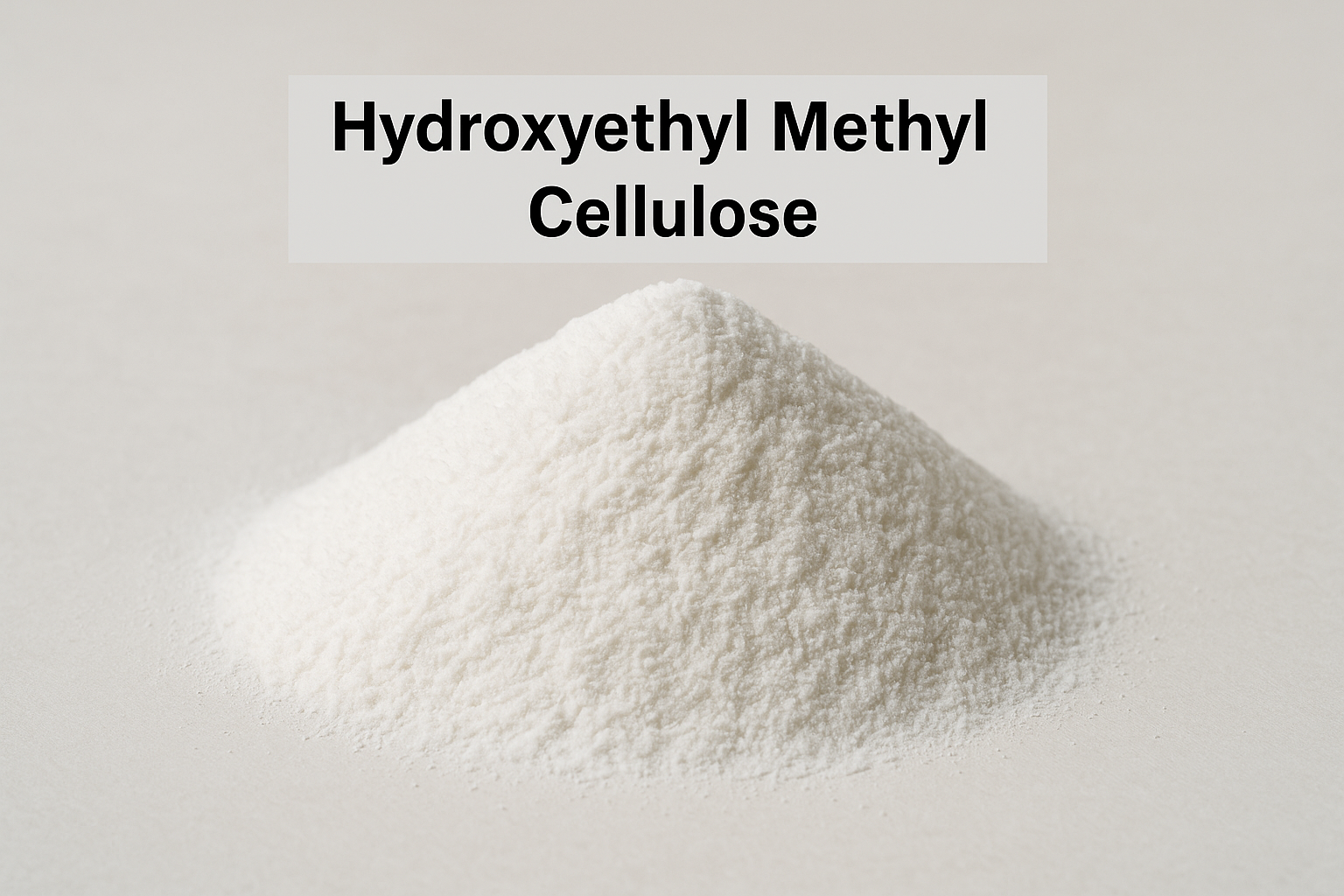
Hydroxyethyl Methyl Cellulose (MHEC/HEMC)1 functions as a dual-purpose additive in cement mortars, primarily retaining water to ensure complete cement hydration while increasing viscosity2 for improved workability and preventing material sagging on vertical surfaces.

I've spent years working with construction material manufacturers3 across Saudi Arabia, UAE, and other developing markets. One question I hear repeatedly from clients is why their products perform inconsistently despite following the same formula. The answer usually lies in understanding the true role of MHEC - what I call the "super nanny" of cement mortar systems.
How Does MHEC Actually Work in Your Cement Mortar?
Does your mortar crack after drying or slide off walls during application? These aren't just annoying problems - they're costing you money and reputation with every project.
MHEC creates a protective colloid system in mortar that temporarily binds water molecules, releasing them slowly for optimal cement hydration while simultaneously forming a thixotropic network that prevents sagging and improves adhesion to surfaces.

The water retention function of MHEC is its primary superpower. Think of MHEC as a microscopic water reservoir system throughout your mortar. Without sufficient water retention, cement particles can't fully hydrate - especially when applied to porous substrates or in hot weather. When I first started supplying MHEC to clients in the Middle East, many were using inadequate amounts, leading to consistent bonding failures in their exterior wall systems.
Water retention isn't just about preventing quick drying - it's about controlled water release. MHEC molecules form hydrogen bonds with water, creating a temporary network that releases moisture gradually as cement hydration progresses. This ensures cement achieves maximum strength development.
How MHEC's Water Retention Affects Mortar Performance
| Parameter | Without MHEC | With Optimal MHEC | Impact on Final Product |
|---|---|---|---|
| Water Retention Rate | 60-70% | 95-98% | Higher final strength, reduced cracking |
| Setting Time | Accelerated, uneven | Controlled, uniform | Better workability window for application |
| Hydration Efficiency | Partial, interrupted | Complete, consistent | Improved durability, adhesion strength |
| Temperature Tolerance | Poor in extreme conditions | Stable across wider range | All-season performance reliability |
I've tested countless mortar formulations and found that achieving water retention above 90% is critical for exterior applications. Below this threshold, the risk of bond failure increases exponentially, particularly when ambient temperatures exceed 30°C. The optimal MHEC dosage typically ranges between 0.2-0.4% of the dry mix weight, though this varies based on specific application requirements and regional climate conditions.
Why Is MHEC's Thickening Effect Critical for Application Quality?
Have you noticed how some mortars slide off the trowel while others seem to have the perfect consistency? Or why certain products allow for thicker application layers without sagging? The difference often comes down to MHEC quality and dosage.
MHEC creates a pseudoplastic flow behavior in mortar - remaining fluid under high shear forces during mixing and application, but quickly thickening when at rest to prevent sagging and ensure proper layer thickness on vertical surfaces.

The thickening mechanism of MHEC transforms ordinary mortar into a highly workable material with controlled flow properties. This is where the true art of MHEC formulation becomes apparent. In our factory, we can customize the viscosity profile of MHEC to match specific application requirements - whether for thin-set tile adhesives4 that need higher sag resistance or self-leveling compounds5 requiring extended flow time.
When MHEC dissolves in water, its polymer chains form a three-dimensional network that increases the viscosity of the liquid phase in the mortar. This network is sensitive to shear forces - it temporarily breaks down during mixing or troweling (making application easier) but rapidly rebuilds when left undisturbed (preventing sagging on vertical surfaces).
MHEC Viscosity Impact on Application Properties
| Application Type | Recommended MHEC Viscosity | Benefits | Common Issues Without Proper MHEC |
|---|---|---|---|
| Thin-set Tile Adhesives | 30,000-50,000 mPa·s | High sag resistance, extended open time | Tile slippage, reduced coverage area |
| Wall Renders | 15,000-25,000 mPa·s | Smooth application, reduced fatigue | Material wastage, uneven thickness |
| Self-leveling Compounds | 5,000-15,000 mPa·s | Proper flow without segregation | Air bubbles, poor surface finish |
| Joint Fillers | 40,000-80,000 mPa·s | No slumping, clean application | Shrinkage, poor crack resistance |
I once worked with a client in Pakistan who was using an inferior MHEC product with inconsistent viscosity. Their tile adhesive would sometimes perform perfectly and other times fail completely. After switching to our premium MHEC with controlled viscosity specifications, their product consistency improved dramatically, and customer complaints dropped by over 80%.
How Does MHEC Impact the Final Strength of Your Construction Materials?
Are you concerned about long-term durability and bond strength of your mortar products? Many manufacturers don't realize how significantly water retention additives affect final strength development.
MHEC indirectly enhances final mortar strength by ensuring complete cement hydration through optimal water retention, while its air-entraining properties create microstructures that improve freeze-thaw resistance and flexibility in the hardened state.

The relationship between MHEC and final mortar strength is often misunderstood. MHEC doesn't directly contribute to strength like cement does, but it creates the perfect conditions for cement particles to reach their full strength potential. In our laboratory tests, mortar samples with optimal MHEC content consistently show 15-25% higher final bond strength compared to identical formulations with insufficient water retention.
MHEC also introduces microscopic air bubbles into the mortar matrix. While excessive air entrainment can reduce compressive strength, the optimal amount creates discontinuous pores that enhance flexibility and freeze-thaw resistance. This is particularly important for exterior applications in regions with significant temperature variations.
MHEC's Impact on Mortar Physical Properties
| Property | Without MHEC | With Optimal MHEC | Long-term Benefit |
|---|---|---|---|
| Tensile Bond Strength | 0.3-0.5 MPa | 0.7-1.0+ MPa | Reduced delamination risk |
| Flexural Strength | Moderate | Increased by 10-20% | Better crack resistance |
| Freeze-Thaw Resistance | Poor to moderate | Significantly improved | Extended service life in cold climates |
| Shrinkage Behavior | High, uncontrolled | Reduced, more predictable | Fewer warranty claims and callbacks |
| Water Repellency | Poor | Improved with proper MHEC | Better moisture protection |
Through years of testing different MHEC grades across various applications, I've observed that the molecular substitution pattern has a significant impact on cement compatibility. MHEC products with the right balance of hydroxyethyl and methyl substitution interact more favorably with cement particles, leading to more stable air void structures and better overall performance.
Conclusion
MHEC truly functions as the "soul additive" of quality mortar systems, delivering water retention and rheology control with minimal dosage while dramatically improving workability, strength, and durability of finished construction materials.
-
Explore this resource to understand how MHEC enhances mortar performance and its critical role in construction. ↩
-
Discover how viscosity influences the workability and performance of mortar in construction projects. ↩
-
Explore how manufacturers maintain product consistency and quality in construction materials. ↩
-
Learn best practices for tile adhesives to ensure strong and durable installations. ↩
-
Discover the benefits and applications of self-leveling compounds in modern construction. ↩