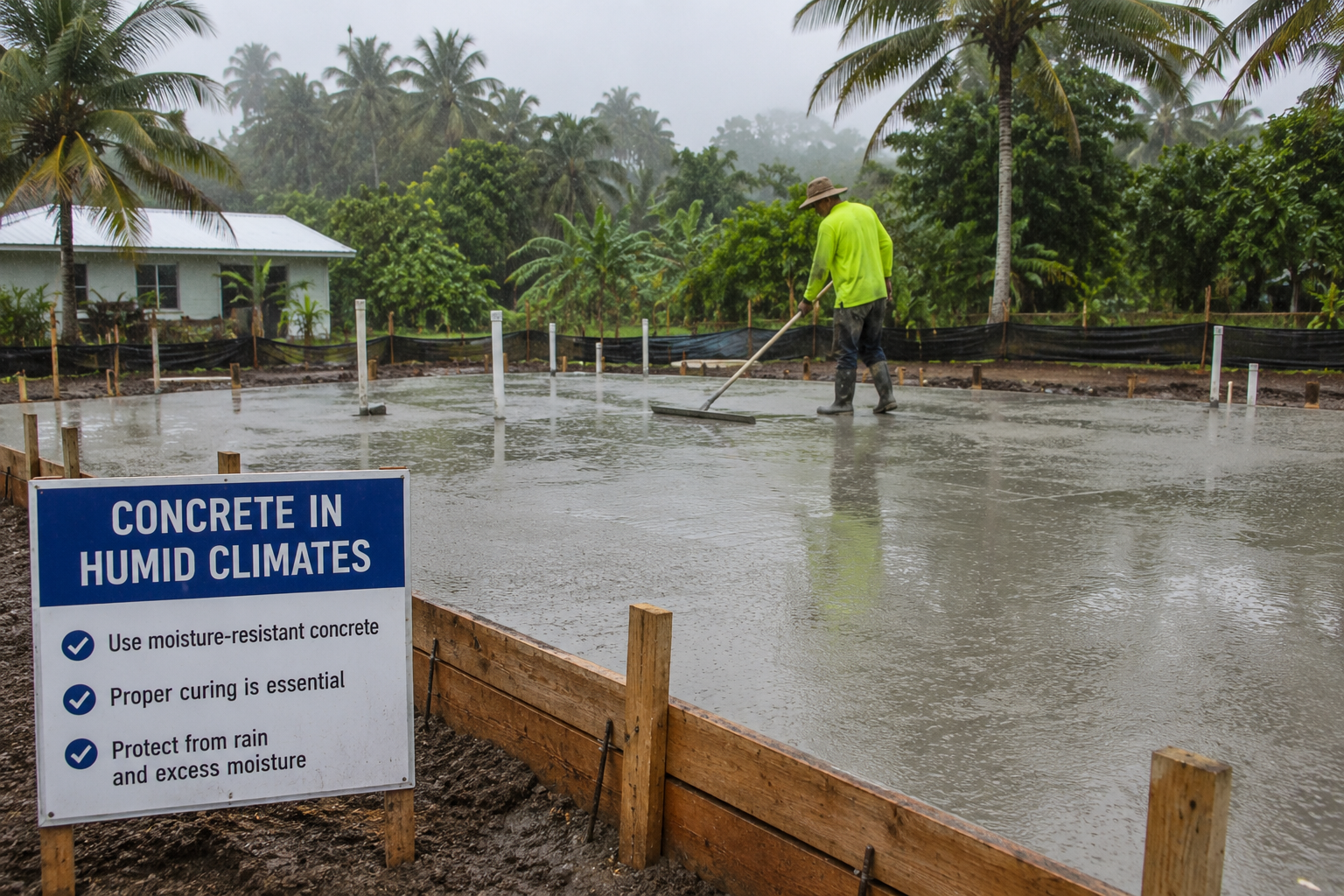
Your project is behind schedule. The concrete is taking forever to cure, costing you time and money. A humid climate should help, but it comes with its own problems.
The fastest way to cure concrete in a humid climate involves a three-part strategy. First, optimize your mix with chemical accelerators. Second, actively manage moisture to ensure full hydration. Third, control the temperature and airflow around the concrete to speed up the chemical reaction safely.
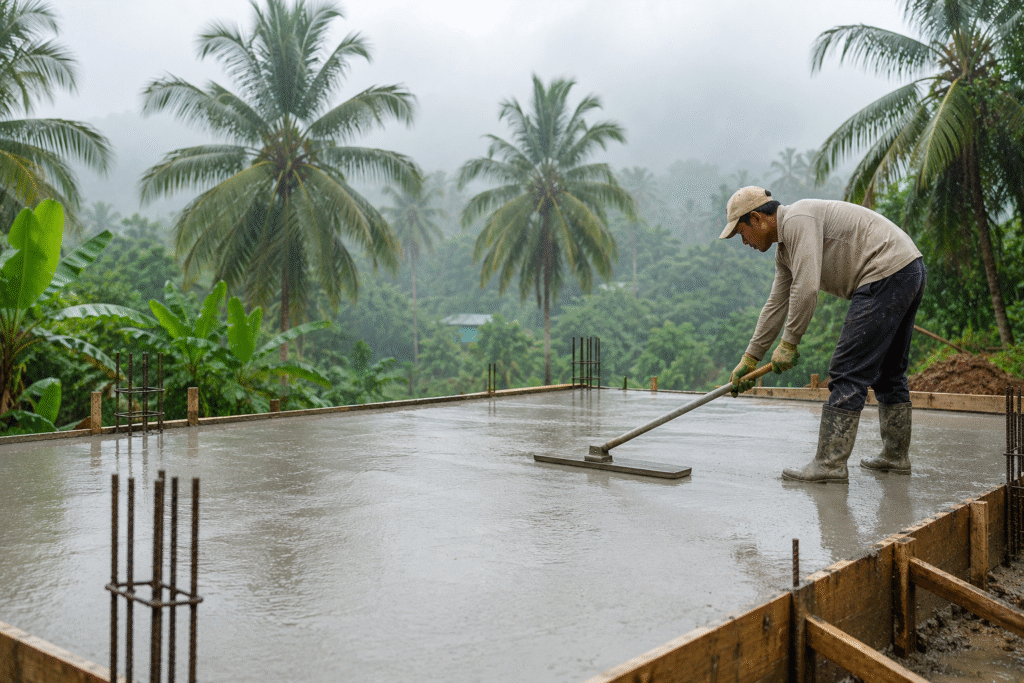
I’ve spent years helping clients in countries like Vietnam, Brazil, and India, where humidity is a daily reality. Everyone thinks high humidity is a gift for curing concrete. It can be, but it can also be a trap. The air is wet, but a strong wind can still dry the surface of your slab too quickly, causing cracks. The secret isn't just about what's in the air; it's about what you do on the ground. Let's break down the process into simple, actionable steps to get your concrete cured fast and strong, no matter the weather.
Optimize the Concrete Mix?
Your standard concrete mix is too slow for a fast-paced job. Just guessing which additives to use can ruin an entire batch. The right, scientifically optimized mix is your first step.
To speed up curing, you should optimize the mix with chemical accelerators like calcium chloride or non-chloride options for reinforced concrete1. For extreme speed, consider specialized cements like calcium sulfoaluminate, which achieve high strength in hours, not days2.
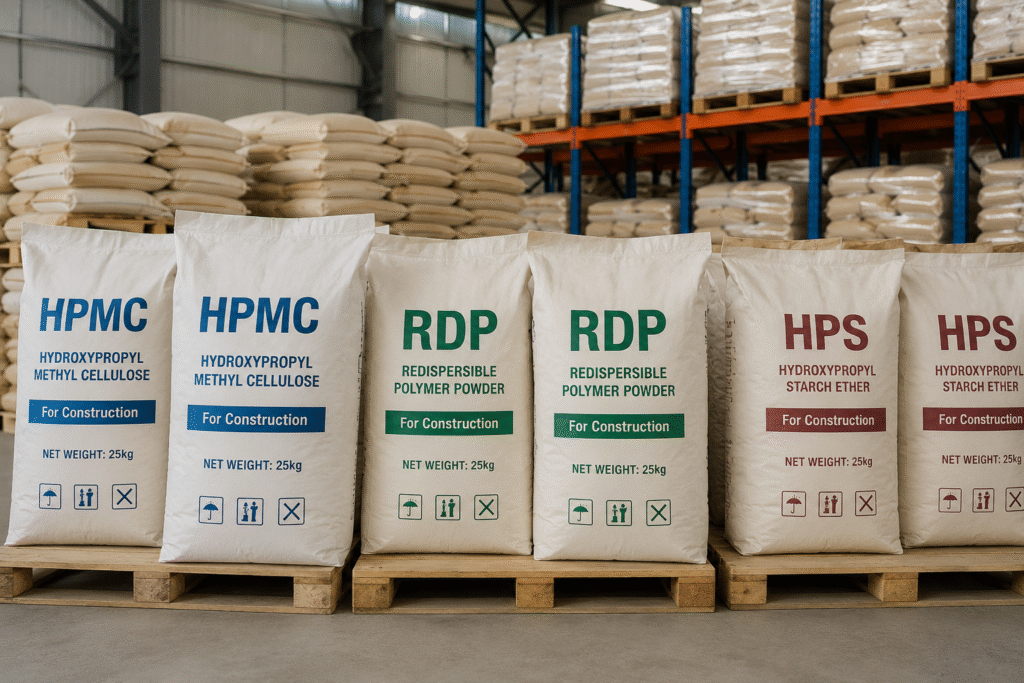
The Power of Additives and Specialized Cements
The foundation of fast curing is the mix itself. Before you even think about the curing environment, you can cut down your time significantly by choosing the right ingredients. This is about making the concrete work smarter, not just harder.
Chemical Accelerators: The Speed Boosters
Accelerators are chemicals that speed up the hydration process. The most common one is calcium chloride. It's cheap and effective, and it can shorten the set time by up to 30%. However, you must be careful. Calcium chloride can corrode steel rebar, so I never recommend it for reinforced concrete structures. For those projects, we always use non-chloride accelerators. A more advanced option some of our clients are using for critical structures is nano-silica, which improves both early and long-term strength without the corrosion risk3.
Choosing the Right Cement
For most projects, standard Portland cement is fine. But when speed is everything, you need something special. I remember a client in the Philippines who needed to repair a factory floor over a single weekend. We recommended calcium sulfoaluminate (CSA) cement. This material is incredible. It can reach strengths of 35 MPa in just 20 hours. For comparison, standard concrete takes a week or more to get there.
Here is a simple table to compare these options:
| Method | Speed Increase | Best For | Key Consideration |
|---|---|---|---|
| Calcium Chloride | ~30% faster | Mass concrete, non-reinforced | High risk of rebar corrosion |
| Non-Chloride Accelerator | Moderate | Reinforced concrete, structural work | Slightly higher cost |
| Calcium Sulfoaluminate (CSA) Cement | Extremely fast | Emergency repairs, precast | Requires special handling and knowledge |
Lock in Moisture (The Curing Stage)?
Your concrete is drying too fast on the surface, which causes ugly and dangerous cracks. High humidity isn't enough to protect it. You must actively manage moisture to get a strong cure.
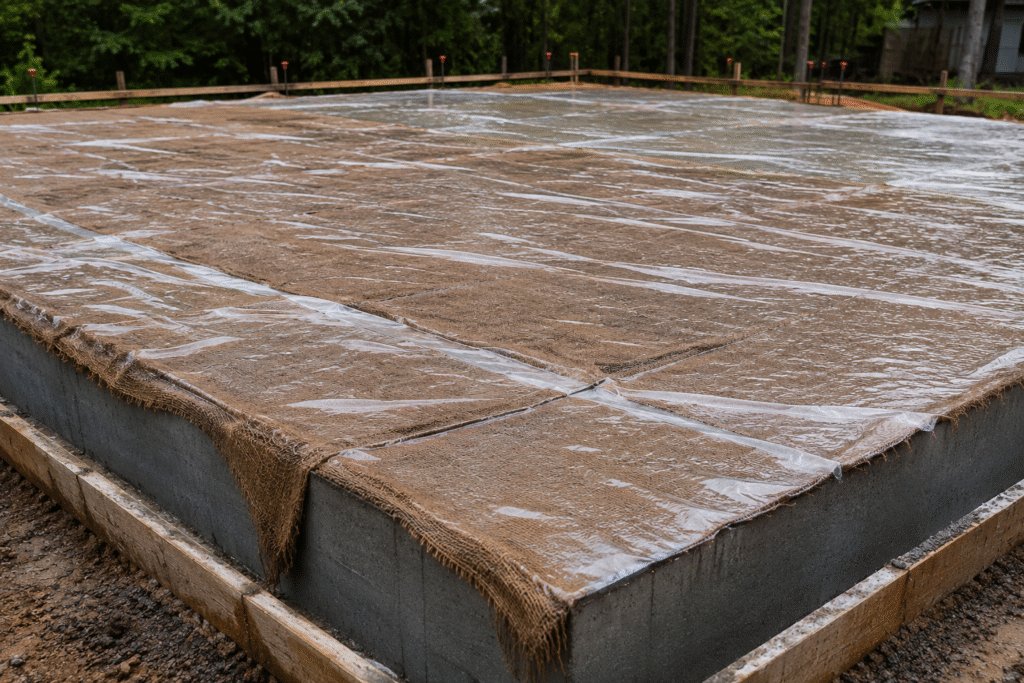
The key is to keep the concrete surface saturated for the first few days. This can be done by ponding with water, continuous fogging, or covering it with wet burlap and plastic sheeting. This ensures the cement fully hydrates and develops maximum strength.
Why Humid Air Is Not Enough
Many builders I meet in humid regions believe the air does the curing for them. It's a dangerous assumption. Yes, high humidity (over 80%) helps by slowing down evaporation. But it doesn't stop it completely, especially if there's wind. Wind acts like a sponge, pulling moisture from the surface of your fresh concrete. When the surface dries faster than the inside, it shrinks and cracks. I've seen a beautiful, smooth slab ruined in a few hours by a surprise sea breeze.
The temperature difference is also a huge risk. If the air temperature drops more than 15°C (27°F) from the concrete's temperature, the risk of surface cracking can increase by 300%4. This is common overnight in tropical or desert areas.
To combat this, you need to take control.
Practical Curing Methods
The goal is simple: keep water in the concrete. The cement needs that water for the chemical reaction (hydration) that gives it strength. Here are the best ways to do it:
- Wet Coverings: This is a classic for a reason. Laying down wet burlap, then covering it with plastic sheeting, creates a mini-greenhouse effect. It traps moisture and keeps the concrete saturated.
- Curing Compounds: These are liquid membranes that you spray onto the fresh concrete. They form a film that seals the moisture in. It's a great "set it and forget it" method, but make sure you get complete coverage.
- Vacuum Dewatering: This is a high-tech method for horizontal slabs. A special mat is placed over the concrete, and a vacuum pump literally sucks out up to 20% of the initial water. This compacts the concrete and gives it incredible early strength. You can achieve in 48 hours what would normally take 7 days.
Control the Environment?
The weather is unpredictable. A sudden gust of wind, a hot sun, or a cool night can ruin your perfect pour. You must take control of the immediate environment around your concrete.
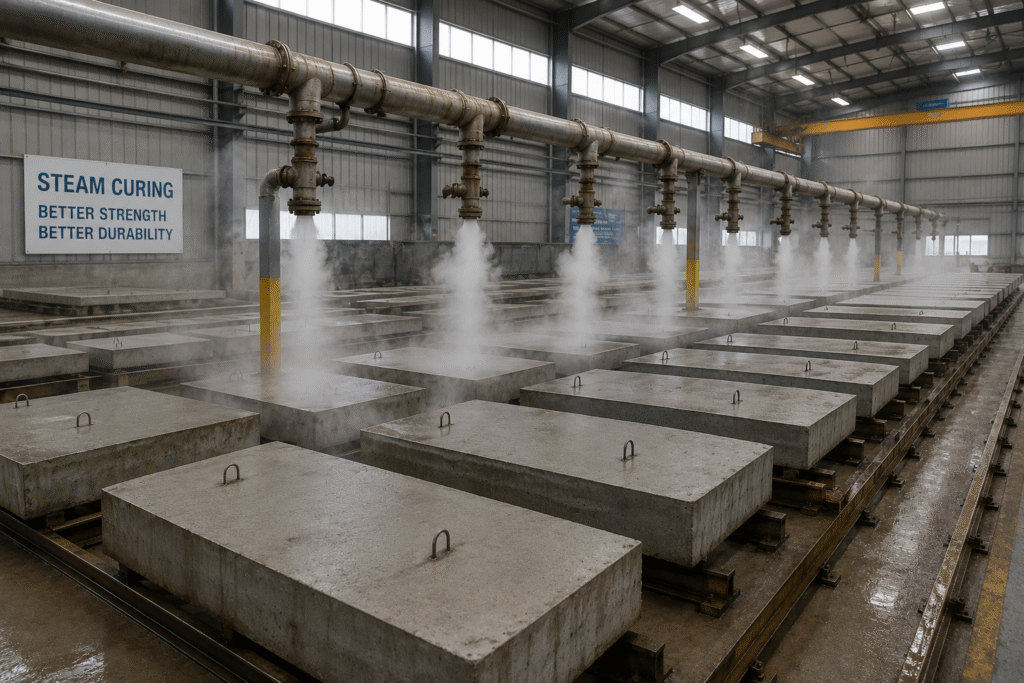
To control the environment, you must manage temperature and airflow. Use windbreaks to stop rapid surface evaporation. For maximum speed, use methods like steam curing to raise the temperature, which can achieve 7-day strength in just 24 hours.
Turn the Environment into Your Ally
Once you've got the right mix and locked in the moisture, the final piece of the puzzle is managing the air around your slab. This is especially true in a humid climate, where the difference between a slight breeze and still air can make or break a project.
Temperature is Your Accelerator
Heat speeds up the chemical reaction in concrete. A simple rule is that for every 10°C (18°F) increase in temperature, the curing time can be cut roughly in half. We can use this to our advantage. For our customers who make precast panels, steam curing is the best solution. They place the new panels in an enclosure and pump in steam. By keeping the temperature at 60°C (140°F) and humidity above 90%, they can achieve the 7-day strength target in a single 24-hour cycle. This allows them to use their molds every single day, dramatically increasing their factory's output.
Shielding Your Work
For cast-in-place concrete out on a job site, steam curing isn't practical. Here, we focus on protection.
- Windbreaks: Set up temporary fences or screens to block the wind. This is the single most important thing you can do to prevent surface cracking in a humid but windy environment.
- Insulating Blankets: These blankets do two things. They protect the concrete from cold night air, preventing thermal shock. They also trap the heat that the concrete naturally generates during hydration. This self-generated heat helps the slab cure faster from the inside out.
By controlling the immediate environment, you are no longer a victim of the weather. You are actively guiding the concrete to a faster, stronger cure.
How to cure concrete in hot weather?
Pouring concrete in extreme heat is a challenge. The sun and high air temperatures can bake the water out of your mix too quickly. This leads to weak concrete and plastic shrinkage cracks.
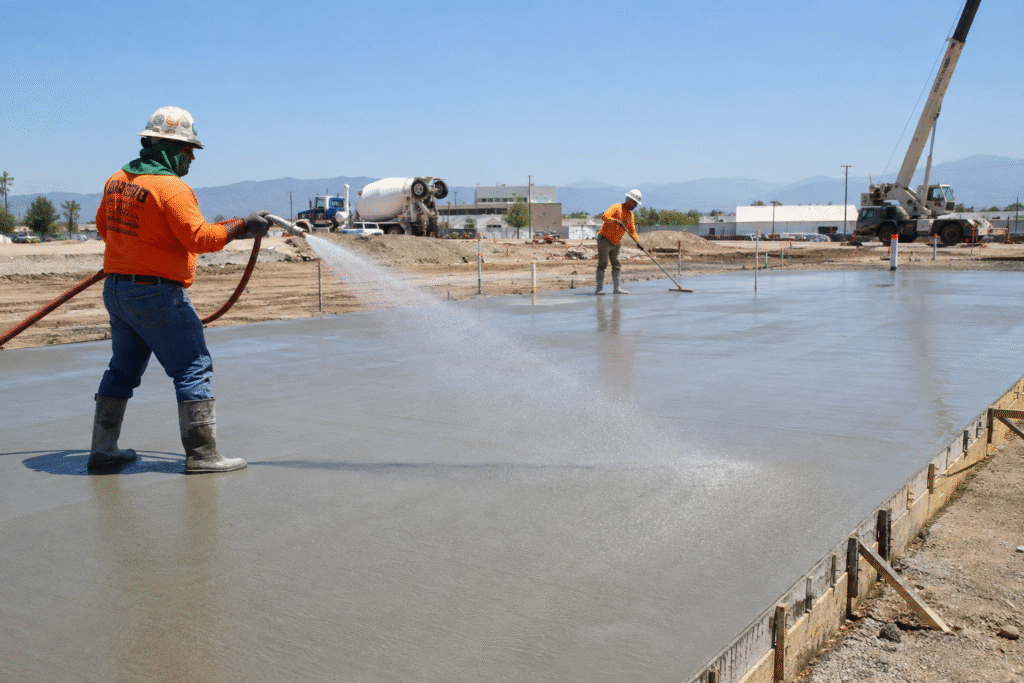
To cure concrete in hot weather, focus on preventing rapid water evaporation. You should pour during cooler parts of the day, use misting or fogging to raise local humidity, and apply a white-pigmented curing compound to reflect sunlight and seal in moisture.
Beating the Heat
When I talk to clients in places like Saudi Arabia or Pakistan, the heat is their biggest enemy. The same high temperature that can accelerate curing can also destroy the slab if not managed. The primary goal changes from speeding up the cure to protecting the cure.
Here's my advice, based on industry standards like the ACI (American Concrete Institute) 305R guide for hot weather concreting:
- Cool the Mix: Before it's even poured, cool the concrete down. You can do this by using chilled water in the mix or spraying the stone aggregates with water to cool them through evaporation.
- Time Your Pour: Schedule your pours for the late afternoon or very early morning. Avoid pouring concrete between 11 AM and 4 PM when the sun is at its strongest.
- Create a Fog: For large slabs, set up a system to spray a fine mist of water into the air over the concrete. This "fogging" dramatically increases the humidity right above the surface, fighting off the drying effect of the hot, dry air. It doesn't add water to the slab, it just stops water from leaving.
- Reflect the Sun: As soon as the concrete can be finished, spray it with a white-pigmented curing compound. The white color reflects solar radiation, keeping the slab's surface temperature down, while the compound itself seals in the essential moisture.
What does Coca-Cola do for concrete?
You might hear a strange myth on job sites: Coca-Cola can be used on concrete. People believe it can clean it, remove stains, or even help with finishing. This is a very bad idea.
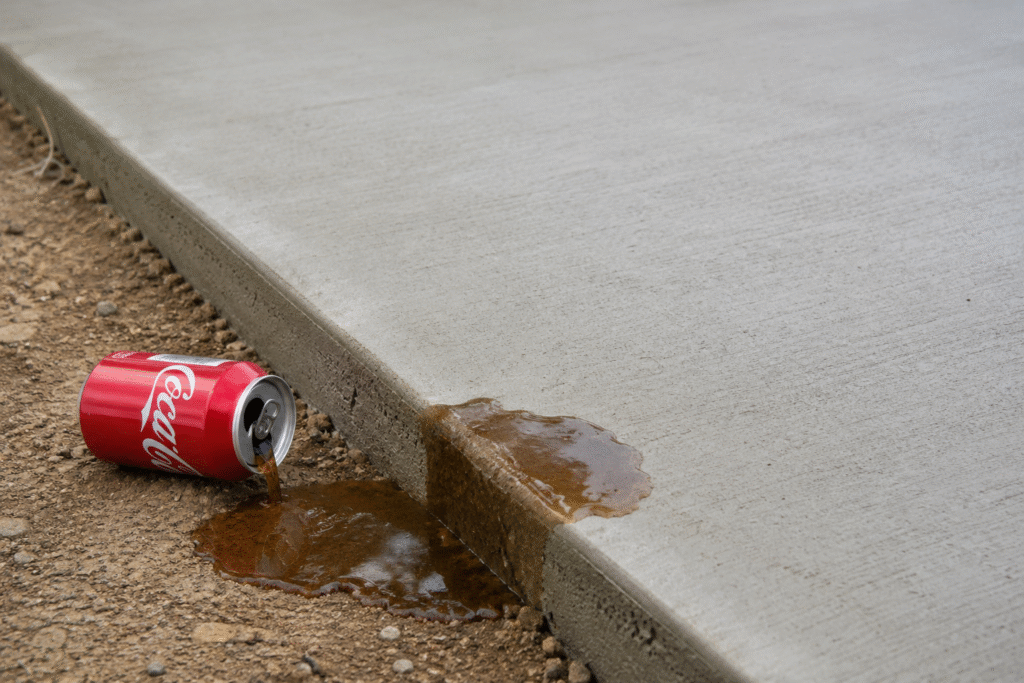
Coca-Cola is useless for curing and harmful for structural concrete. The phosphoric acid in the soda can slightly etch the surface and act as a retarder, slowing down the set time. Using it on a new slab will only weaken the surface layer.
Sticking to Science, Not Soda Pop
Every so often, a client asks me about some "trick" they heard about. The Coca-Cola myth is a common one. The logic seems to be that since it can clean rust, maybe it can do something for concrete.
Here's the reality. The mild phosphoric acid in Coca-Cola can react with the cement paste on the surface. This has two effects, both of them bad for a new slab:
- It Weakens the Surface: The acid chemically attacks the cement, which is the "glue" holding everything together. This creates a weak, powdery surface that will wear away quickly.
- It Acts as an Uncontrolled Retarder: Acids slow down the hydration process. By spraying soda on the surface, you are stopping the top layer from curing properly while the rest of the slab continues to harden.
Some artists use sugar washes (a key ingredient in soda) to create an "exposed aggregate" finish on decorative panels. They apply it to the surface, let the concrete harden, and then wash away the un-cured top layer of cement paste to expose the stones beneath. This requires great skill and is absolutely not what you want for a strong, durable floor or foundation. For predictable results, always use a professionally formulated retarder from a trusted supplier like us at Kehao.
What is the quickest curing concrete?
Your project needs to be open tomorrow, not next month. You don't just need fast-curing concrete; you need the absolute quickest type available. Is that even possible? Yes, it is.
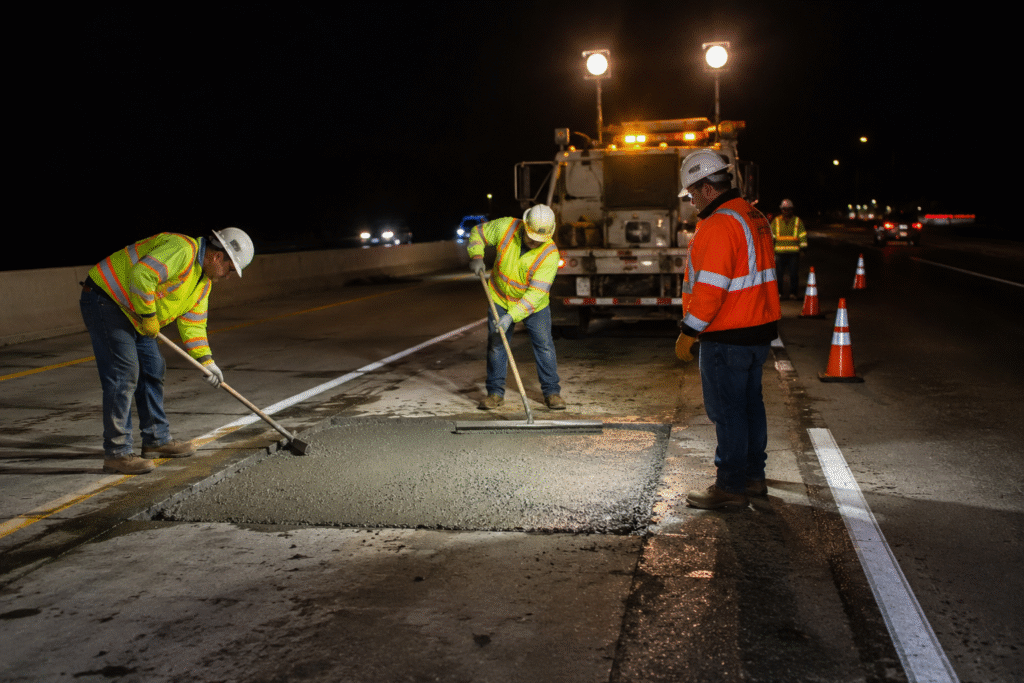
The quickest curing concretes are highly specialized mixes, often using Calcium Sulfoaluminate (CSA) cement or various Calcium Aluminate cements. These can be engineered to reach traffic-bearing strength in as little as one to four hours, making them ideal for emergency repairs.
The World of Rapid-Set Concrete
Standard concrete is like a family car: reliable and good for most trips. Quickest-curing concrete is like a Formula 1 race car: built for pure speed in very specific situations. These materials are a result of advanced chemistry and are used when downtime is measured in minutes, not days.
Here's a look at the top contenders:
- Calcium Sulfoaluminate (CSA) Cements: As I mentioned before, these are champions of speed. They work by forming ettringite crystals very quickly, which builds a strong internal structure in hours. We often supply the additives that go into these mixes for clients doing airport runway or highway repairs, where every minute a lane is closed costs thousands of dollars.
- Calcium Aluminate Cements (CAC): These are also very fast-setting and have the added benefit of being highly resistant to heat and chemical attack. You'll find them used in industrial settings, like lining furnaces or in facilities with chemical spills.
- Magnesium Phosphate Concrete: This is a specialty repair material that is often sold as a two-part kit. It hardens in minutes, even in freezing temperatures. It bonds extremely well to old concrete, making it perfect for patching potholes or anchoring bolts.
The trade-off for this incredible speed is usually cost and a very short working time. You have to mix, place, and finish the concrete in minutes. It requires a skilled and prepared team.
How long does it take concrete to cure in 70 degree weather?
"When can I walk on it?" "When can I drive on it?" These are the most common questions I get about curing time. The answer for a "perfect" day gives us a good baseline.
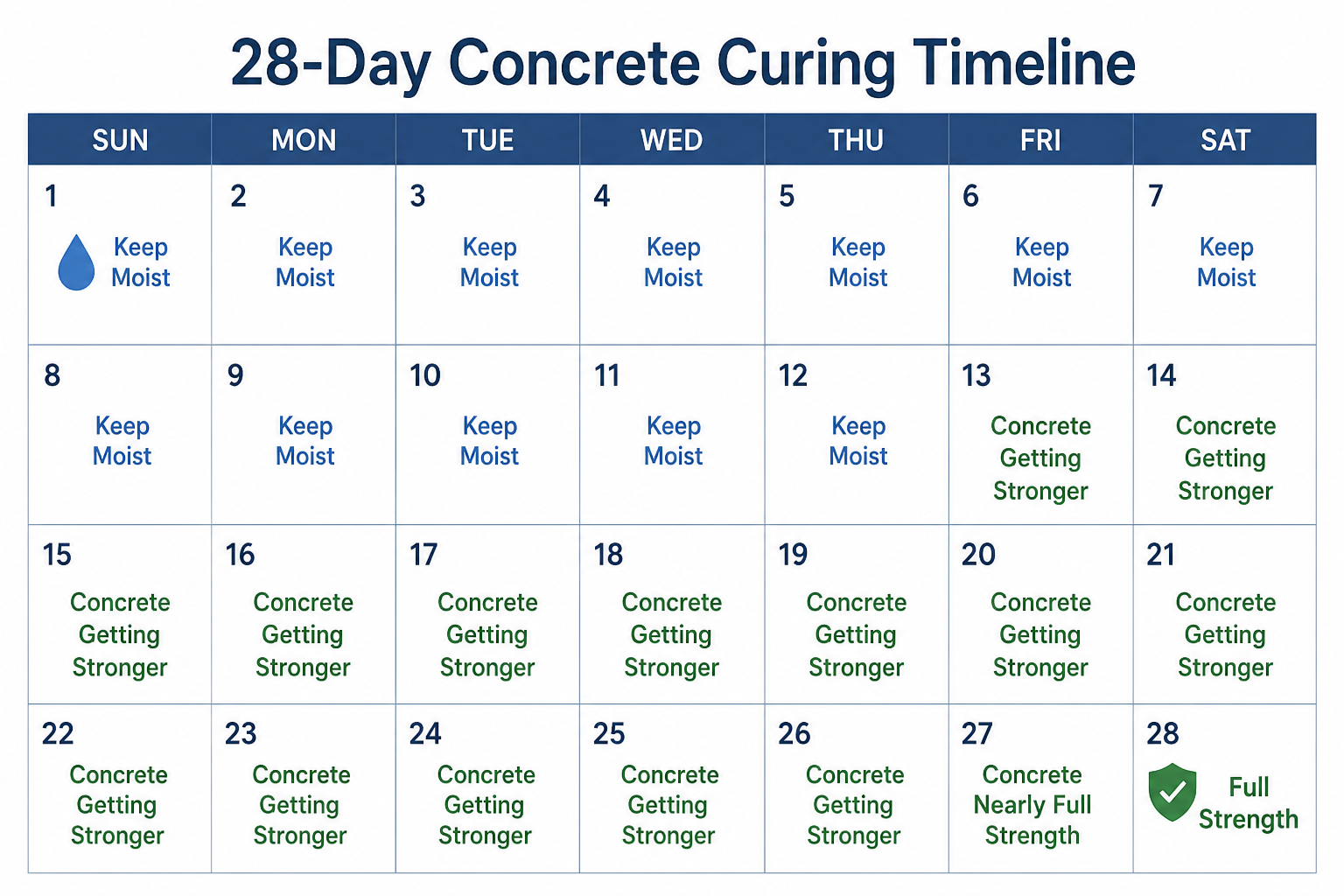
In ideal 70°F (21°C) weather with proper moisture, a standard concrete slab can be walked on in 24-48 hours. It reaches about 70% of its final specified strength in 7 days and is considered fully cured for design purposes at 28 days.
The 28-Day Benchmark Explained
Everyone in the industry talks about 28 days. But it's important to understand what that really means. Concrete never truly stops curing. It continues to get harder and stronger for years. The 28-day mark is simply the age at which it's tested to confirm it has reached the strength the engineer designed it for (e.g., 3000 psi, 4000 psi).
Here is a more practical timeline for a standard slab under ideal conditions:
| Time After Pouring | Activity | Approximate Strength Gained |
|---|---|---|
| 24 to 48 Hours | You can walk on it carefully. | ~40% |
| 7 Days | Curing is critical. Can handle light loads. | ~70% |
| 28 Days | Reaches specified design strength. | ~99% |
| 1 Year and Beyond | Continues to slowly get stronger. | 100%+ |
This timeline is a guide. Remember that all the factors we've discussed—the mix design, additives, temperature, and moisture—can change these numbers dramatically. Using an accelerator might allow you to walk on it in 12 hours. Pouring in cold weather might mean you have to wait 3 days. But for a simple estimate, this 70°F timeline is the industry standard.
Conclusion
The fastest way to cure concrete, especially in humid climates, is through a smart, three-part strategy: optimize your mix, lock in moisture, and control the environment.5 This ensures speed without sacrificing quality.
-
"Cement accelerator - Wikipedia", https://en.wikipedia.org/wiki/Cement_accelerator. A review of chemical accelerators, including calcium chloride and non-chloride options, shows they are widely used to speed up concrete curing by enhancing the hydration process, though calcium chloride is avoided in reinforced concrete due to corrosion risk. Evidence role: mechanism; source type: encyclopedia. Supports: To speed up curing, you should optimize the mix with chemical accelerators like calcium chloride or non-chloride options for reinforced concrete.. Scope note: The effectiveness and safety of accelerators depend on mix design and environmental conditions. ↩
-
"Calcium aluminate cements - Wikipedia", https://en.wikipedia.org/wiki/Calcium_aluminate_cements. Calcium sulfoaluminate (CSA) cement is documented to achieve high compressive strength within hours, making it suitable for rapid repair and precast applications. Evidence role: statistic; source type: education. Supports: For extreme speed, consider specialized cements like calcium sulfoaluminate, which achieve high strength in hours, not days.. Scope note: Actual strength gain depends on mix proportions and curing conditions. ↩
-
"Nano-Silica-Modified Concrete: A Bibliographic Analysis and ... - PMC", https://pmc.ncbi.nlm.nih.gov/articles/PMC9228660/. Studies show that nano-silica additives enhance both early and long-term strength of concrete and do not contribute to steel corrosion. Evidence role: mechanism; source type: paper. Supports: A more advanced option some of our clients are using for critical structures is nano-silica, which improves both early and long-term strength without the corrosion risk.. Scope note: Performance depends on proper dispersion and mix design. ↩
-
"[PDF] The Effect of Elevated Temperature on Concrete Materials and ...", https://info.ornl.gov/sites/publications/files/Pub1043.pdf. Research indicates that significant temperature differences between concrete and ambient air can greatly increase the risk of surface cracking, though exact percentages may vary. Evidence role: statistic; source type: paper. Supports: If the air temperature drops more than 15°C (27°F) from the concrete's temperature, the risk of surface cracking can increase by 300%.. Scope note: The 300% figure is an estimate and may not apply universally. ↩
-
"Guide for Curing Portland Cement Concrete Pavements, II , August ...", https://www.fhwa.dot.gov/publications/research/infrastructure/pavements/pccp/05038/007.cfm. Concrete curing best practices from engineering and construction manuals emphasize optimizing mix design, maintaining moisture, and controlling environmental conditions for rapid and quality curing. Evidence role: expert_consensus; source type: education. Supports: The fastest way to cure concrete, especially in humid climates, is through a smart, three-part strategy: optimize your mix, lock in moisture, and control the environment.. Scope note: Specific strategies may vary depending on climate and project requirements. ↩