Struggling with thin, watery shampoo formulations? Your HEC concentration1 might be off. Many manufacturers waste money on ingredients while still producing subpar products because they don't understand this critical balance.
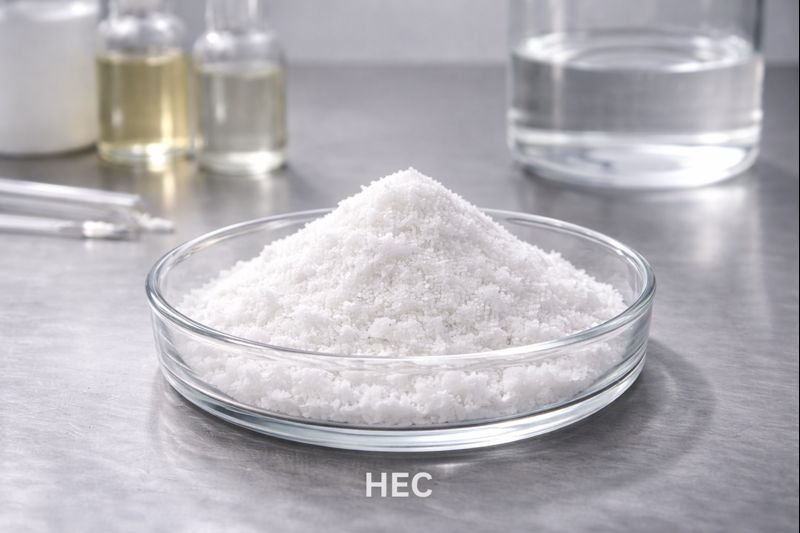
The ideal HEC (Hydroxyethyl Cellulose) concentration for creamy shampoo formulations ranges from 0.8% to 1.2%. This "golden ratio" provides optimal viscosity, creamy flow, and application feel while maintaining proper suspension and creating that premium texture consumers expect.
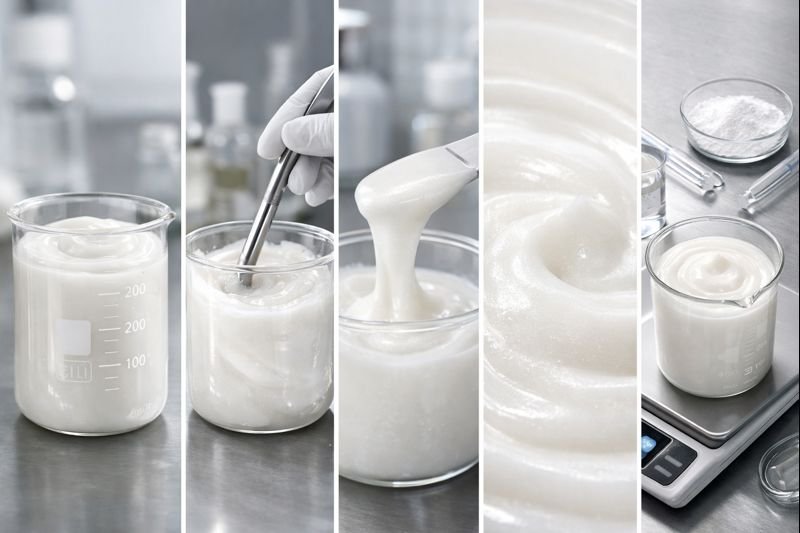
I've spent years perfecting shampoo formulations for major brands, experimenting with countless HEC concentration1s. What I've discovered is that the difference between a luxury product and a disappointing one often comes down to precise measurements within a surprisingly narrow range.
How to Make Shampoo Thicker and Creamier?
You've probably encountered shampoos that feel watery and cheap. A common mistake is thinking more thickener solves everything, but incorrect HEC concentration can ruin your product's texture and consumer experience.
To achieve thicker, creamier shampoo, use HEC at 0.8-1.2% concentration while balancing it with pearlizing agents (like ethylene glycol distearate) and fatty alcohols (such as cetyl alcohol). This combination creates structure, stability, and the luxurious creamy texture consumers associate with premium products.
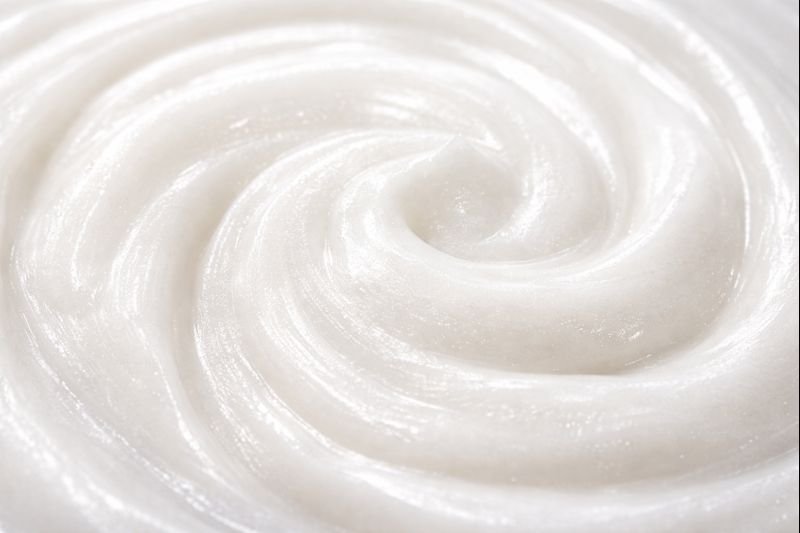
The science behind creating that perfect creamy consistency goes beyond just adding thickeners. When I consult with shampoo manufacturers, I emphasize that HEC concentration isn't just about thickness—it's about creating the right molecular structure that supports both performance and sensory experience.
Crossing the boundaries on either side can be disastrous. Using less than 0.7% HEC results in thin, watery formulations that feel cheap and insubstantial. They lack body and that premium suspension effect consumers expect. On the flip side, exceeding 1.5% HEC creates an overly viscous, stringy texture that feels sticky and unpleasant during application and rinse-off.
The true art of formulation lies in understanding that HEC is only one part of the equation. Think of it as the structural framework—necessary but incomplete on its own. For the ultimate creamy texture, this framework must be complemented by:
| Component | Function | Typical Concentration |
|---|---|---|
| HEC | Provides main viscosity and structure | 0.8-1.2% |
| Pearlizing Agents | Creates opacity and silky appearance | 1-3% |
| Fatty Alcohols | Enhances creaminess and conditioning | 0.5-2% |
| Surfactant System | Cleansing while supporting structure | 10-15% |
When property balanced, these elements work synergistically to create that rich, creamy texture that glides through hair and suggests premium quality to consumers.
What is the Formulation of Cream Shampoo?
Have you wondered why some shampoos feel luxuriously creamy while others feel like dish soap? The answer isn't just marketing—it's chemistry. Creating the perfect cream shampoo formulation2 requires precise ingredient selection and balance.
A cream shampoo typically contains 0.8-1.2% HEC as a thickener, 10-15% mild surfactants (like SLES/betaines), 1-3% pearlizing agents, conditioning ingredients like silicones or oils (1-3%), fatty alcohols (0.5-2%), preservatives, fragrances, and pH adjusters. This balanced formula creates the rich, opaque texture consumers associate with premium products.
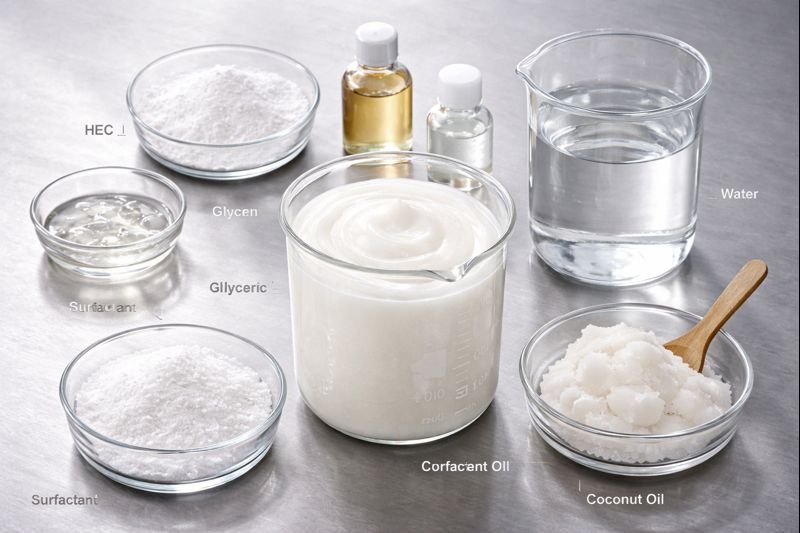
The development of a successful cream shampoo formulation requires more than simply knowing the ingredients—it demands a deep understanding of how these components interact with one another. From my experience working with major manufacturers, I've found that the sequence of addition is nearly as important as the concentrations themselves.
A typical premium cream shampoo formulation starts with water as the base (60-80%), followed by the careful addition of surfactants like Sodium Laureth Sulfate (SLES) or milder alternatives such as Sodium Cocoyl Isethionate. The HEC (at that critical 0.8-1.2% concentration) is typically pre-dispersed and added at a specific temperature range to ensure proper hydration and development of its thickening properties.
What separates ordinary formulations from exceptional ones is the synergy between ingredients. For instance:
| Component Interaction | Result |
|---|---|
| HEC + Surfactants | Creates basic viscosity structure |
| HEC + Pearlizing Agents | Develops opacity and suspension |
| HEC + Fatty Alcohols + Oils | Produces rich, creamy texture |
| Complete System + pH Adjustment | Stabilizes the final formulation |
When developing formulations, I always emphasize that the visual appearance and rheological properties (flow behavior) of the final product are heavily influenced by how these interactions are managed during the manufacturing process. Temperature control, mixing speed, and addition order can all dramatically affect whether your shampoo achieves that coveted creamy texture or falls short.
How to Use HEC in Shampoo?
Are you struggling with clumps or uneven texture in your shampoo formulation? Improper HEC incorporation is likely the culprit. Even with the right concentration, incorrect addition methods can ruin your product.
To use HEC in shampoo, first disperse it in glycerin or propylene glycol (ratio 1:5) before adding to water at 50-60°C while mixing. Add it before surfactants at the 0.8-1.2% concentration, ensure complete hydration (15-20 minutes), then incorporate other ingredients. Adjust pH last for optimal thickening effect.
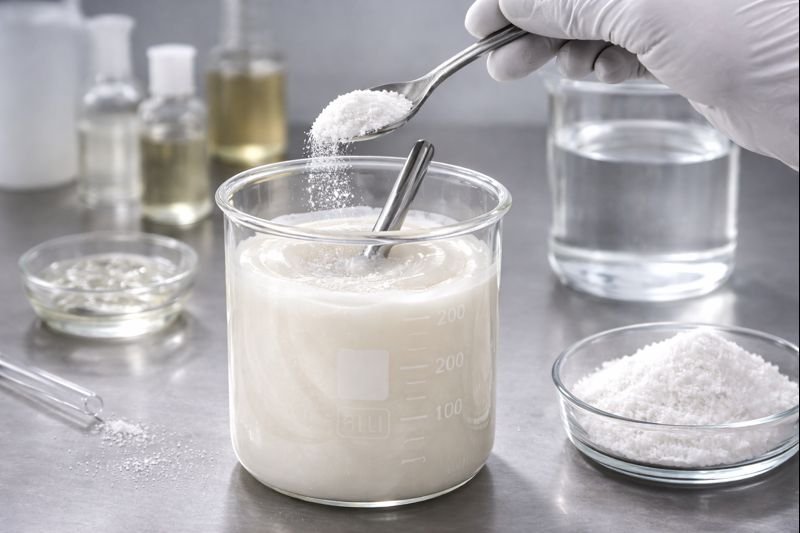
The proper incorporation of HEC into shampoo formulations can make or break your product's texture, stability, and overall customer experience. Through years of formulation work, I've developed a methodical approach that ensures consistent results every time.
HEC is notoriously prone to clumping when added directly to water, which can result in "fish eyes" or gel lumps that never fully integrate into the formulation. These imperfections are immediately noticeable to consumers and suggest poor quality control. To prevent this, I recommend creating a slurry of HEC in a non-solvent like glycerin or propylene glycol before adding it to your water phase.
Temperature control is another critical factor that many formulators overlook. HEC hydrates optimally at moderate temperatures (50-60°C)—too cold, and it won't fully hydrate; too hot, and you risk degrading the polymer chains and losing viscosity. I've developed a temperature-controlled addition sequence that works well in large-scale production:
| Step | Temperature | Process |
|---|---|---|
| 1 | Room temp | Create HEC pre-dispersion in glycerin (1:5) |
| 2 | 50-60°C | Add HEC slurry to deionized water with moderate agitation |
| 3 | 50-60°C | Continue mixing for 15-20 minutes for complete hydration |
| 4 | 45-50°C | Add primary surfactants slowly to maintain structure |
| 5 | 40-45°C | Incorporate conditioning agents and pearlizing components |
| 6 | 35-40°C | Add preservatives, fragrance, and final additives |
| 7 | 30-35°C | Adjust pH for optimal thickening (typically 5.5-6.5) |
This methodical approach ensures that the HEC develops its full thickening potential while creating a stable matrix that can support other ingredients. One trick I've learned is to monitor the viscosity development throughout the process—a properly hydrated HEC system will show a characteristic viscosity curve that plateaus after about 20 minutes of hydration time.
What is the Best pH Level for Hair Shampoo?
Have you noticed how some shampoos leave your hair feeling stripped and straw-like? The pH level could be the hidden culprit. Getting this wrong doesn't just affect product performance—it impacts hair health.
The optimal pH for hair shampoo is between 5.0 and 6.0, which respects hair's natural pH of 4.5-5.5. This slightly acidic range maintains the hair cuticle's integrity, optimizes HEC thickening performance (especially at 5.5), and ensures compatibility with most preservative systems while providing effective yet gentle cleansing.
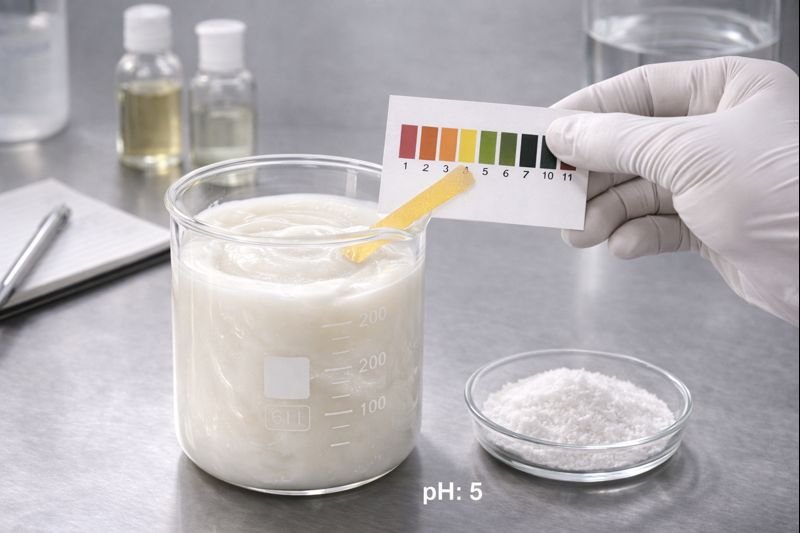
The relationship between pH and shampoo performance is one of the most underappreciated aspects of formulation. In my work with premium brands, I've observed that pH adjustment is often treated as an afterthought, but it actually deserves careful consideration right from the formulation concept stage.
Hair's natural pH is slightly acidic (4.5-5.5), forming a protective acid mantle that helps seal the cuticle and retain moisture. When shampoo pH strays too far from this range, it can disrupt this natural protection. Too alkaline (pH>7), and the cuticle swells and lifts, causing friction, tangles, and long-term damage. Too acidic (pH<4.5), and you risk irritating the scalp and compromising the cleaning efficiency of your surfactant system.
The pH level also directly impacts how HEC performs in your formulation. At pH 5.5, hydroxyethyl cellulose reaches its optimal thickening efficiency, particularly when used in that critical 0.8-1.2% concentration range we established earlier. This creates an ideal synergy—the same pH that's best for hair health also maximizes your thickener's performance.
Here's how pH affects different aspects of your shampoo formulation:
| pH Range | Effect on Hair | Effect on HEC | Effect on Surfactants |
|---|---|---|---|
| 4.0-4.5 | May be too acidic for sensitive scalps | Reduced efficiency | Decreased foaming |
| 5.0-6.0 | Optimal for hair health | Optimal thickening | Good cleansing/foaming balance |
| 6.0-7.0 | Begins to disrupt acid mantle | Still effective but less ideal | Increased cleansing power |
| >7.0 | Damages cuticle, causes frizz | Significantly reduced effectiveness | Harsh cleansing, potential irritation |
When formulating, I always recommend checking pH at multiple stages—after HEC hydration, after surfactant addition, and as a final adjustment. Small shifts can occur throughout the manufacturing process, and maintaining that 5.0-6.0 target (ideally 5.5) ensures both optimal performance and gentle hair care.
Conclusion
The "golden ratio" for HEC in creamy shampoos is 0.8-1.2%—below 0.7% creates watery products, while above 1.5% makes them stringy. Remember that HEC provides structure while pearlizing agents and fatty alcohols create the truly luxurious cream effect consumers expect.
FAQ
Can I use HEC as the only thickener in my shampoo?
Yes, HEC can be the primary thickener, but for premium creamy texture, it works best when complemented by pearlizing agents and fatty alcohols.
How do I fix a shampoo that's too thick after adding HEC?
Dilute with small amounts of water or adjust the pH slightly upward, but don't exceed pH 6.5.
Is HEC compatible with all surfactant systems?
HEC works with most common surfactants, but extremely high concentrations of salt or cationic surfactants may reduce its effectiveness.
What's the difference between HEC and HPMC for shampoo formulations?
HEC typically provides better clarity and compatibility with surfactants, while HPMC can offer stronger moisture retention properties.
How long should I mix after adding HEC?
Allow 15-20 minutes of mixing at 50-60°C for complete hydration before adding other ingredients.