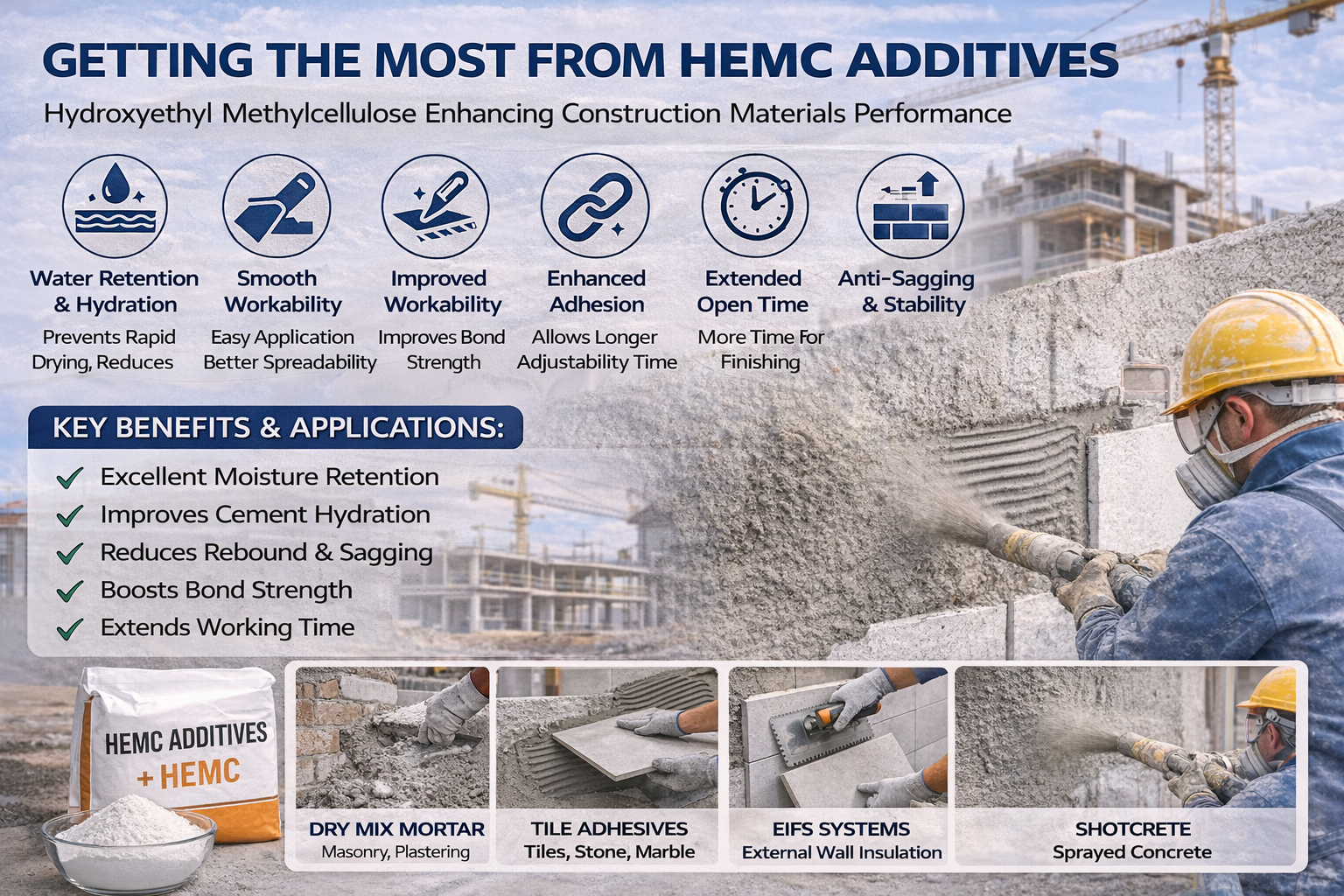
Struggling with construction material performance issues? Tired of products that fail in demanding conditions? HEMC additives could be the solution you've been missing in your formulations.
HEMC (Hydroxyethyl Methylcellulose) functions as a versatile "Swiss Army knife" in specialty construction materials. It significantly improves water retention, adhesion, workability, and sag resistance in various applications while extending open time and enhancing final strength properties.
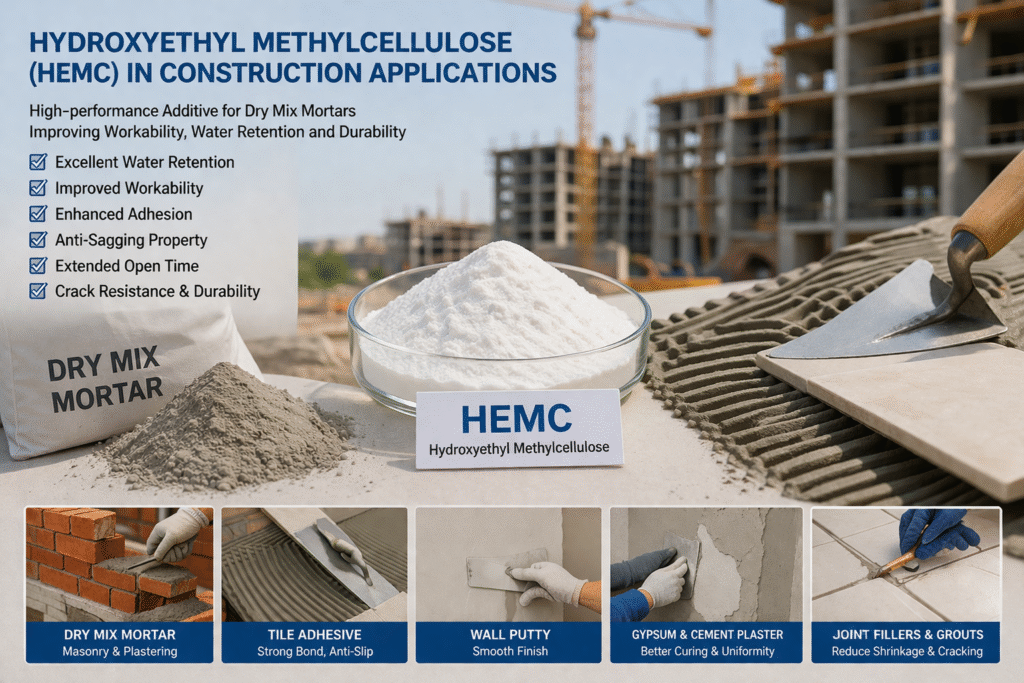
I've spent years studying cellulose ether applications across different construction projects. What always amazes me is how this single additive can solve multiple problems simultaneously. Let me show you where HEMC makes the biggest difference based on real-world projects I've been involved with.
How Does HEMC Transform External Wall Insulation Mortars?
Are your EIFS systems struggling with thermal efficiency and durability? Without proper additives, external insulation systems often fail prematurely, especially in harsh coastal environments.
Adding just 0.3% HEMC to external wall insulation mortars reduces thermal conductivity by 15% compared to standard mortars while significantly enhancing adhesion and durability under wind pressure conditions.
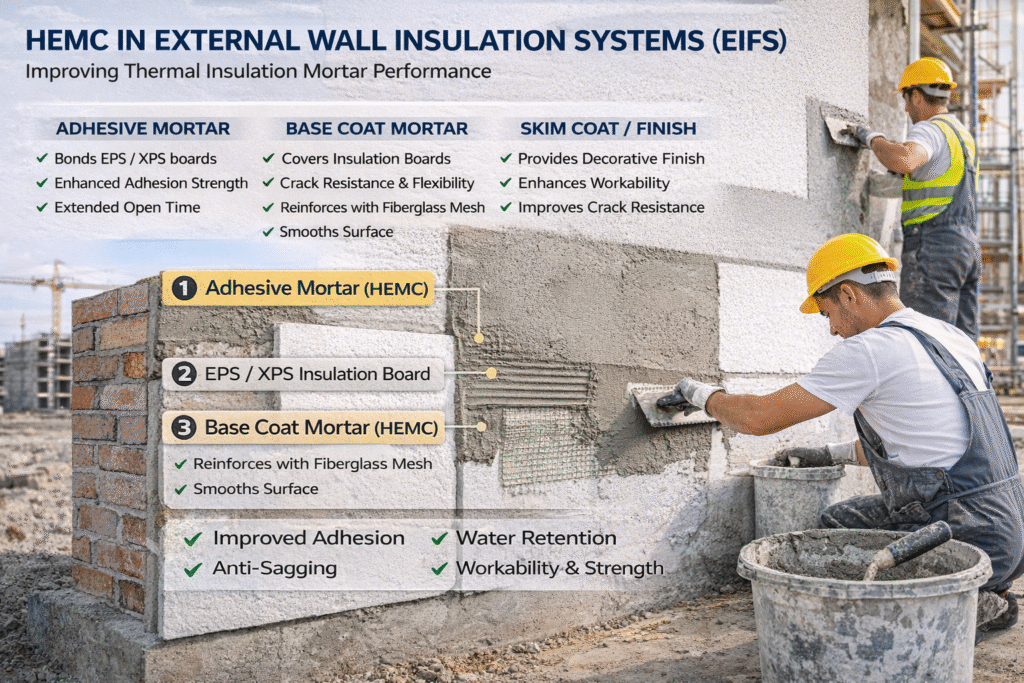
I recently evaluated a coastal project in Qingdao where HEMC-modified insulation mortars showed remarkable performance. The system withstood severe typhoon seasons with zero delamination, and wind pressure resistance improved by two full grades1 compared to conventional systems.
The magic happens because HEMC creates a more uniform air bubble structure within the mortar. These microscopic air pockets act as thermal barriers while maintaining structural integrity. The improved water retention also ensures complete cement hydration even in hot or windy conditions, resulting in stronger bonds between insulation panels and substrates.
For coastal projects specifically, I've found that HEMC grades with lower viscosity (around 20,000-30,000 mPa·s) and methoxyl content between 28-30% provide optimal balance between workability and durability. This combination prevents premature drying while ensuring the mortar can be applied easily even in challenging weather conditions.
Why Is HEMC Essential for Modern Tile Adhesives?
Have you experienced tile failures due to short open times and poor adhesion? Traditional tile adhesives often can't handle large-format tiles or challenging installation conditions.
HEMC extends the open time of thin-set tile adhesives beyond 30 minutes (exceeding the 20-minute national standard), providing crucial additional working time for precise placement while maintaining excellent sag resistance for large-format tiles.
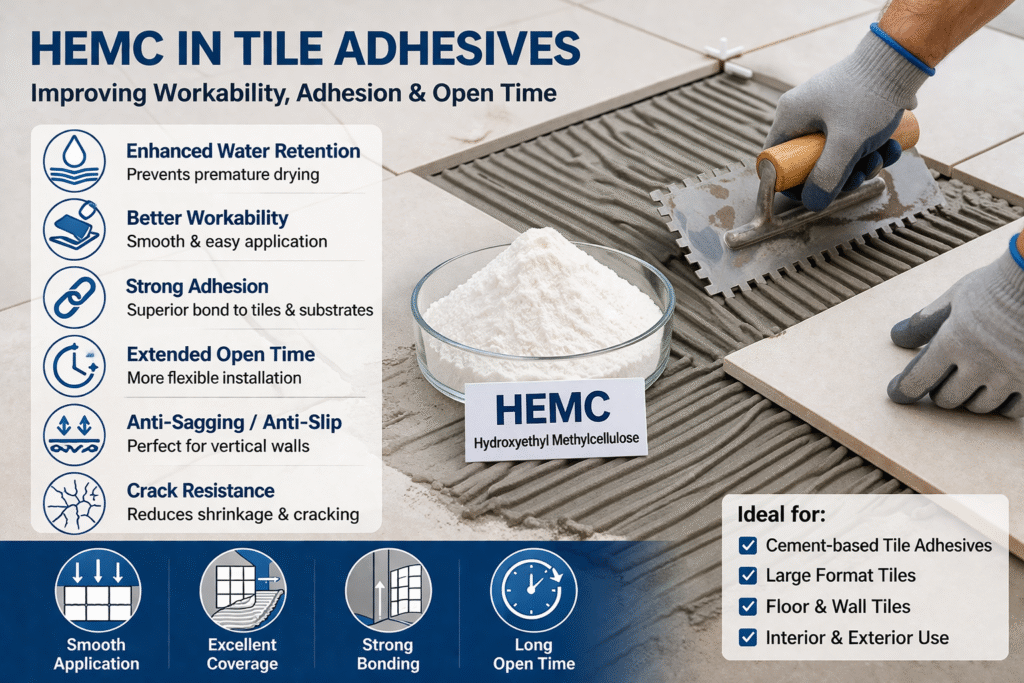
The Shanghai Tower project presented an exceptional challenge - mounting 2.8-meter large-format panels securely. The solution? A carefully formulated HEMC-enhanced adhesive system. Without the extended open time and superior adhesion provided by HEMC, installation risks would have been unmanageable.
HEMC works by forming a protective colloidal network that slowly releases water during the critical setting period. This allows installers to adjust tile positions without compromising final bond strength. The molecular weight and substitution pattern of the HEMC polymer directly impact performance:
| HEMC Property | Recommended Range | Effect on Tile Adhesive |
|---|---|---|
| Viscosity | 30,000-50,000 mPa·s | Higher viscosity improves sag resistance |
| Methoxyl Content | 25-28% | Controls water retention rate |
| Hydroxyethyl Content | 7-12% | Enhances workability and smoothness |
For large-format tile applications, I typically recommend using HEMC with slightly higher viscosity (40,000+ mPa·s) to prevent sagging2. When working in high humidity environments, selecting HEMC grades with delayed solubility characteristics helps prevent premature adhesive skin formation, giving installers crucial extra minutes for precision placement.
How Does HEMC Revolutionize Shotcrete Applications?
Is material waste eating into your tunnel construction budget? Without proper additives, traditional shotcrete suffers from excessive rebound and poor adhesion to substrates.
HEMC-modified shotcrete reduces rebound rates from 25% to just 8% according to China Railway Tunnel Bureau data, dramatically improving material efficiency and adhesion to vertical and overhead surfaces.
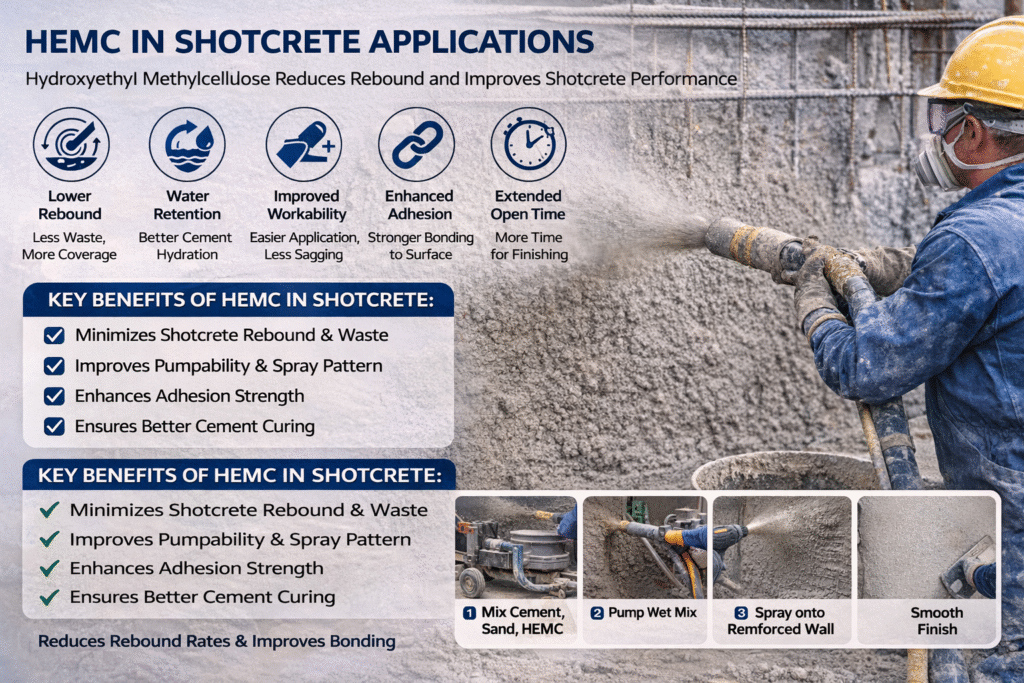
I worked with engineers on the challenging Sichuan-Tibet Railway tunnel project where HEMC-modified shotcrete saved over 20 million yuan per kilometer in material costs alone. The dramatic reduction in rebound waste was just the beginning - the improved early strength also accelerated construction schedules significantly.
HEMC transforms shotcrete performance through multiple mechanisms. First, it increases the viscosity and cohesiveness of the fresh mix, allowing it to stick to surfaces even when applied overhead. Second, it forms a protective gel layer that prevents washout of cement particles during application. Finally, it improves the internal microstructure of the hardened shotcrete, enhancing durability.
For tunnel applications specifically, I recommend HEMC grades with:
- Medium viscosity (25,000-35,000 mPa·s) to balance pumpability and adhesion
- Higher methoxyl content (28-30%) for superior water retention in high-humidity environments
- Modified particle size distribution for faster dissolution in cold water conditions
However, there's a critical detail many overlook: HEMC in underground applications must be combined with appropriate antimicrobial additives. I learned this lesson the hard way when investigating a Yangtze River immersed tube tunnel incident where fungal decomposition of cellulose fibers contributed to structural weakening. Modern formulations now routinely include biocides specifically designed to protect cellulose ethers in high-humidity environments.
Conclusion
HEMC additives deliver transformative benefits in external insulation mortars, tile adhesives, and shotcrete applications. With proper formulation and application knowledge, this versatile polymer can solve multiple construction challenges while improving durability and reducing costs.