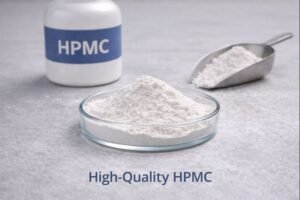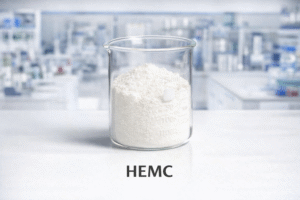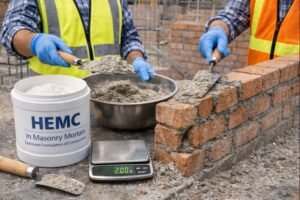
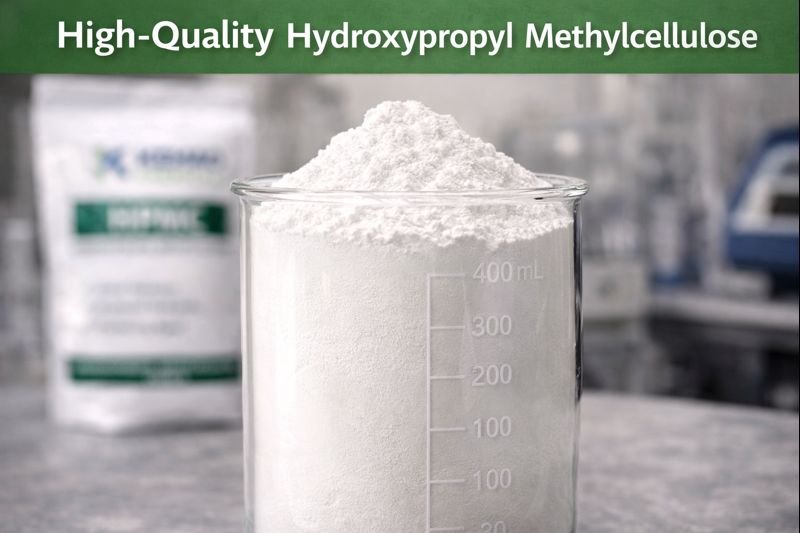
Worried about buying fake HPMC that could ruin your construction project? Low-quality hydroxypropyl methylcellulose1 can weaken mortar, create adhesion problems, and waste your money. These simple tests can save your business.
To test HPMC purity2 without lab equipment, observe its dissolution in cold water (it should form clear gel without lumps), check for odorless quality with smooth texture between fingers, and perform a burn test where pure HPMC leaves only light black ash that easily blows away.
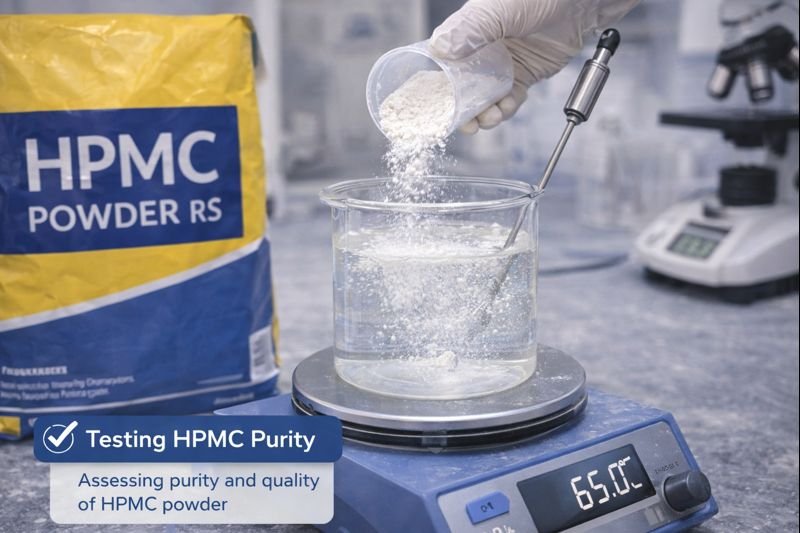
I've been in the construction materials business for over 15 years, and I've seen many contractors struggle with inconsistent mortar quality. The culprit is often impure HPMC. These three simple tests have saved my customers thousands of dollars and countless headaches. Anyone can do them right on the job site in minutes. Let me show you how.
How Does the Water Dissolution Test Reveal HPMC Quality?
Have you ever mixed HPMC and watched it turn into lumpy "fish eyes" instead of a smooth gel? That frustrating experience signals poor quality that will compromise your entire project.
For the water dissolution test, sprinkle a small amount of HPMC onto cold water without stirring. High-quality HPMC will spread evenly across the surface, gradually absorb water, thicken, and form a clear solution. Low-quality products will sink, form stubborn lumps, or create cloudy solutions.
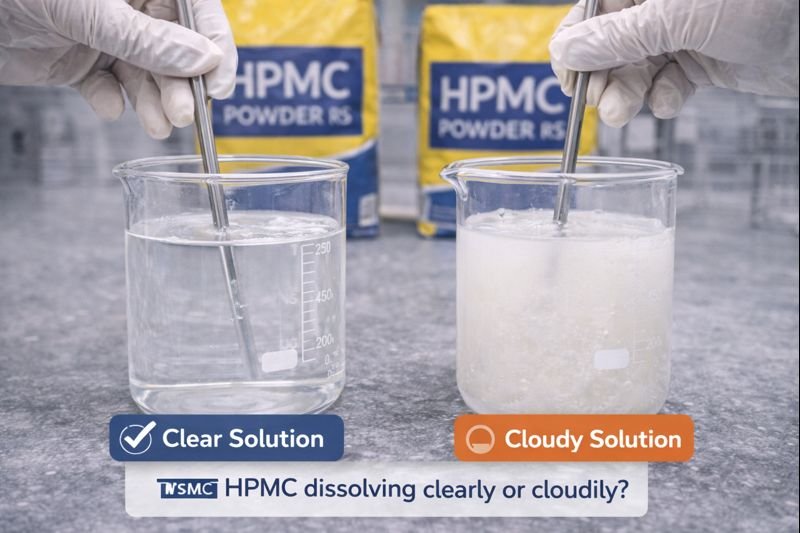
The water dissolution test is my go-to first check because it's so revealing about what you're really working with. A proper HPMC sample demonstrates hydrophilic properties that are essential for its function in construction applications. When high-quality HPMC contacts cold water, you'll observe three distinct phases: even distribution across the water surface, gradual swelling as it absorbs water, and finally complete dissolution into a clear, transparent gel.
If you see immediate sinking to the bottom, this indicates the material has been adulterated with heavier substances like salt or other inorganic fillers. These adulterants increase weight (allowing sellers to charge for worthless ingredients) but drastically reduce the HPMC's effectiveness. Similarly, persistent "fish eye" formations - those stubborn lumps that won't dissolve no matter how much you stir - point to manufacturing defects or impurities that will create inconsistent performance in your mortar.
The clarity of the final solution is equally important. Pure HPMC creates a transparent solution, while a cloudy or milky appearance often reveals starch additives or other impurities. These fillers might save you money initially but will compromise water retention, bond strength, and overall mortar performance. I've seen projects where contractors had to completely remove and replace sections because impure HPMC caused premature drying and poor adhesion.
Can Sensory Checks Identify Pure HPMC Without Equipment?
Ever received a batch of HPMC that just didn't "feel right" but couldn't explain why? Your senses are actually sophisticated detection tools that can identify impurities your eyes might miss.
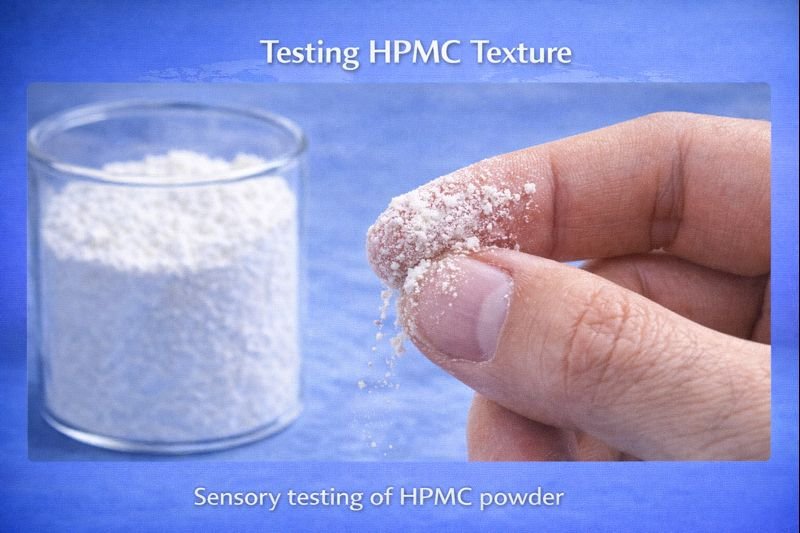
Pure HPMC should be virtually odorless with only a faint ethereal smell. Any strong ammonia, alcohol, or chemical odors indicate poor manufacturing processes or inferior raw materials. When rubbed between thumb and forefinger, high-quality HPMC feels extremely smooth like fine flour, while grittiness suggests salt or sand additives.
I've trained dozens of site managers to perform these sensory checks as part of their material acceptance process, and it's remarkable how quickly they develop the ability to identify quality issues with just their senses. The smell test is particularly revealing about manufacturing quality. Pure HPMC undergoes a specific production process involving propylene oxide and methyl chloride, which should be thoroughly removed during washing cycles. When you detect strong chemical odors, it's a clear indication that the manufacturer has cut corners in the purification process.
The most common offensive odors include ammonia (from inadequate neutralization), alcohols (from incomplete reaction processing), or other sharp chemical smells that indicate residual solvents. These aren't just unpleasant - they signal chemical impurities that can interfere with cement hydration and potentially weaken your finished product.
The tactile test complements the smell check perfectly. High-quality HPMC has a remarkably consistent texture - finely powdered and silky smooth between the fingers, similar to premium flour. This uniformity ensures even dispersion in mortar mixes. When you feel grittiness or coarse particles, you're likely detecting sodium chloride (salt) or silica additives used as cheap fillers to increase weight. These fillers not only diminish the effective HPMC content but can also interfere with proper water retention and adhesion properties in your mortar.
I recommend performing these sensory tests on every new batch of HPMC you receive, even from trusted suppliers. Quality can vary between production runs, and catching problems before the material goes into your mix can save enormous amounts of time and money. Over time, you'll develop an intuitive sense of what "good" HPMC should feel and smell like.
Why is the Burn Test the Most Definitive Field Method for HPMC Purity?
Are you tired of discovering low-quality HPMC only after your mortar fails? The burn test gives you immediate, undeniable proof of purity before you risk your reputation on suspicious materials.
For the burn test, place a small sample of HPMC in a metal spoon and heat it with a lighter. Pure HPMC will burn completely, leaving only lightweight black carbon ash that disperses easily when blown. If substantial white or grayish residue remains, the sample contains significant amounts of sodium chloride or other inorganic fillers.
I consider the burn test the ultimate field verification method because it's based on simple chemistry that can't be easily faked. The science behind this test is straightforward: pure HPMC is an organic compound derived from cellulose (C₆H₁₀O₅)n with hydroxypropyl and methyl substitutions. When burned completely, organic materials like this convert primarily to carbon dioxide and water vapor, leaving behind only a minimal amount of carbon residue (black ash).
This black carbon ash from pure HPMC has three distinctive characteristics: it's extremely lightweight, very small in quantity relative to the original sample, and disappears with the slightest breath or touch. In contrast, inorganic fillers like sodium chloride (table salt), calcium carbonate, or silica don't burn - they merely change form. Salt melts at high temperatures but resolidifies upon cooling as a white residue. Other mineral fillers may change color but remain as substantial solid residue after burning.
The quantity of residue provides a rough estimate of adulteration levels. In my experience working with manufacturers across Asia, some unscrupulous suppliers add as much as 30-40% salt to increase weight and reduce costs. Such heavily adulterated products might still provide some thickening effect initially, but they drastically underperform in critical properties like water retention, workability time, and adhesion strength.
This test has saved my customers from countless construction failures. One particular client in Saudi Arabia was experiencing mysterious adhesion problems with their tile installation projects. When we performed the burn test on their HPMC, we discovered nearly 25% salt content! After switching to verified pure HPMC, their adhesion problems disappeared completely. For critical applications like external insulation and finish systems (EIFS), tile adhesives, and self-leveling compounds, this level of quality verification isn't optional - it's essential.
Conclusion
Testing HPMC purity2 through dissolution, sensory checks, and burn tests can save your construction projects from failure. These simple field methods quickly identify adulterated products, ensuring you get the performance you're paying for.