Mishandling chemicals, even seemingly safe ones, can create risks. This can cause health issues or accidents, hurting your team and your production schedule. Let's make sure that never happens.
To handle PVA 2488 safely, you must use personal protective equipment like dust masks and safety glasses. Always work in a well-ventilated area, store the powder in a cool, dry place, and know the proper first aid and spill cleanup procedures. These simple steps prevent most workplace problems.
I've visited many factories over the years, from small workshops to massive production plants like the ones many of my customers run. One thing I always notice is that the most successful and efficient operations are also the safest. Safety isn't just about following rules; it's about protecting your investment, your people, and your products. When your team is safe, they work better, and when your materials are handled correctly, you reduce waste and ensure quality. Let's break down the exact steps you need to take to make your handling of PVA 2488 as safe and efficient as possible.
What are the Key Properties of PVA 2488 You Need to Know for Safety?
Are you confused by complex chemical data sheets? All that technical data can make it easy to miss the practical safety information you actually need. I'll simplify it for you.
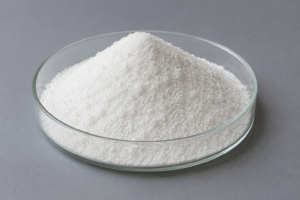
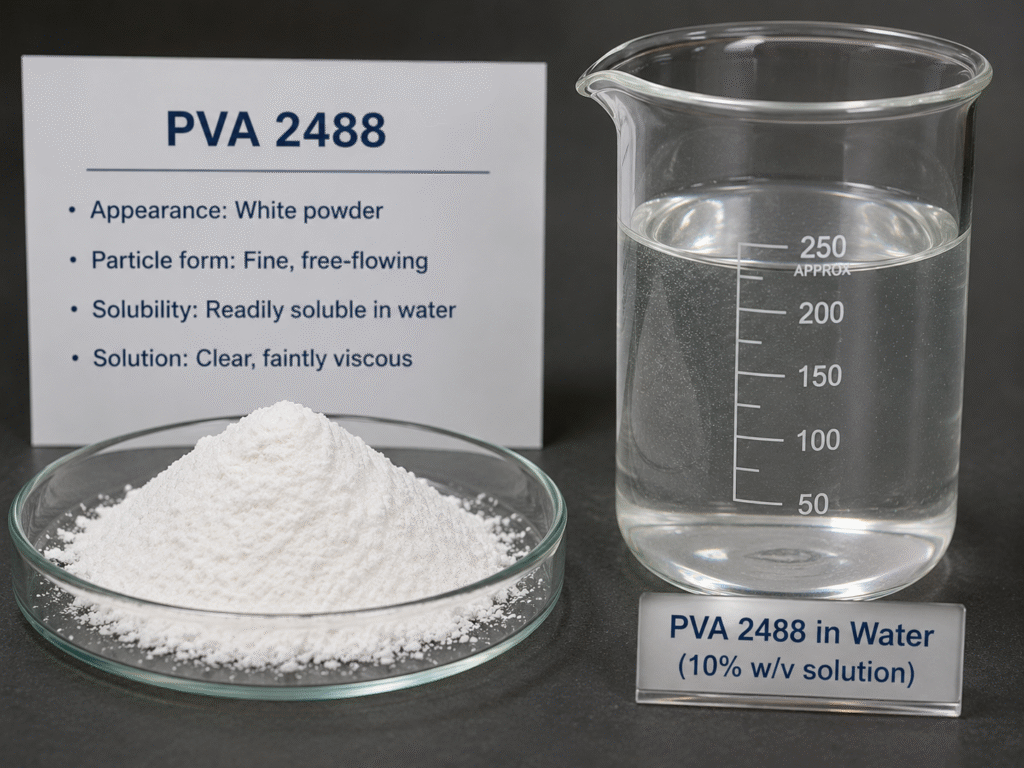
Polyvinyl Alcohol (PVA) 2488 is a white, solid powder that dissolves in water. It is not highly toxic, but the fine dust can irritate your eyes and lungs. It is also combustible, so you must keep it away from open flames and strong heat sources.1
Understanding a product's basic properties is the first step to handling it safely. PVA 2488 is a fantastic polymer, but we must respect its chemical and physical nature. I always tell my customers, like Mark in Saudi Arabia, to think about how the product will behave in their specific factory environment.
Physical Form and Dust
PVA 2488 comes as a fine, lightweight powder. This is great for dissolving it quickly, but it also means the dust can easily become airborne during scooping, pouring, or mixing. This dust is the main hazard. If inhaled, it can irritate the respiratory tract, and if it gets in your eyes, it will cause discomfort.2
Interaction with Water
One of the best features of PVA is its water solubility. This also affects safety. Small spills can be cleaned more easily with water. However, a spill on the floor that gets wet becomes extremely slippery, creating a serious fall hazard.
Thermal Properties
PVA 2488 is a stable polymer at room temperature. However, it is an organic material and it will burn if exposed to a strong ignition source.3 It's important to know it's combustible to ensure it's stored far away from any sparks or flames.
Here is a simple table of its key properties related to safety:
| Property | Description | Safety Implication |
|---|---|---|
| Appearance | White to light yellow granular or powder solid | Dust can become airborne and act as an irritant. |
| Solubility | Soluble in water, especially hot water | Spills can become very slippery when wet. |
| Combustibility | Burns when exposed to flame | Must be stored away from heat and ignition sources. |
| Toxicity | Generally considered low toxicity | The primary hazard is physical irritation from dust. |
What Personal Protective Equipment (PPE) is Essential When Handling PVA 2488?
Do you think you don't need safety gear for a "low-hazard" chemical? Even minimal exposure to dust day after day can cause long-term irritation. Protecting your team is protecting your business.
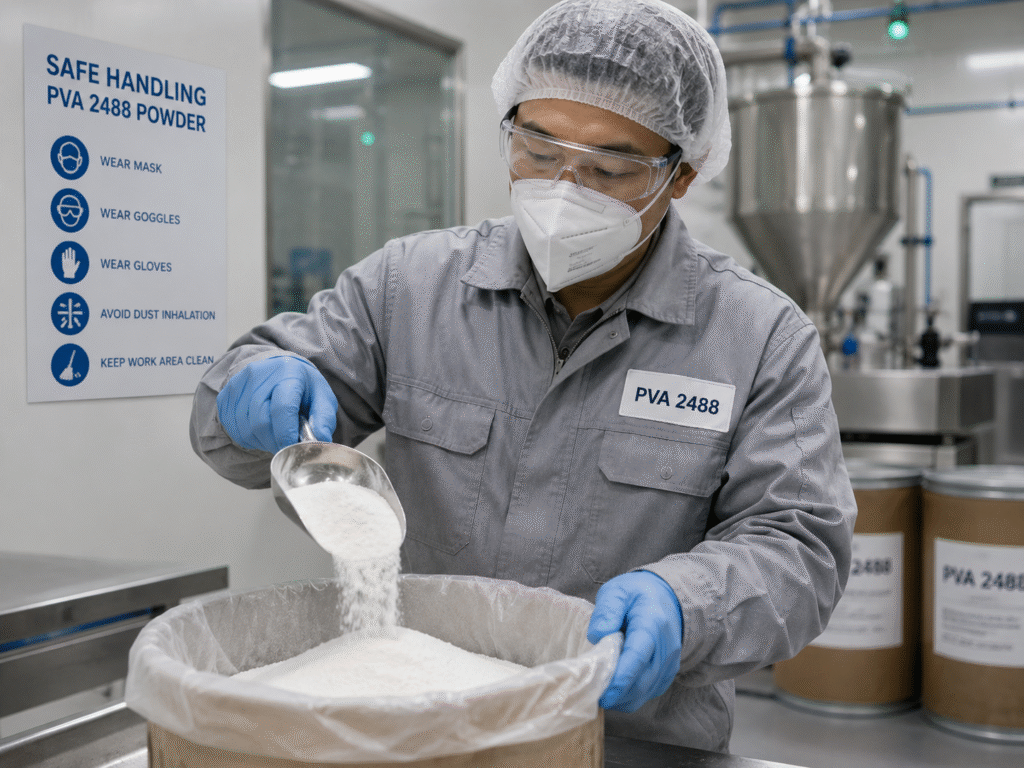
At a minimum, anyone handling PVA 2488 powder should wear safety glasses with side shields and a dust mask (N95 or equivalent). Gloves are also recommended to prevent dry skin from prolonged contact. This simple gear prevents the most common issues.
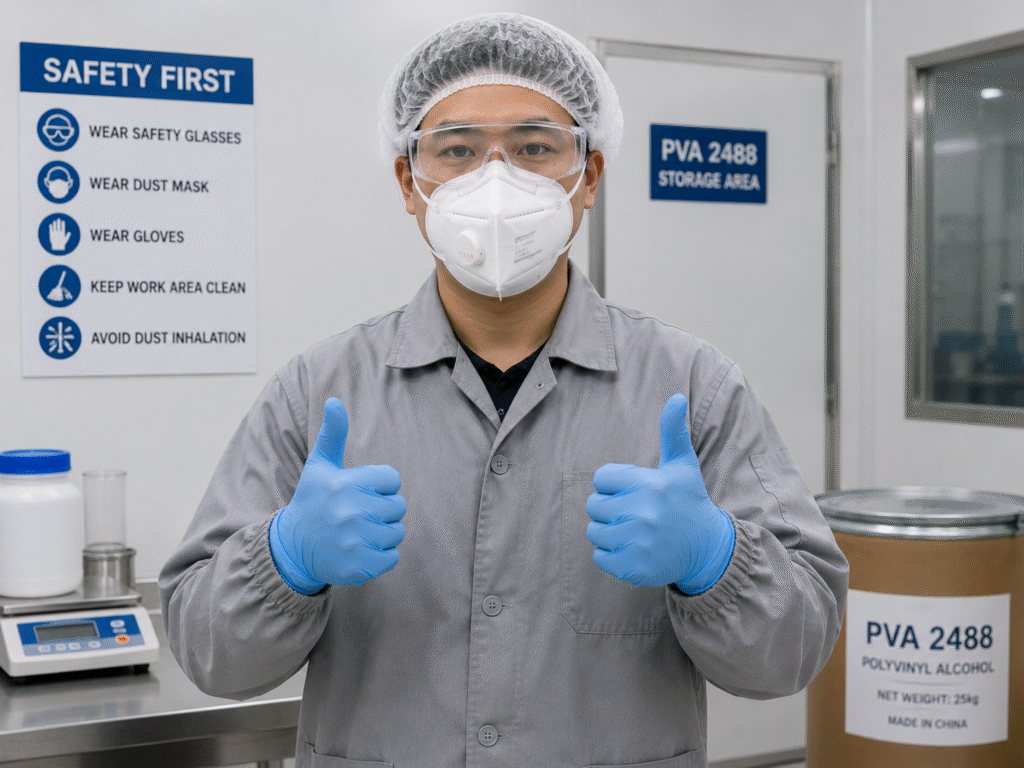
When I provide PVA 2488 to large paint or mortar factories, I always emphasize that consistent use of proper PPE is non-negotiable. It's not about working with a dangerous chemical; it's about professional best practices for handling any fine powder. A small investment in PPE pays for itself by preventing lost time due to health complaints or injuries.
Eye and Face Protection
PVA dust is a mechanical irritant. It won't chemically burn your eyes, but it can cause significant redness, itching, and discomfort, just like getting sand in your eye.
- What to use: Safety glasses with side shields are the minimum. If you are working in a very dusty area, like near a large mixer when it's being loaded, sealed goggles are even better because they prevent dust from entering around the edges.
Respiratory Protection
This is perhaps the most critical piece of PPE. Breathing in any dust isn't good for your lungs.
- What to use: A certified particulate respirator, often called a dust mask. Look for masks rated N95 (US standard) or FFP2 (European standard).4 These are designed to filter out fine dust particles effectively. A simple surgical mask is not enough, as it doesn't seal to your face properly.
Hand and Body Protection
PVA isn't corrosive to the skin, but it can be drying.
- What to use: Standard work gloves, like nitrile or latex, are perfectly fine. For clothing, a normal long-sleeve work shirt or a lab coat is sufficient to keep dust off your skin and clothes.
| PPE Item | Purpose | Why It's Important |
|---|---|---|
| Safety Glasses/Goggles | Protect eyes from dust particles. | Prevents mechanical irritation, redness, and injury. |
| Dust Mask (N95/FFP2) | Prevent inhalation of airborne powder. | Protects your lungs from irritation and long-term harm. |
| Gloves | Keep hands clean and prevent skin dryness. | Avoids minor skin irritation from prolonged contact. |
How Can You Ensure Proper Workspace Safety and Ventilation for PVA 2488?
A messy workspace with poor airflow is a bad situation for any process. Dust from PVA 2488 can build up, creating breathing hazards for your team and slip hazards on the floor.
To ensure safety, handle PVA 2488 in a well-ventilated area. Use local exhaust ventilation (like a fume hood) near mixing tanks. Keep the area clean and use wet mops or HEPA vacuums for cleanup, not dry brooms that kick up more dust.
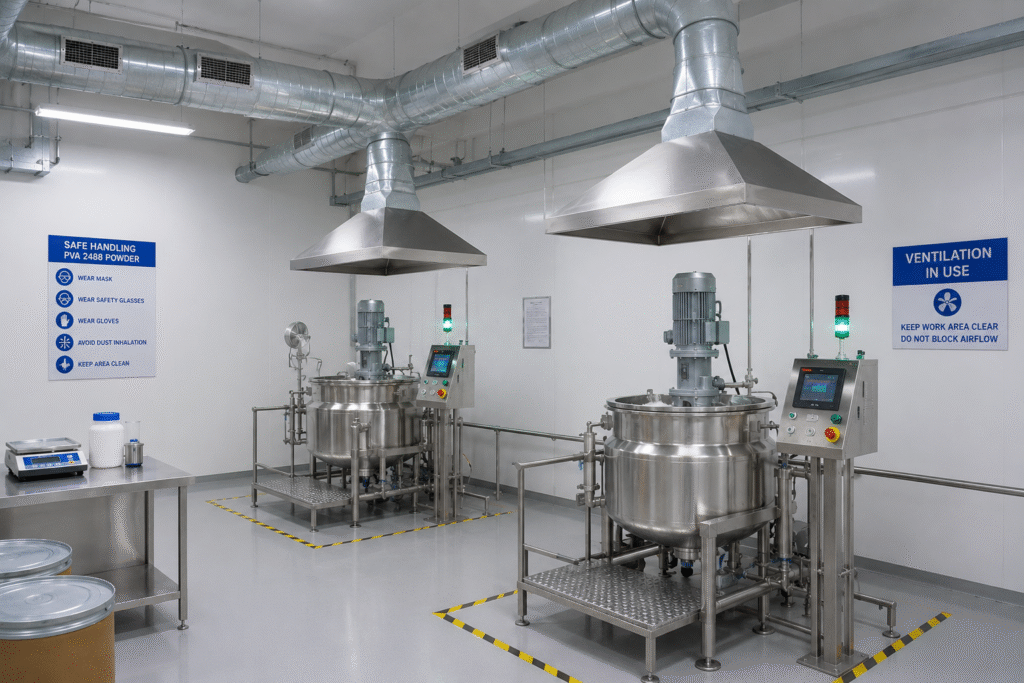
A clean and well-ventilated workspace is the mark of a professional operation. It shows a commitment to quality and safety. For my customers who run large-scale production, controlling airborne dust is essential for both worker health and preventing cross-contamination between product batches.
General vs. Local Ventilation
- General Ventilation: This refers to the overall airflow in the room, like open doors, windows, or large fans that exchange air with the outside. This is good, but it might not be enough if you're working directly with large amounts of powder.
- Local Exhaust Ventilation (LEV): This is much more effective. LEV systems use a hood or duct placed directly at the source of the dust to capture it before it can spread into the room. This is the best solution for areas where bags of PVA are opened and dumped into mixers. It protects the operator directly and keeps the entire workspace cleaner.
Good Housekeeping is Critical
Dust doesn't just stay in the air. It settles on floors, shelves, and equipment. If you don't clean it up properly, it can easily be kicked back into the air by foot traffic or vibrations.
- Cleaning Method: Never use a dry broom or compressed air to clean up PVA powder. This will create a huge cloud of dust. Instead, use an industrial vacuum cleaner with a HEPA filter, or gently wet the powder with a water spray bottle before sweeping or mopping it up. Remember, wet PVA is slippery, so be sure to clean the floor thoroughly.
This commitment to a clean workspace directly addresses one of Mark's biggest pain points with other suppliers: inconsistency. A clean factory leads to a more consistent process and a more stable, high-quality final product.
What are the Best Practices for Storing PVA 2488 Safely?
Improper storage doesn't just create safety risks; it can ruin your product quality. Moisture is the biggest enemy of PVA powder—it causes clumping and can make the product completely unusable.
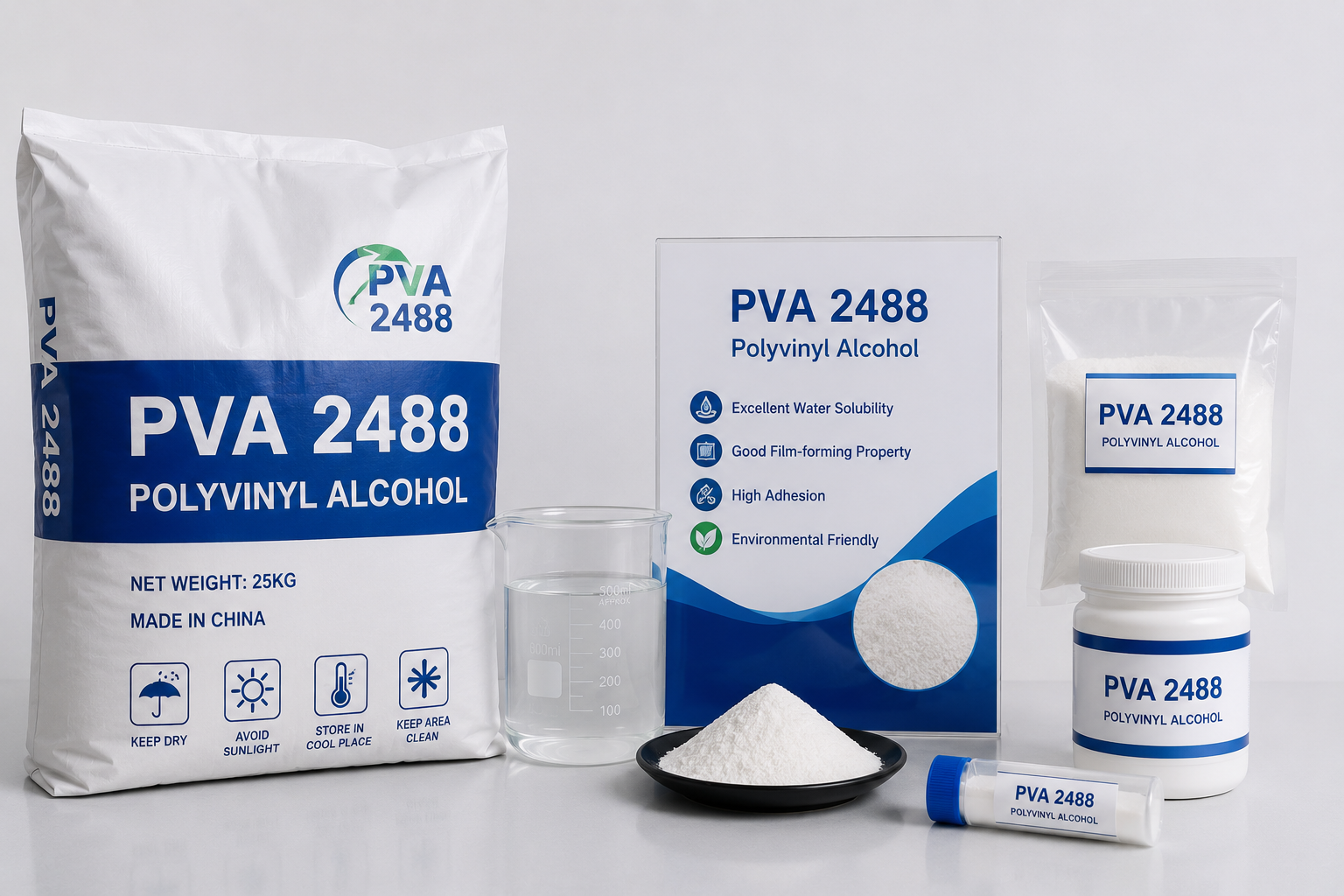
Store PVA 2488 in a cool, dry, and well-ventilated area. Keep containers tightly sealed to protect them from moisture and humidity. Store the bags away from direct sunlight, heat sources, and strong oxidizing agents.
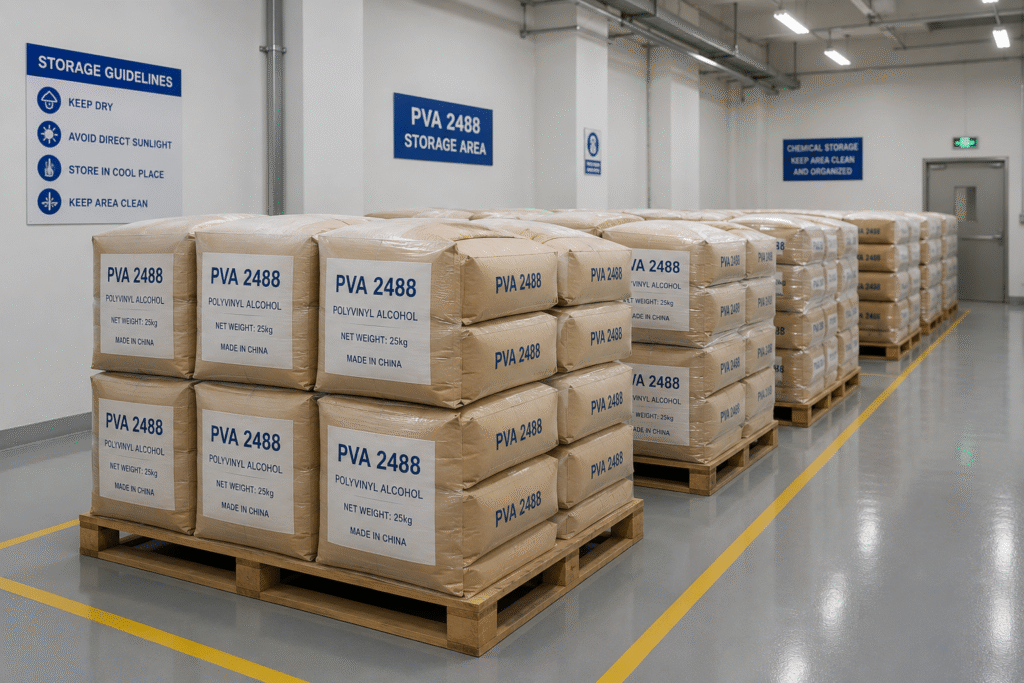
I cannot stress this enough to my clients: your storage conditions are just as important as your production process. You can buy the highest quality PVA 2488 from us at Kehao, but if you store it in a damp warehouse, its performance will suffer. Protecting your raw materials is key to protecting your profits.
The Enemy: Moisture
Polyvinyl alcohol is hygroscopic, which means it actively absorbs moisture from the air.5
- Problem: When PVA powder absorbs moisture, it starts to clump together. These clumps will not dissolve properly, leading to defects in your final product, whether it's paint, mortar, or adhesive. In a worst-case scenario, the entire bag can solidify into a useless block.
- Solution: Always store PVA in its original packaging, which is designed to be moisture-resistant. After opening a bag, seal it as tightly as possible. If you transfer it to a new container, make sure that container has an airtight seal.
Temperature and Incompatibilities
- Temperature: While PVA is stable, you should avoid storing it in areas with extreme heat. High temperatures can degrade the product over time. More importantly, keep it far away from open flames, sparks, or hot machinery, as it is a combustible powder.
- Chemical Incompatibilities: Keep PVA separated from strong acids and strong oxidizing agents. While reactions are not common in a normal warehouse setting, it is good practice to segregate different types of chemicals.
Here’s a simple guide for your warehouse team:
| Do | Don't |
|---|---|
| Do store in a cool, dry place. | Don't store outside or in a humid environment. |
| Do keep bags tightly sealed. | Don't leave bags open to the air for long periods. |
| Do stack bags neatly on pallets to keep them off the floor. | Don't store directly on a concrete floor (which can be damp). |
| Do keep it away from heat and ignition sources. | Don't store it near welders, grinders, or heaters. |
What are the Correct Emergency Procedures for PVA 2488 Spills or Exposure?
Accidents can happen even in the best-run facilities. Being unprepared turns a small incident into a big problem. Having a clear, simple plan for spills or exposure is essential for safety.
For eye contact, immediately rinse with clean water for 15 minutes. For spills, carefully contain the powder to prevent it from spreading, then collect it using a method that does not create dust, such as a HEPA vacuum or by wetting it down first.
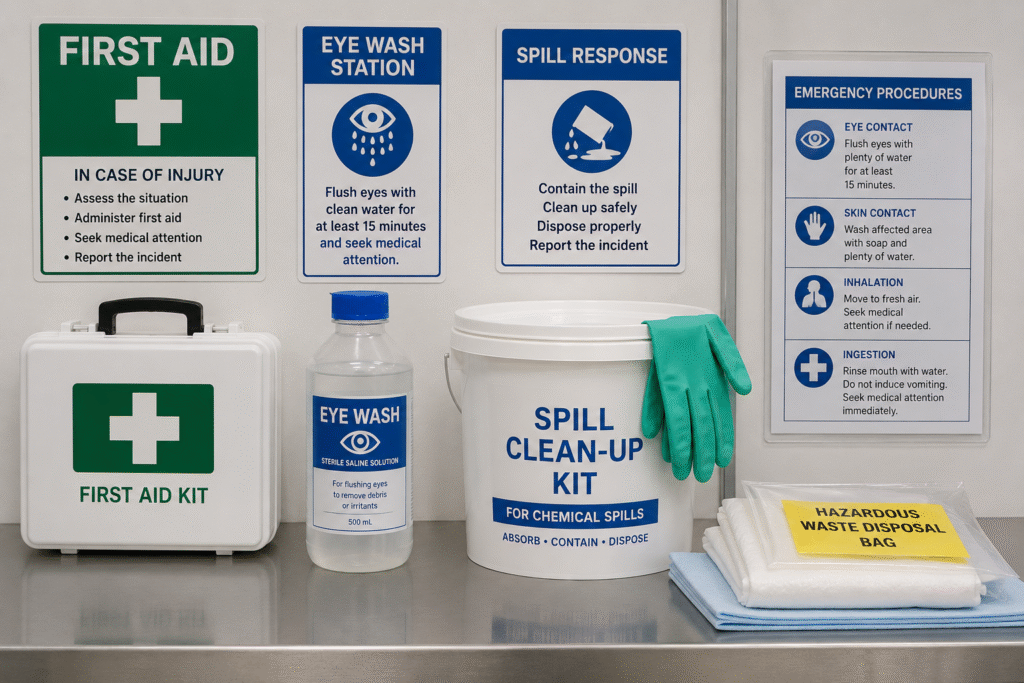
A quick and correct response minimizes harm and downtime. The procedures for PVA 2488 are straightforward. Make sure your team is trained on these basic steps and knows where to find the first aid and spill kits. I always provide a Safety Data Sheet (SDS) with every shipment, which contains all this information.
First Aid Measures
The goal is to remove the powder from the affected area.
- Eye Contact: This is the most urgent situation. Get to an eye wash station or use a bottle of clean water to flush the eye continuously for at least 15 minutes6. Hold the eyelid open to ensure water rinses underneath. See a doctor if irritation continues.
- Skin Contact: PVA is not irritating to the skin, but it's best to wash it off. Use simple soap and water.
- Inhalation: If someone breathes in a large amount of dust and feels discomfort, move them to an area with fresh air immediately. If they have trouble breathing, seek medical attention.
Spill and Leak Cleanup
The main goal is to clean up the powder without creating more airborne dust.
- Secure the Area: Keep unnecessary personnel away from the spill.
- Contain the Spill: Use barriers if needed to stop the powder from spreading.
- Clean Up: The best method is to use an industrial vacuum cleaner fitted with a HEPA filter7. This safely contains the dust. If you don't have one, lightly mist the powder with water to prevent it from becoming airborne. Then, you can sweep up the dampened material.
- Dispose: Place the collected powder into a labeled container for disposal according to your local regulations.
- Final Clean: Mop the area to remove any remaining residue. Remember, the wet floor will be slippery until it's clean and dry.
What Are the Fire Safety Risks Associated with Polyvinyl Alcohol?
You may not think of a white powder as a major fire risk. However, like most fine organic powders such as flour or sugar, PVA 2488 is combustible and can burn if ignited.
PVA 2488 powder is combustible and can be ignited by sparks, static electricity, or open flames. To prevent fires, eliminate ignition sources from handling and storage areas. If a fire occurs, use a water spray, foam, or dry chemical extinguisher.
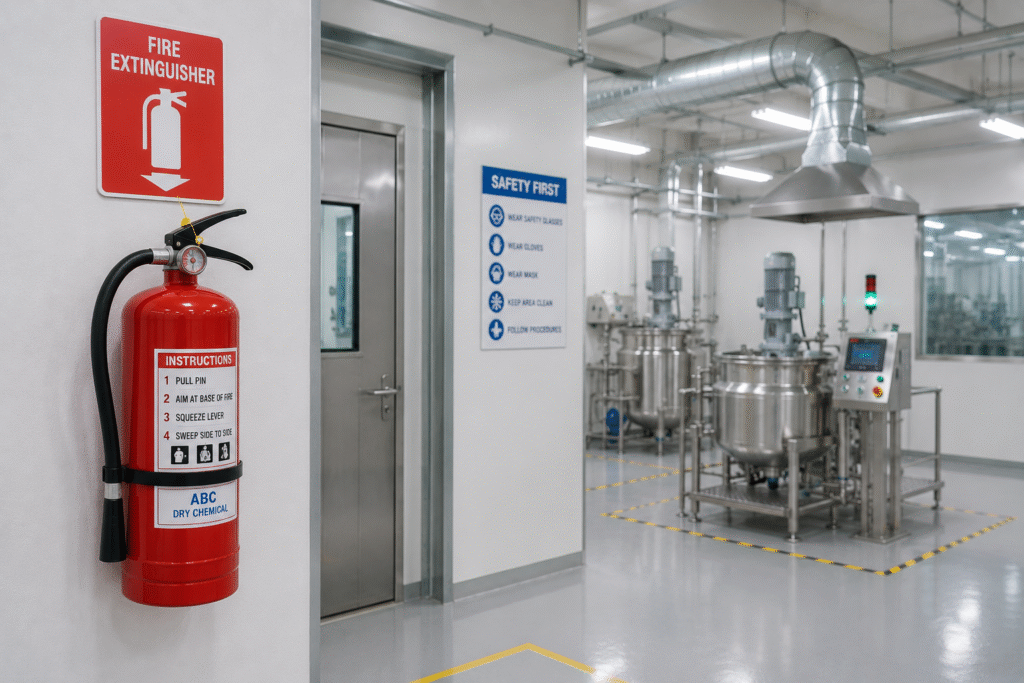
In my experience, fire safety with powders is mostly about prevention. A pile of PVA powder will burn, but the more significant risk, though small, is a dust explosion8. This can only happen if there is a high concentration of dust suspended in the air inside an enclosed space with an ignition source. While this is unlikely in most situations, it’s why controlling dust is so important.
Eliminating Ignition Sources
This is the most effective fire prevention strategy.
- No Smoking, No Open Flames: Enforce strict rules against smoking, welding, or any other open flame in areas where PVA is stored or handled.
- Electrical Equipment: Ensure all electrical motors, switches, and lights are properly rated for the environment and well-maintained to prevent sparks.
- Static Electricity: When powder moves quickly, like when it’s being poured or transported through pipes, it can generate static electricity. This static can create a spark. Grounding your equipment, such as mixers and transfer systems, is a crucial step to let this static charge dissipate safely9. This is especially important for large-scale operations.
What to Do in Case of a Fire
If a fire involving PVA does occur:
- Extinguishing Media: Use methods that will cool the fire and smother it.
- Water Spray/Fog: Excellent for cooling. Avoid using a strong jet of water that could throw dust into the air.
- Dry Chemical Extinguisher (ABC type): Very effective.
- Foam Extinguisher: Works well by smothering the fire.
- Evacuation: Your team's safety comes first. If a fire is too large to handle with a portable extinguisher, evacuate the area and call for professional firefighters.
How Can You Handle PVA 2488 in an Environmentally Responsible Way?
Worrying about chemical disposal and environmental impact is a valid concern for any factory owner. You want to follow regulations and be a good corporate citizen. The good news is that PVA is relatively friendly.
PVA 2488 is biodegradable10, but you should never release it directly into rivers or sewage systems in large amounts. Dispose of waste powder and empty packaging according to all local and national environmental regulations.
Being environmentally responsible is not just good for the planet; it’s good for business. Customers and communities respect companies that take their environmental duties seriously. With PVA 2488, following these duties is quite simple.
Understanding Biodegradability
PVA is a polymer that can be broken down by microorganisms in the environment. This is a significant advantage over many other synthetic polymers. However, this process takes time and consumes oxygen.
Why Not to Dump it in Water
If a large amount of PVA is released into a lake or river, the microorganisms that break it down will use up a lot of the dissolved oxygen in the water. This is called increasing the Biochemical Oxygen Demand (BOD). This can harm fish and other aquatic life that need that oxygen to survive. Therefore, you should never wash large quantities of waste PVA down the drain or into local waterways.
Proper Disposal Methods
- Waste Powder: Spilled or contaminated PVA 2488 powder that cannot be used should be collected and disposed of as solid waste. In most regions, it can be sent to a standard industrial landfill. Always check your specific local regulations first.
- Empty Bags: The multi-wall paper or plastic bags that PVA comes in should be emptied as much as possible. Then, they can typically be disposed of with other industrial trash or sent for recycling if your local facilities accept them.
- Rinse Water: Small amounts of rinse water from cleaning equipment can usually go to a wastewater treatment facility, as it will be heavily diluted. Check with your local water authority about their limits for industrial discharge.
Do Special Grades like Cold-Resistant PVA 2488 Have Different Safety Needs?
You see different product names and grades and wonder if they require special safety rules. A grade labeled "super cold-resistant" might sound like it needs complex handling. Let me clarify.
No, the fundamental safety guidelines are the same for all grades of PVA 2488, including specialty ones like our cold-resistant solution grade. The "cold-resistant" property describes the performance of the final liquid product, not a change in the powder's basic safety profile.
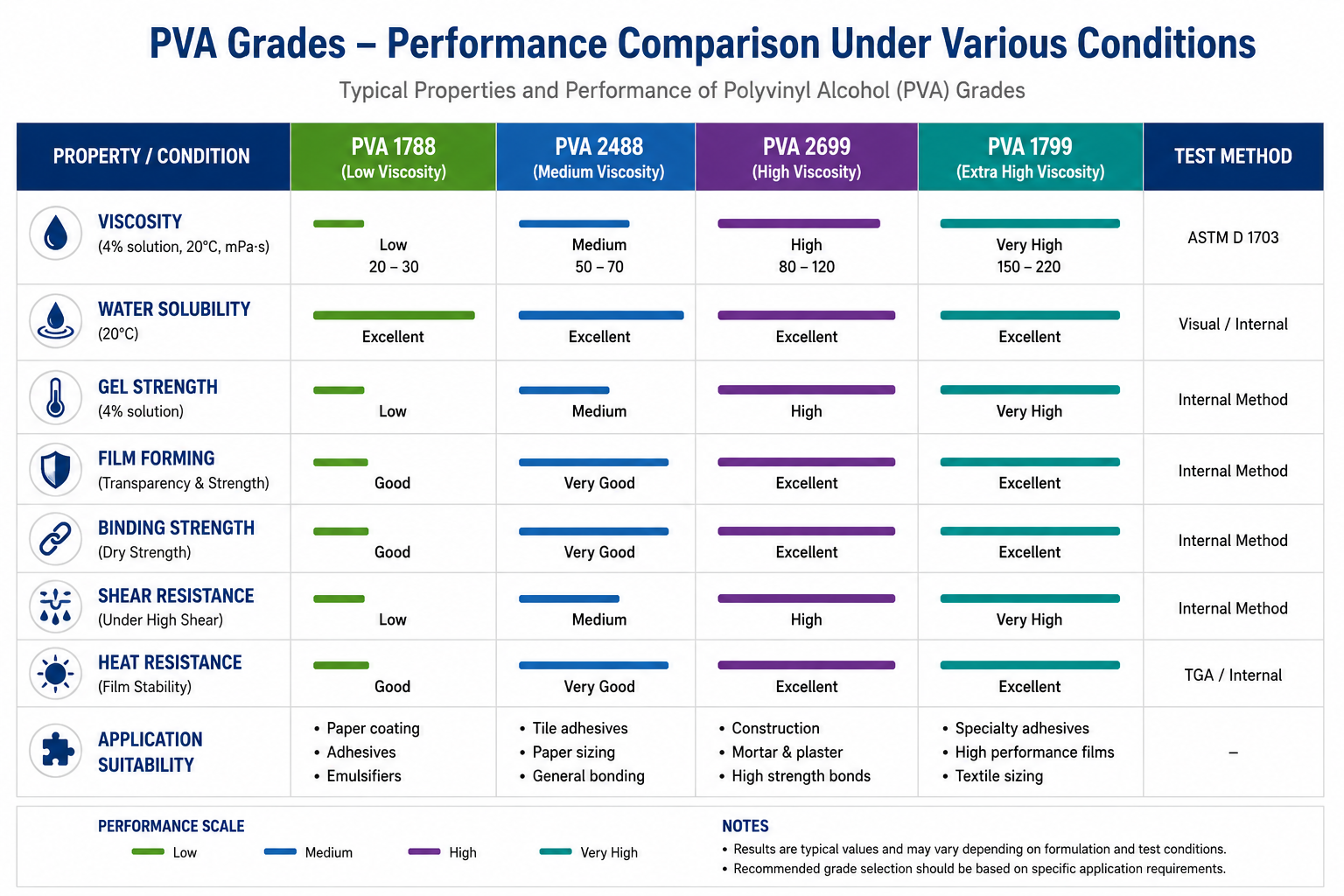
One of the services we are proud of at Kehao is our ability to customize products. Many of my customers, like Mark, need materials that perform in specific ways. For example, he might need a paint that doesn't crack in the cold winters or a mortar that works well in the hot Saudi summer. We develop special grades to meet these needs.
What Does "Cold-Resistant" Mean?
When we talk about a "cold-resistant PVA solution," we are not talking about the powder itself. We are referring to the properties of the liquid adhesive or binder that you create after you dissolve the PVA powder in water. This special grade ensures that your final product—be it an adhesive, a coating, or a textile treatment—maintains its flexibility and strength even at low temperatures.
Safety Remains the Same
The raw material you receive is still a fine, white, water-soluble, combustible powder. Therefore, all the safety rules we have discussed still apply:
- Control the dust.
- Use your PPE (mask, glasses, gloves).
- Store it in a cool, dry place.
- Keep it away from ignition sources.
The customization is at a molecular level to change its performance in solution, not its fundamental physical form or hazards. When you order from us, you can be confident that while we can tailor the product for your application, we will always provide clear, consistent safety information that protects your workers. This is part of our commitment to being a reliable, long-term partner.
Conclusion
Following these simple safety guidelines for PVA 2488 protects your team, product, and business. Safe, clean, and responsible handling is always the smartest way to run your operation.
-
"Polyvinyl alcohol - Wikipedia", https://en.wikipedia.org/wiki/Polyvinyl_alcohol. The International Programme on Chemical Safety (IPCS) and chemical safety data sheets describe polyvinyl alcohol as a white powder, water-soluble, of low toxicity, with dust that can irritate eyes and respiratory tract, and as a combustible material. Evidence role: definition; source type: institution. Supports: Polyvinyl Alcohol (PVA) 2488 is a white, solid powder that dissolves in water. It is not highly toxic, but the fine dust can irritate your eyes and lungs. It is also combustible, so you must keep it away from open flames and strong heat sources.. Scope note: The information is for polyvinyl alcohol in general, not exclusively the 2488 grade. ↩
-
"POLYVINYL ALCOHOL - CAMEO Chemicals - NOAA", https://cameochemicals.noaa.gov/chemical/7523. The U.S. National Library of Medicine's Hazardous Substances Data Bank (HSDB) reports that inhalation of polyvinyl alcohol dust may cause respiratory tract irritation and eye contact may result in discomfort or irritation. Evidence role: mechanism; source type: institution. Supports: If inhaled, it can irritate the respiratory tract, and if it gets in your eyes, it will cause discomfort.. Scope note: The data is for polyvinyl alcohol generally, not specifically for the 2488 grade. ↩
-
"POLYVINYL ALCOHOL - CAMEO Chemicals - NOAA", https://cameochemicals.noaa.gov/chemical/7523. Chemical safety references indicate that polyvinyl alcohol is stable under normal conditions but is combustible and can burn when exposed to ignition sources. Evidence role: mechanism; source type: institution. Supports: PVA 2488 is a stable polymer at room temperature. However, it is an organic material and it will burn if exposed to a strong ignition source.. Scope note: The statement is based on general chemical safety data for polyvinyl alcohol, not specifically the 2488 grade. ↩
-
"How to Use Your N95® Respirator - CDC", https://www.cdc.gov/niosh/ppe/php/n95-use/index.html. The U.S. Centers for Disease Control and Prevention (CDC) and European safety agencies recommend N95 or FFP2 respirators for protection against airborne particulate matter, including chemical powders. Evidence role: expert_consensus; source type: government. Supports: A certified particulate respirator, often called a dust mask. Look for masks rated N95 (US standard) or FFP2 (European standard).. Scope note: The recommendation is for general airborne particulates, not specifically PVA 2488. ↩
-
"Polyvinyl alcohol - Wikipedia", https://en.wikipedia.org/wiki/Polyvinyl_alcohol. Chemical encyclopedias and safety data sheets describe polyvinyl alcohol as hygroscopic, meaning it absorbs moisture from the atmosphere. Evidence role: definition; source type: encyclopedia. Supports: Polyvinyl alcohol is hygroscopic, which means it actively absorbs moisture from the air.. Scope note: The property is for polyvinyl alcohol generally, not specifically the 2488 grade. ↩
-
"Requirements for eyewash and shower facilities. - OSHA", http://www.osha.gov/laws-regs/standardinterpretations/2009-06-01. CDC and OSHA guidelines recommend flushing eyes for at least 15 minutes after exposure to chemical powders, supporting the recommended duration in this context. This guidance is general for chemical exposures and may not address PVA specifically. Evidence role: expert_consensus; source type: government. Supports: Get to an eye wash station or use a bottle of clean water to flush the eye continuously for at least 15 minutes.. Scope note: Guidelines are for general chemical exposures, not PVA specifically. ↩
-
"HEPA - Wikipedia", https://en.wikipedia.org/wiki/HEPA. OSHA and industrial hygiene sources recommend HEPA-filtered vacuums for safe cleanup of fine powders to prevent airborne dust, supporting this method for PVA powder. The recommendation is general for powders, not PVA-specific. Evidence role: expert_consensus; source type: government. Supports: The best method is to use an industrial vacuum cleaner fitted with a HEPA filter. This safely contains the dust.. Scope note: General guidance for powders; not specific to PVA. ↩
-
"Category:Dust explosions - Wikipedia", https://en.wikipedia.org/wiki/Category:Dust_explosions. Fire safety literature and industrial safety guidelines recognize that fine organic powders, including polyvinyl alcohol, can pose dust explosion risks under certain conditions. The risk is context-dependent and may be low in typical handling situations. Evidence role: mechanism; source type: institution. Supports: A pile of PVA powder will burn, but the more significant risk, though small, is a dust explosion.. Scope note: Risk depends on concentration and environment; not all situations present a hazard. ↩
-
"[PDF] OSHA Technical Manual - Section IV, Chapter 6, Combustible Dusts", https://www.osha.gov/sites/default/files/otm_secIV_chap6.pdf. Industrial safety standards, including OSHA guidelines, emphasize grounding equipment to prevent static discharge and reduce fire risk when handling combustible powders. This is a general safety principle for powder processing. Evidence role: expert_consensus; source type: government. Supports: Grounding your equipment, such as mixers and transfer systems, is a crucial step to let this static charge dissipate safely.. Scope note: General guidance for powders; not specific to PVA. ↩
-
"Polyvinyl alcohol", https://en.wikipedia.org/wiki/Polyvinyl_alcohol. Environmental science literature and chemical databases confirm that polyvinyl alcohol is biodegradable under certain conditions, supporting the claim. The rate and completeness of biodegradation depend on environmental factors. Evidence role: mechanism; source type: research. Supports: PVA 2488 is biodegradable, but you should never release it directly into rivers or sewage systems in large amounts.. Scope note: Biodegradation varies by environment; not all conditions are equal. ↩