Making a good shampoo is a challenge. Many people buy shampoo based on scent and bubbles, but don't know what's really inside. The wrong ingredients can damage your hair and scalp.
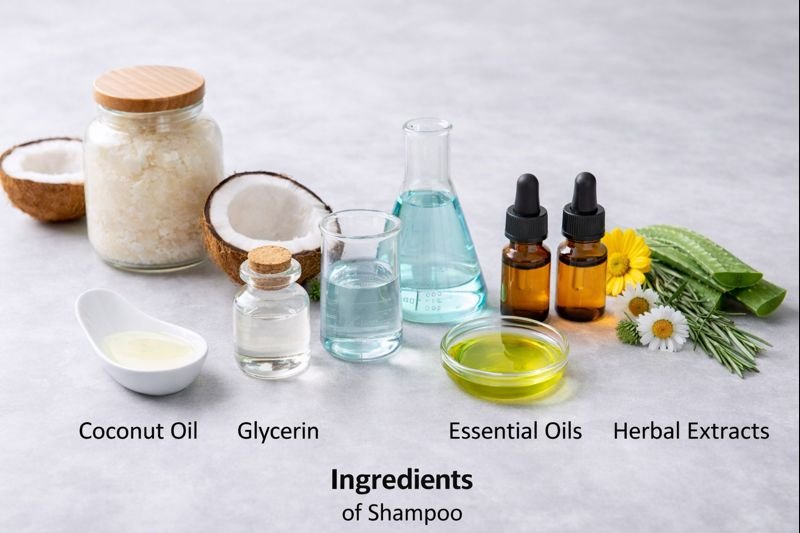
The main ingredients in shampoo are water (70-80%), detergents1 (10-15%), thickening agents (5-10%), and additives like fragrances, preservatives, and conditioning agents. Water serves as the base, detergents clean hair, thickeners provide consistency, and additives enhance performance.
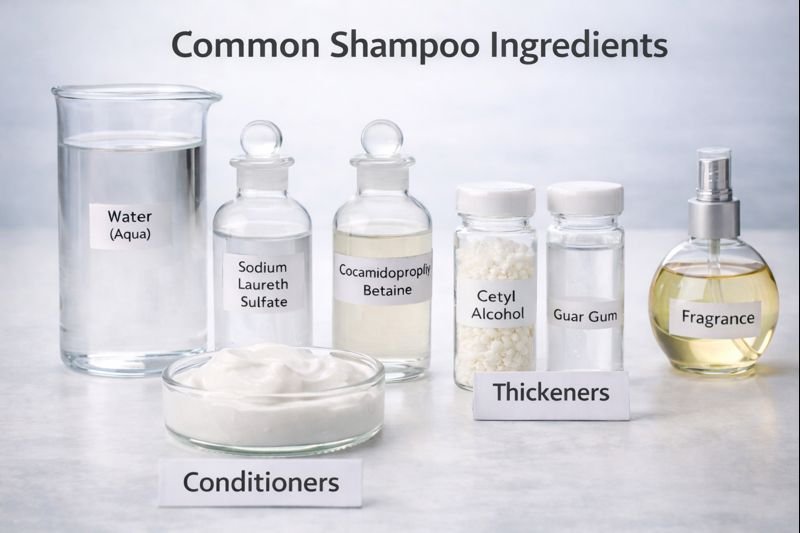
I've spent years working with different shampoo formulations2. Each ingredient plays a specific role in the final product. Let's break down what goes into making a quality shampoo and why these components matter for your hair care routine.
What Makes Up Most of the Shampoo Bottle?
Opening a shampoo bottle reveals a mystery. What's that thick liquid that promises clean, shiny hair? The answer might surprise you.
Water typically makes up 70-80% of shampoo formulations. This high water content serves as the primary solvent and carrier for other ingredients, helping them spread evenly through your hair when washing.
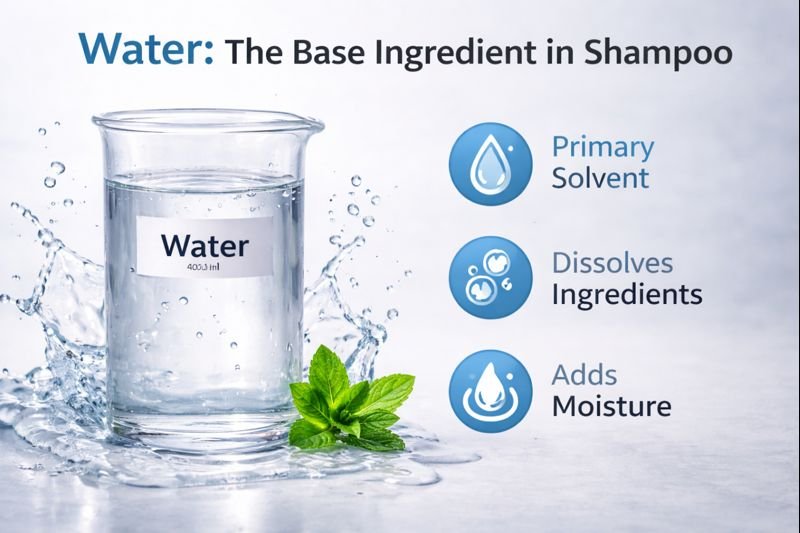
Water isn't just a filler in shampoo - it's essential for the product to work properly. In our factory, we carefully purify all water used in production through multiple filtration systems and treatments.
The quality of water matters significantly in shampoo production. Hard water with high mineral content can affect how other ingredients perform and may cause stability issues in the final product. We use deionized water to ensure consistent quality.
Water also helps control the concentration of active ingredients. Too concentrated, and detergents might irritate your scalp; too diluted, and the shampoo won't clean effectively. Finding this balance is a key part of formulation science.
When customers visit our production facility, they're often surprised to see how much attention we pay to water quality. We test pH levels, mineral content, and microbial purity before it ever enters our mixing tanks.
Why Are Thickening Agents Important in Shampoo?
Have you ever used a shampoo that was too runny? It probably felt cheap and ineffective. This is where thickening agents come in.
Thickening agents make up about 5-10% of shampoo formulations. These ingredients give shampoo its viscosity and prevent it from running through your fingers, allowing for proper application and an enjoyable user experience.
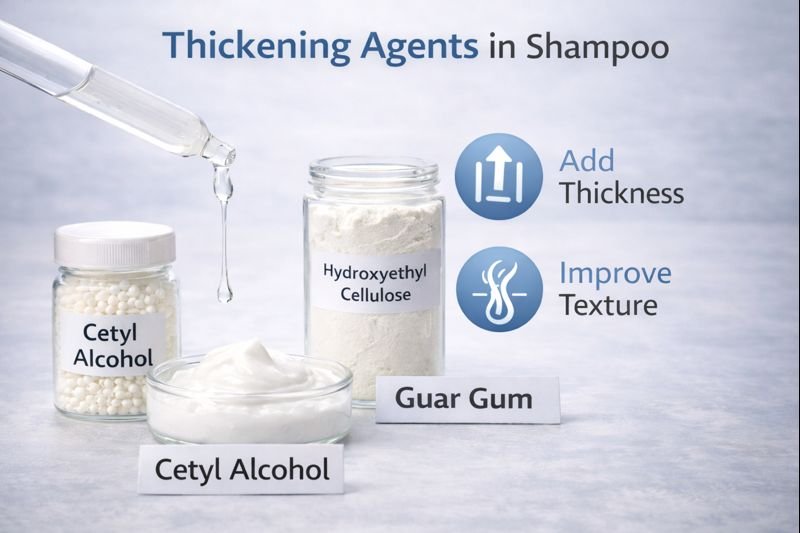
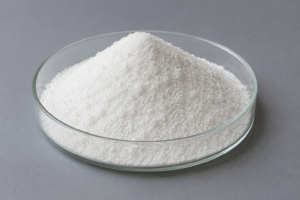
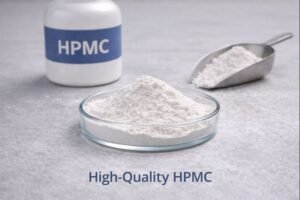
Hydroxypropyl methylcellulose3 (HPMC) is one of the most effective thickening agents we use in our factory. This cellulose-derived compound not only thickens shampoo but also helps stabilize the mixture and suspend other ingredients.
Common Thickeners Used in Shampoo
| Thickening Agent | Benefits | Concentration Range |
|---|---|---|
| HPMC (Hydroxypropyl methylcellulose) | Excellent stability, clear solutions, works in wide pH range | 0.5-2% |
| CMC (Carboxymethyl cellulose) | Good salt tolerance, smooth feel, inexpensive | 0.3-1.5% |
| HEC (Hydroxyethyl cellulose) | Fast hydration, compatible with most surfactants | 0.5-2% |
I've noticed a clear difference in customer satisfaction when we use high-quality cellulose derivatives as thickeners. Consumers respond positively to the "luxurious" feeling these ingredients provide, even if they don't know why the product feels premium.
Thickening agents also help suspend solid particles like exfoliants or anti-dandruff ingredients. Without proper thickeners, these particles would settle at the bottom of the bottle, making the product ineffective.
When developing formulations for clients, we often customize thickener blends based on the specific needs of their target market. For example, consumers in hot climates often prefer slightly thicker formulations that won't thin out in warmer temperatures.
What Makes Shampoo Actually Clean Your Hair?
Bubbles look nice, but do they clean your hair? The real workhorses in shampoo are hidden behind chemical names you might not recognize.
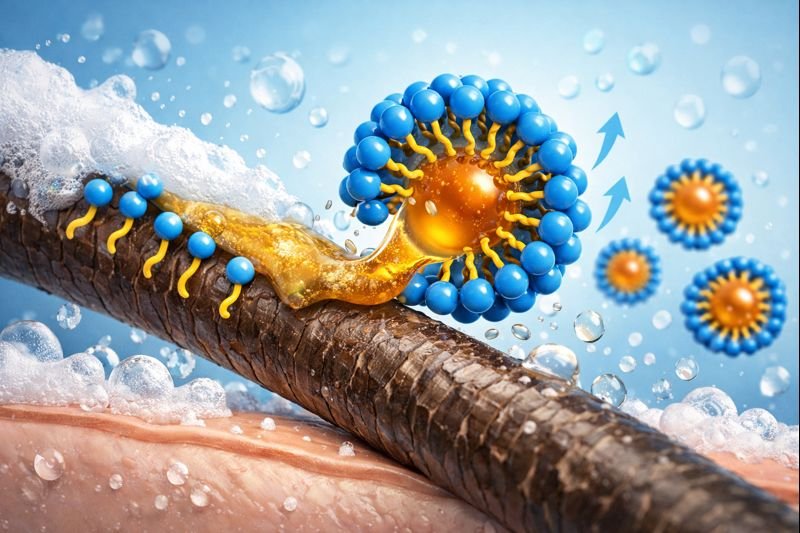
Detergents (also called surfactants) make up 10-15% of shampoo formulations. These molecules have one water-loving end and one oil-loving end, allowing them to surround oil and dirt particles and wash them away when you rinse.
 "How detergents clean hair")
Detergents work through a process called emulsification. When you massage shampoo into your hair, the oil-loving parts of detergent molecules attach to sebum, oils, and dirt. The water-loving parts face outward, forming tiny bubbles called micelles that can be rinsed away with water.
Sodium laureth sulfate (SLES) and sodium lauryl sulfate (SLS) are common primary surfactants used in many shampoos. They create rich lather and provide strong cleansing power. However, they can sometimes be too effective, stripping natural oils from the hair.
This is why modern formulations often include milder co-surfactants like cocamidopropyl betaine or decyl glucoside to reduce irritation and maintain more of the hair's natural moisture.
In our factory, we've observed increasing demand for sulfate-free formulations, especially for products marketed for color-treated or damaged hair. These formulations use gentler surfactant blends that clean without excessive stripping.
The selection of detergents greatly affects not just cleaning power but also foam quality, viscosity, and even how the hair feels after drying. We regularly conduct test washes with different surfactant combinations to find the perfect balance for each client's specific needs.
How Do I Find a Reliable Shampoo Factory Near Me?
Looking for a shampoo manufacturer can be overwhelming. With so many options, how do you find a reliable partner who delivers quality products on time?
Finding a reliable shampoo factory requires evaluating their production capabilities, certifications, minimum order quantities, and formulation expertise. The best approach is to request samples, verify certifications, and conduct a facility audit if possible.
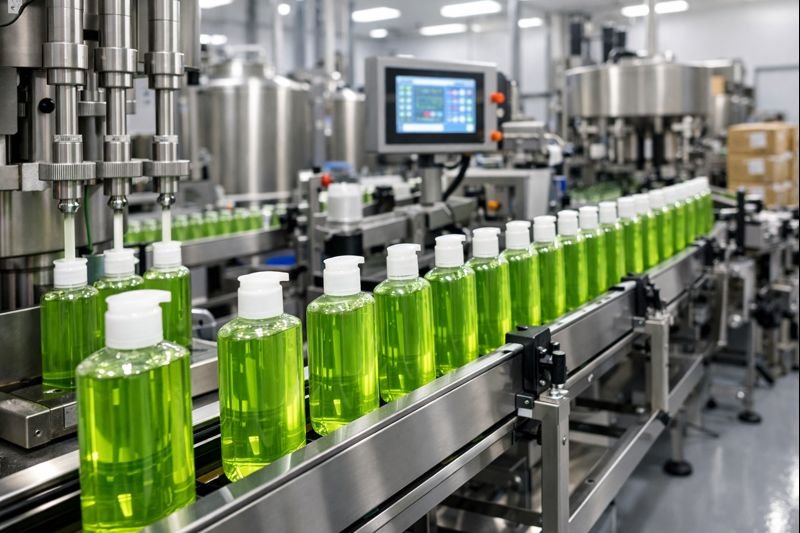
When searching for a shampoo factory partner, don't just look at price. A truly valuable manufacturing partner should offer formulation expertise, quality control systems, and supply chain stability.
At Kehao, we've built our reputation on consistent quality and transparency. Our six production lines give us the flexibility to handle both small custom batches and large-scale production runs for clients across Saudi Arabia, UAE, India, and other markets.
What to Look for in a Shampoo Manufacturer
| Factor | Why It Matters | Questions to Ask |
|---|---|---|
| Certifications | Ensures quality standards and regulatory compliance | Do you have ISO, GMP, or organic certifications? |
| Production Capacity | Determines ability to scale with your business | What's your monthly capacity? Minimum order quantity? |
| Formulation Expertise | Helps develop innovative, market-appropriate products | Can you customize formulations? Do you have an R&D team? |
| Raw Material Sourcing | Affects final product quality and stability | Where do you source ingredients? Do you test for purity? |
I've seen many clients make the mistake of choosing manufacturers solely on price, only to face quality inconsistencies later. A good manufacturing partner should be willing to show you their facility, discuss their quality control processes, and provide samples before full production.
Another important consideration is whether the manufacturer can provide support with regulatory compliance for your target markets. Different countries have different requirements for cosmetic products, and a knowledgeable manufacturer can help navigate these complexities.
At our factory, we maintain relationships with suppliers of high-quality cellulose derivatives like HPMC and CMC, which are crucial for consistent product texture. This supply chain stability translates directly to consistent product quality for our clients.
Conclusion
Shampoo is more than just bubbles and scent. Water forms the base, detergents clean your hair, thickeners provide the right consistency, and choosing a reliable manufacturer ensures quality and consistency in your products.