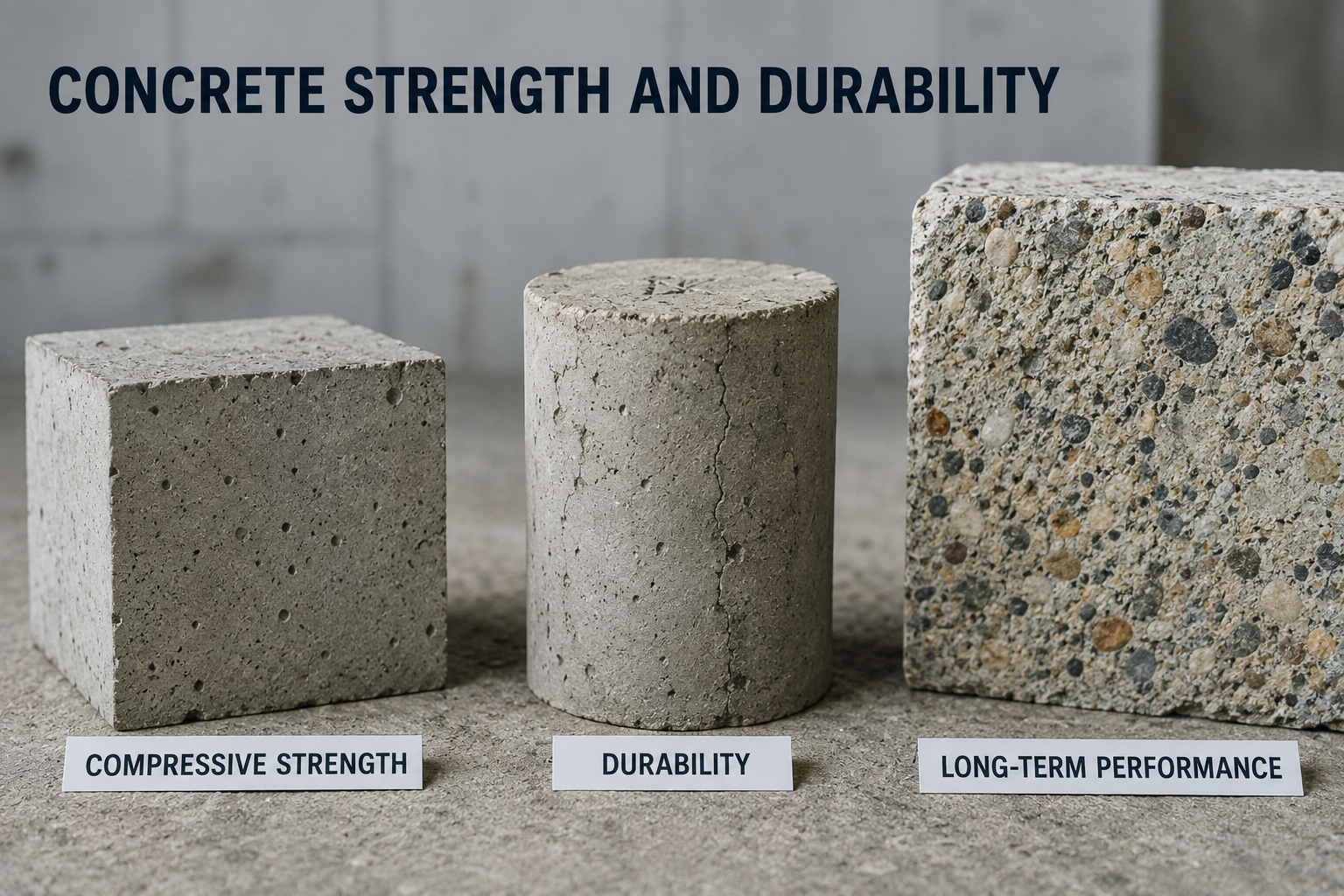
Your concrete structure is failing, causing immense stress and financial loss. The likely culprit is surprisingly simple, yet often overlooked: the amount of water used in the mix.
The water-to-cement (W/C) ratio is the most important factor for concrete quality1. Generally, adding more water makes concrete weaker and less durable2. Excess water evaporates, leaving behind pores and capillaries that compromise the final structure, reducing both strength and longevity.
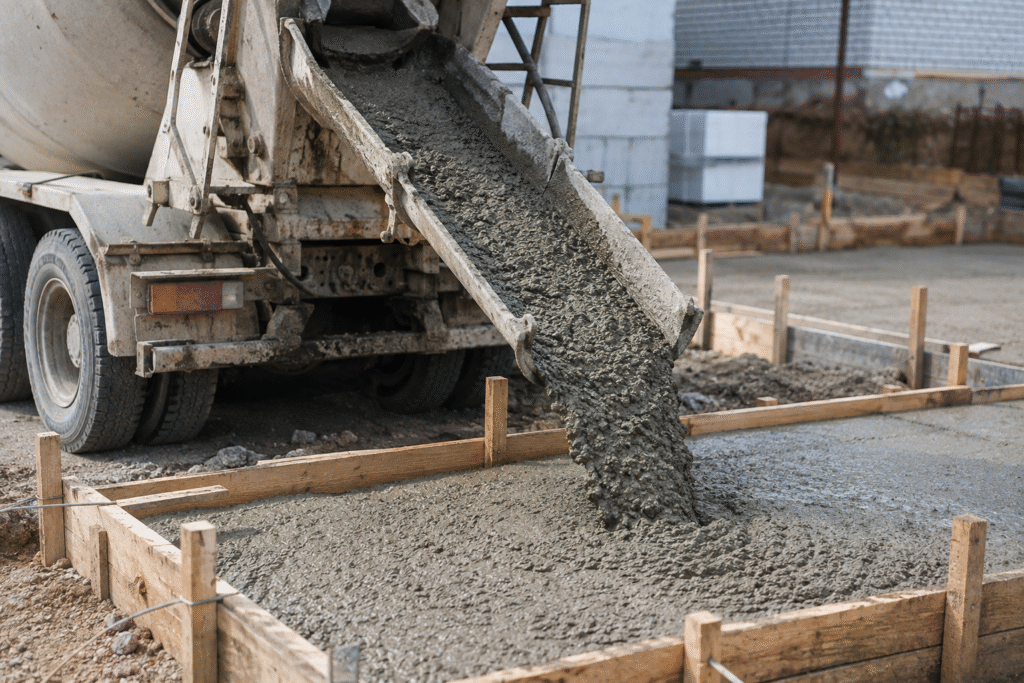
I've talked to hundreds of clients, from large distributors to paint factory owners like Mark Chen in Saudi Arabia. We often discuss quality and price, but the conversation always comes back to one fundamental truth. The most beautiful building is worthless if the foundation crumbles. Understanding the role of water is not just for lab technicians; it's a critical business decision for anyone in the construction industry. Let me break down exactly why this matters and how you can control it.
Why Does Water Content Matter So Much in Concrete?
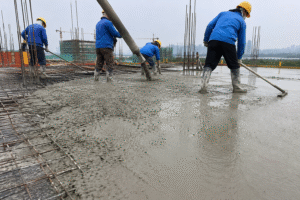
You see workers adding extra water to the concrete mix on-site. You worry it's compromising your project. Understanding the science behind it can give you the confidence to stop this.
Water is essential for the chemical reaction (hydration) that hardens cement. But, any water beyond what's needed for this reaction creates voids. These voids become weak points, drastically reducing the concrete's strength and overall quality. It's a delicate balance.
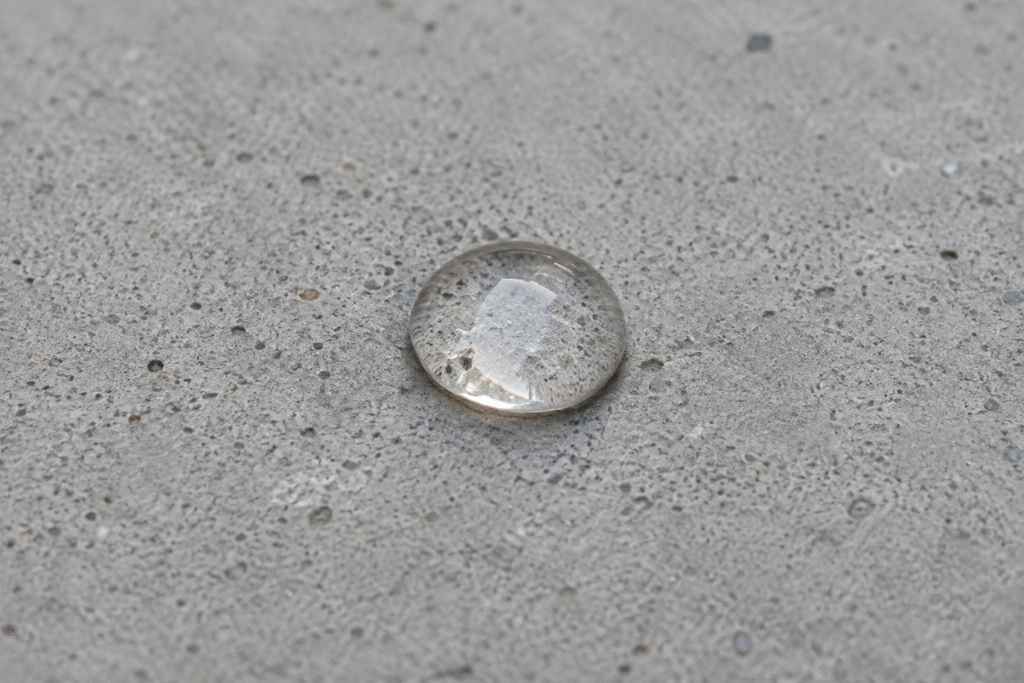
Let's dive deeper into this. Concrete is the second most consumed substance on earth, after water3. It seems simple, but getting it right is a science. The entire process hinges on a chemical reaction called hydration. This is where cement particles react with water to form a strong, binding paste that holds the aggregates (sand and gravel) together. Think of it like making a strong glue. You need enough water to activate the glue, but too much water will just dilute it and make it weak. The key metric we use in my factory is the Water-to-Cement (W/C) ratio. This is simply the weight of the water divided by the weight of the cement in the mix.
The W/C Ratio: A Simple Rule with Big Consequences
A lower W/C ratio almost always means stronger, more durable concrete. Here is a simple table to show what I mean. I've seen these numbers prove true time and time again in quality control tests.
| W/C Ratio | Expected 28-Day Compressive Strength | General Quality |
|---|---|---|
| 0.40 | High (e.g., >5000 psi / 35 MPa) | Very strong, low permeability, high durability. |
| 0.50 | Medium (e.g., 4000 psi / 28 MPa) | Good general-purpose concrete. |
| 0.60 | Low (e.g., <3000 psi / 21 MPa) | Weaker, more porous, prone to early failure. |
| >0.70 | Very Low | Unsuitable for most structural applications. |
As you can see, even a small increase in the W/C ratio can have a massive impact. According to standards like ACI 211.1, for every 0.1 increase in the W/C ratio, you can expect a 15-20% drop in compressive strength4. This is why I always tell my clients to be strict about what happens at the job site.
How Exactly Does High Water Content Affect Compressive Strength?
Your test cubes failed the compression test. Now the project faces delays and penalties. You need to understand that the unmeasured water added on-site is the most likely reason.
Excess water that is not used in the hydration reaction eventually evaporates from the concrete. This process leaves behind a network of tiny pores and channels, making the concrete act like a sponge instead of a solid rock. This porous structure cannot resist compression effectively.
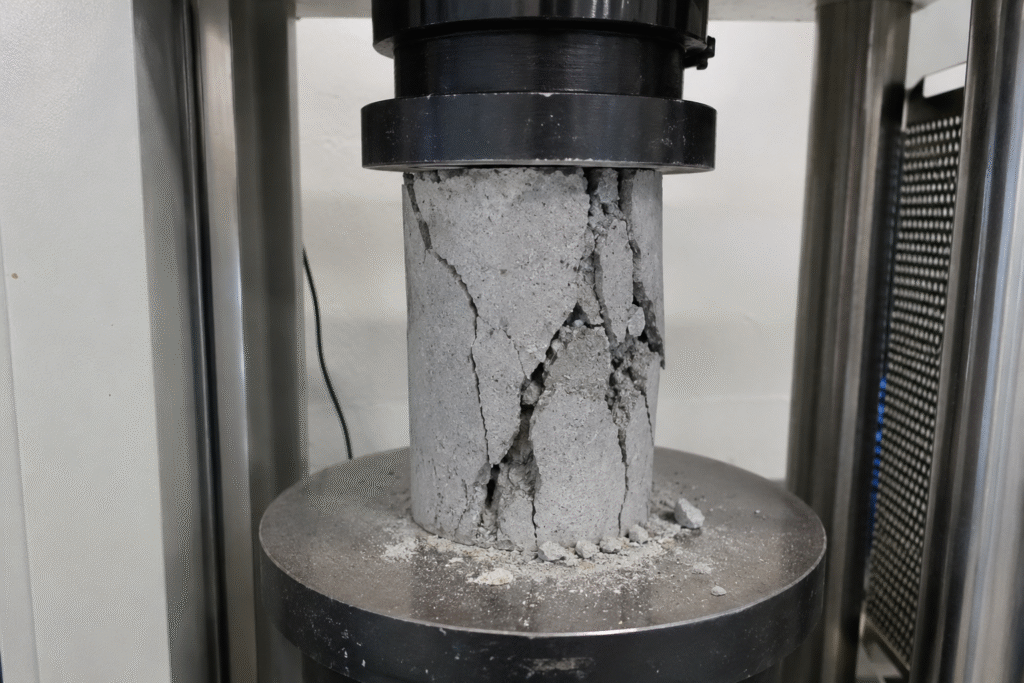
When I discuss this with buyers, I often use a simple analogy. Imagine a block of solid cheese versus a block of Swiss cheese. Which one is stronger? The solid one, of course. The holes in Swiss cheese make it weak. It's the same with concrete. The more water you add, the more "holes" you create after it evaporates. These holes, or voids, are called capillary pores. They form an interconnected network within the concrete. When you put a load on the concrete, the stress concentrates around these voids, causing micro-cracks to form and spread, leading to eventual failure at a much lower load than expected.
Beyond the Basic "4-2-1 Rule"
Many small contractors learn a simple "rule" for mixing concrete, something like the 4-2-1 rule: 4 parts gravel, 2 parts sand, 1 part cement. Then, they add water "until it looks right." This is a recipe for disaster. This method completely ignores the critical W/C ratio. The amount of water needed depends on many factors, including the moisture already in your sand and gravel. A professional mix design specifies the exact weight of every component, including water, for a reason. Ignoring this is gambling with the integrity of the structure. This is where our chemical admixtures can play a vital role in providing more control over the mix.
Why Does High Water Content Ruin Concrete's Durability?
Your new concrete structure looks fine today. But will it survive the next 20, 30, or 50 years? Hidden problems from high water content can lead to catastrophic future costs.
High water content creates a highly permeable concrete. This porous structure acts like a highway, allowing aggressive elements like water, chlorides, and chemicals to penetrate deep inside. This leads to rebar corrosion, freeze-thaw damage, and ultimately, premature structural failure.
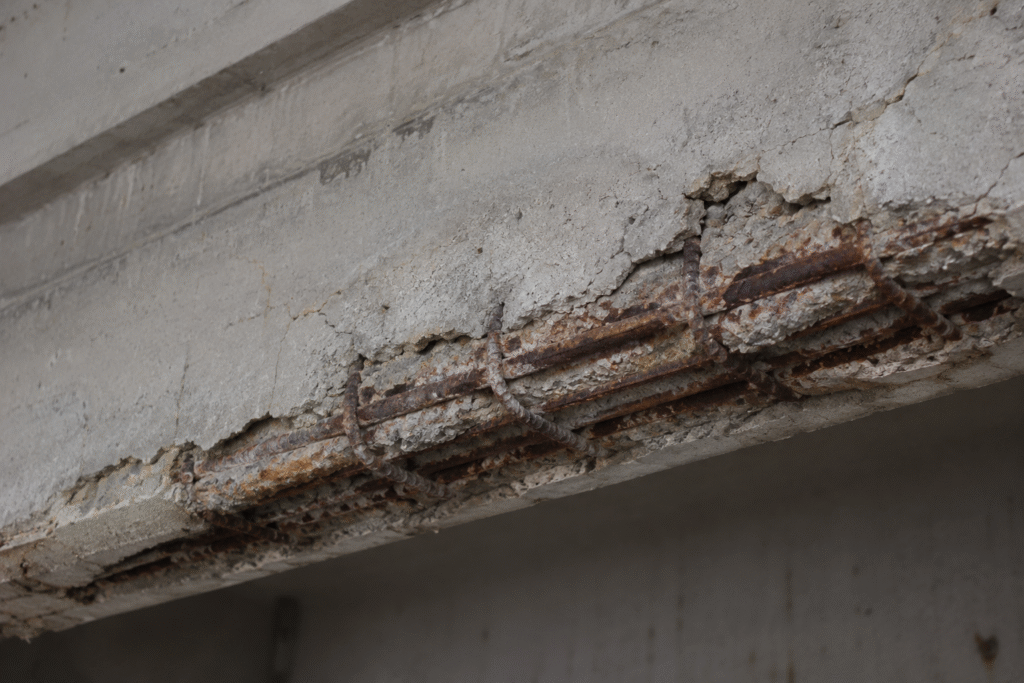
For my clients in places like the UAE, Saudi Arabia, or coastal areas of Vietnam, durability is even more important than initial strength. They are fighting a constant battle against salt and humidity. When concrete is permeable, chloride ions from saltwater or de-icing salts travel through the capillary pores and reach the steel reinforcement (rebar) inside. This starts a corrosion process that is devastating. Rusting steel expands with incredible force, cracking the concrete from within. This is known as "concrete cancer," and it's incredibly expensive to repair.
Major Durability Problems Caused by Excess Water
Let's look at the specific issues, which I've seen firsthand in many countries:
- Freeze-Thaw Damage: In colder climates, the water trapped in the pores freezes and expands by about 9%. This expansion exerts immense pressure, causing the surface to spall and crumble over time. ACI technical reports consistently link poor freeze-thaw resistance to high W/C ratios.
- Plastic Shrinkage Cracks: In hot, windy climates like many of my customers experience, if there's too much surface water, it evaporates too quickly in the crucial first few hours. This rapid volume loss causes a web of shallow cracks to form. The solution is proper curing protocol, like using a covering film and fog spray, as recommended by a 2021 Transportation Research Board guide.
- Chemical Attack: A porous concrete is also vulnerable to attack from sulfates and other chemicals in the soil or air, which can cause the cement paste to deteriorate and lose its binding ability.
In short, a low W/C ratio creates a dense, impermeable barrier that protects the concrete and its reinforcement from the outside world, ensuring it lasts for its intended service life.
How Can You Practically Control Water Content?
You understand the theory, but you wonder what you can do on your project today. Following bad advice can be a disaster. Let's focus on practical steps and professional solutions.
The best way to control water content is by using a professionally designed mix and incorporating water-reducing admixtures, or superplasticizers. These chemicals increase the mix's fluidity (slump) without adding more water, maintaining a low W/C ratio for high strength and durability.5
I received a call from a client in Brazil who was struggling with this. His team needed workable concrete for a complex pour, but a high-strength design. The workers kept adding water to make it flow, and the test results were terrible. I explained that they were trying to solve the wrong problem. The issue wasn't that the concrete was "too dry"; it was that it wasn't fluid enough at a low W/C ratio. This is exactly where modern chemistry comes in.
Smart Solutions for Modern Concrete
- Use Water-Reducing Admixtures (Superplasticizers): These are the magic ingredients. They work by attaching to cement particles and imparting a negative charge, causing them to repel each other. This breaks up clumps and releases trapped water, making the mix flow easily without any extra water. A report from the China Building Materials Academy showed a high-speed rail project increased structural durability by 30% just by optimizing the mix with superplasticizers to maintain workability while lowering the W/C ratio.
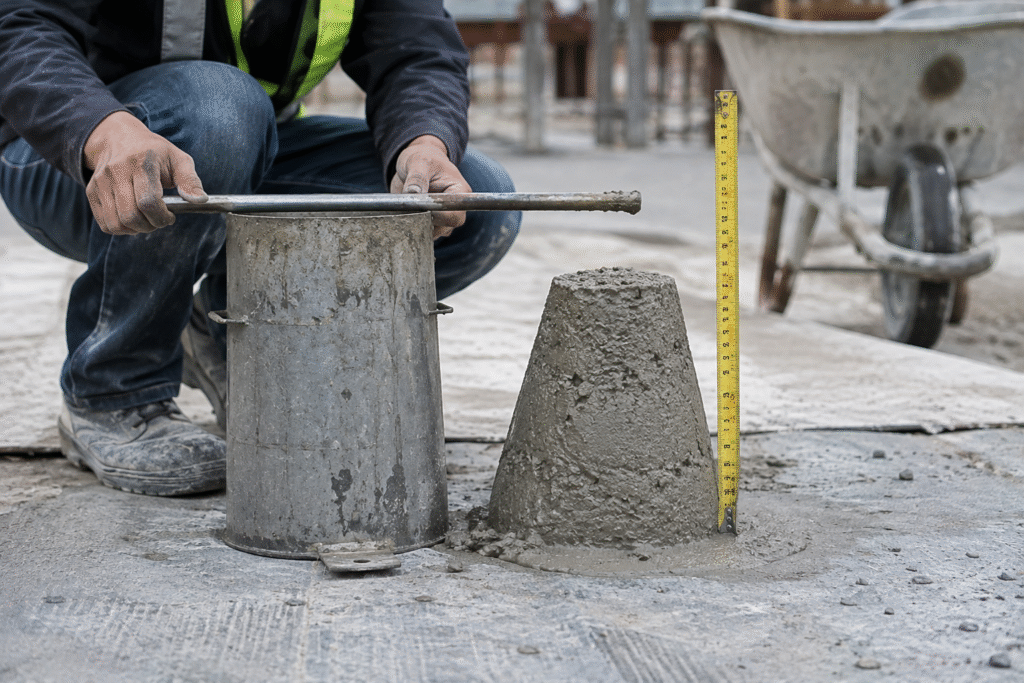
- Insist on Slump Tests: The slump test is a simple, effective on-site test for the consistency of fresh concrete. If the slump is much higher than specified in the mix design, it's a huge red flag that someone has added extra water. Don't accept that delivery.
- Beware of Myths: You may hear strange tips, like using Coca-Cola to slow down setting in an emergency. The sugar in soda does act as a retarder, but it's completely uncontrolled and unprofessional. It's a fun fact, but you should always use a proper, certified admixture from a reliable supplier like my company for predictable results.
Conclusion
Controlling the water-to-cement ratio is the most important action you can take to ensure you produce strong, long-lasting concrete. It is not an option; it is a necessity.
-
"Determination Of The Water To Cement Ratio Of Fresh ...", https://commons.und.edu/cgi/viewcontent.cgi?article=7323&context=theses. Technical standards and educational resources in concrete technology identify the water-to-cement ratio as the primary factor influencing concrete strength and durability, though other factors such as aggregate quality and curing also play significant roles. Evidence role: expert_consensus; source type: education. Supports: The water-to-cement (W/C) ratio is the most important factor for concrete quality.. Scope note: Other mix design and environmental factors also affect concrete quality. ↩
-
"HMEC Module G Lesson 03 WBT", https://www.fhwa.dot.gov/pavement/materials/hmec/pubs/module_g/lesson03_wbt.pdf. Research and technical standards consistently report that increasing the water-to-cement ratio reduces concrete strength and durability due to increased porosity. Evidence role: mechanism; source type: research. Supports: Generally, adding more water makes concrete weaker and less durable.. Scope note: The relationship is general; admixtures and curing can modify outcomes. ↩
-
"Concrete", https://en.wikipedia.org/wiki/Concrete. Reports from international organizations and industry bodies state that concrete is the most widely used man-made material and second only to water in global consumption. Evidence role: statistic; source type: institution. Supports: Concrete is the second most consumed substance on earth, after water.. Scope note: Exact rankings may vary depending on definitions and measurement methods. ↩
-
"Water–cement ratio - Wikipedia", https://en.wikipedia.org/wiki/Water%E2%80%93cement_ratio. Technical literature and ACI standards provide empirical data showing that increases in the water-to-cement ratio are associated with significant reductions in compressive strength, often in the range of 15-20% per 0.1 increase, though exact values depend on mix specifics. Evidence role: statistic; source type: education. Supports: For every 0.1 increase in the W/C ratio, you can expect a 15-20% drop in compressive strength.. Scope note: The percentage drop varies with mix composition and testing conditions. ↩
-
"Use of Water Reducers, Retarders, and Superplasticizer", https://www.engr.psu.edu/ce/courses/ce584/concrete/library/materials/Admixture/AdmixturesMain.htm. Technical and educational sources explain that superplasticizers (high-range water reducers) increase concrete workability at low water-to-cement ratios, enabling high strength and durability without excess water. Evidence role: mechanism; source type: education. Supports: Superplasticizers allow increased workability of concrete without increasing water content, supporting low W/C ratios for strength and durability.. Scope note: Proper dosage and mix design are required for optimal results. ↩