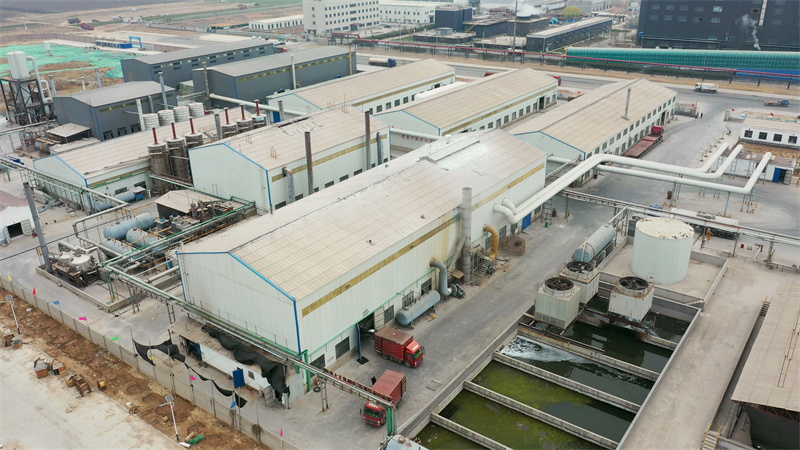
Choosing an HPMC factory in China sounds simple until you realize that two products with the exact same viscosity label can perform completely differently in your mortar. You trusted the spec sheet, you placed a bulk order, and then your tile adhesive started sagging on the wall. The fix? Understanding what actually matters before you pick a manufacturer.
The right HPMC factory in China should offer more than just competitive pricing and a viscosity grade. A reliable HPMC manufacturer provides application-specific guidance, consistent batch quality across commercial orders, and transparent documentation that buyers can verify independently. Price per ton is misleading — what matters is cost-in-use1, batch stability, and formulation compatibility.
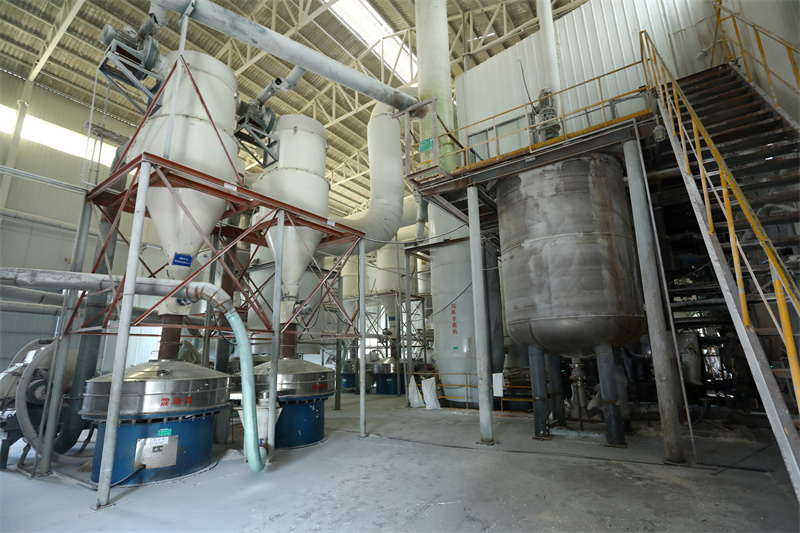
I've spent years working with buyers from the Middle East, South Asia, and Latin America. Many of them came to us after painful experiences with other suppliers. In the sections below, I'll break down the real criteria that separate a dependable HPMC manufacturer from one that just looks good on paper. Let's get into the details.
Why Can't You Just Pick an HPMC Factory by Viscosity Alone?
This is the single biggest misconception I see. Buyers send us inquiries like "I need HPMC 200,000 mPa·s" and assume that any factory producing that grade will give them the same results. It won't.
Even when two HPMC products both read 200,000 mPa·s on the test report, their water retention, open time, workability, and sag resistance in tile adhesive or plaster can be completely different. Viscosity is just one parameter — it does not define the full performance profile of the cellulose ether.
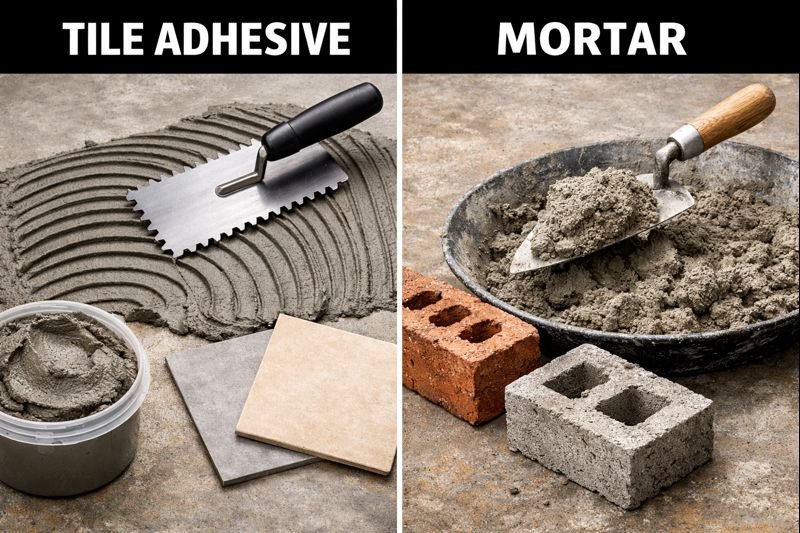
What Else Affects HPMC Performance Besides Viscosity?
Several factors beyond viscosity determine how HPMC behaves in your dry-mix mortar or tile adhesive:
- Degree of substitution (DS) and molar substitution (MS)2: These control how the cellulose ether interacts with water and cement. Two products at the same viscosity but different substitution levels will give you noticeably different water retention rates.
- Particle size distribution3: Finer particles dissolve faster, which affects open time and workability on the job site. Coarser particles may clump, creating inconsistencies in the final mortar.
- Gel temperature4: This influences how HPMC behaves in hot climates — a critical factor for buyers in Saudi Arabia, UAE, India, or Brazil where ambient temperatures regularly exceed 40°C5.
- Ash content and purity6: Higher ash content means more residual salts, which can cause efflorescence on finished walls or weaken adhesion over time.
Here's a simple comparison to illustrate:
| Parameter | HPMC Product A | HPMC Product B |
|---|---|---|
| Viscosity (2% solution) | 200,000 mPa·s | 200,000 mPa·s |
| Water Retention (ASTM C1506)7 | 98.5% | 93.2% |
| Open Time (EN 1346)8 | 30 min | 18 min |
| Sag Resistance | Excellent | Moderate |
| Gel Temperature | 68°C | 59°C |
Same viscosity. Dramatically different field performance. This is why I always tell buyers: don't start with the viscosity grade. Start with your application.
The correct selection path is:
- Application (tile adhesive, wall putty, gypsum plaster, etc.)
- Formulation (cement ratio, additives, filler type)
- Required performance (open time, sag resistance, water retention)
- HPMC grade (now you pick the right one)
When you approach it this way, you're selecting HPMC like an engineer, not just a purchaser. And that's the difference between a product that works and a product that merely exists on a spec sheet.
Is the Cheapest HPMC Really the Lowest Cost?
I get it. Price pressure is real. Your customers push you on price, so you push your supplier. But here's what I've seen happen dozens of times: a buyer saves $200 per ton on HPMC, then has to add 30% more to the formulation just to match the water retention they need. The "savings" vanish — and often turn into a net loss.
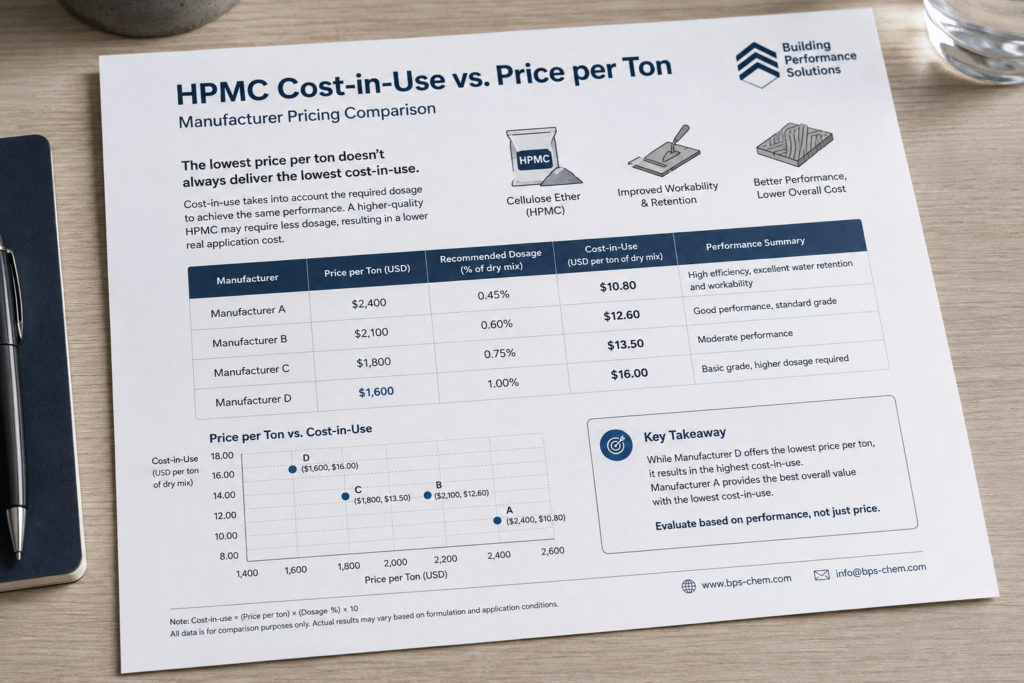
The real metric isn't price per ton. It's cost-in-use — the total cost of HPMC in your final mortar formulation when you account for dosage rate, mortar performance, and waste. A slightly more expensive HPMC that requires lower dosage can actually reduce your overall production cost.
How to Calculate Cost-in-Use for HPMC
Let me walk you through a real-world example. Suppose you're producing C1 tile adhesive9 and comparing two HPMC options:
| Cost Factor | Cheap HPMC | Premium HPMC |
|---|---|---|
| Price per ton (USD) | $2,800 | $3,200 |
| Recommended dosage in tile adhesive | 0.4% | 0.3% |
| HPMC cost per ton of mortar | $11.20 | $9.60 |
| Water retention achieved | 93% | 98% |
| Open time achieved | 15 min | 28 min |
| Reject rate on job site | Higher | Lower |
The premium HPMC costs $1.60 less per ton of mortar despite being $400 more expensive per ton of raw material. Over a 500-ton monthly production run, that's $800 saved every month — plus better field performance, fewer complaints, and stronger customer retention.
Hidden Costs of Cheap HPMC
Beyond dosage, cheap HPMC often carries hidden costs that don't show up on the invoice:
- Reformulation time and cost: When a batch of cheap HPMC underperforms, your R&D team spends days adjusting the formula.
- Customer complaints and returns: If your tile adhesive sags or loses open time, your clients will call you — not your HPMC supplier.
- Inconsistent production: Cheap HPMC often comes with wider quality tolerances, meaning your mortar line runs differently from batch to batch.
- Reputation damage: In markets like the Middle East or Southeast Asia, word travels fast. One bad batch of mortar can cost you a distributor relationship that took years to build.
I've talked to buyers who told me, "We switched to a cheaper supplier last year and lost two major accounts." That's not a hypothetical. That's a real business cost.
So when you're evaluating an HPMC factory in China, ask for the recommended dosage for your specific formulation, not just the unit price. Run your own cost-in-use calculation. The numbers will speak for themselves.
Why Is Batch Stability More Important Than a Perfect Sample?
Every HPMC manufacturer in China can send you an excellent sample. That's the easy part. The hard part — and the part that actually matters — is maintaining that exact quality across 20, 50, or 100 commercial shipments.
Batch stability means every container you receive performs the same as the sample you approved. For a mortar plant running daily production, even a small shift in HPMC quality can cause visible changes in workability, open time, or water retention — and that means downtime, reformulation, and unhappy customers.
How to Evaluate Batch Stability Before Committing
Here are the practical steps I recommend to every buyer:
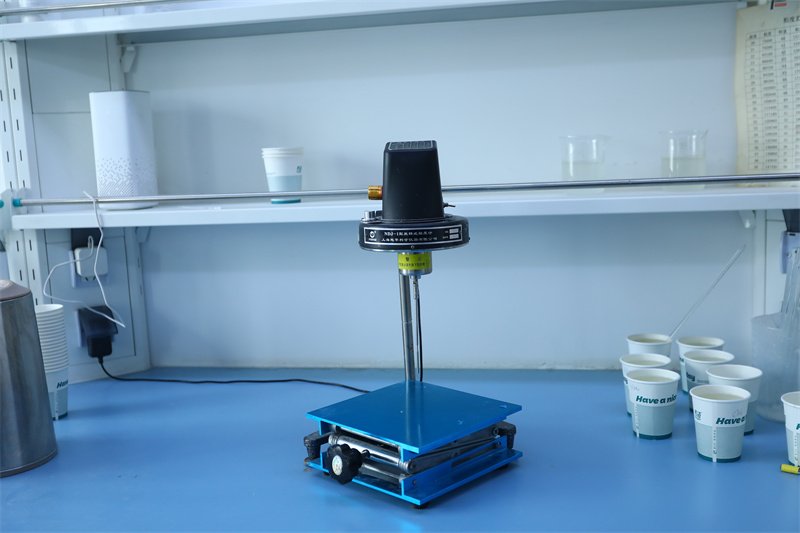
- Request test reports from 3–5 consecutive production batches — not just one golden sample. Compare viscosity, water retention, gel temperature, and moisture content across all batches.
- Ask about raw material sourcing: Does the factory use consistent cotton linter or wood pulp suppliers10? Frequent changes in raw material source are a red flag for quality fluctuation.
- Check the production equipment: Factories with German-imported production lines (like ours, with 6 lines running daily) typically achieve tighter process control than those using older, manually operated systems.
- Verify certifications independently: ISO 9001 and CE certifications should be verifiable through the issuing body11. I'll be blunt — some suppliers in China present documents that don't hold up under scrutiny. Always verify.
- Start with a trial order, then compare: Place a 1–2 ton trial order. Test it in your formulation. Then place a full commercial order and compare the results. If there's a noticeable gap, that's your answer.
A good sample gets you in the door. Consistent commercial batches keep you in the building.
What to Look for in a Factory Audit
If you're placing large volumes — say, 20+ tons per month — a factory visit or third-party audit is worth the investment. Here's what to check:
| Audit Area | What to Look For |
|---|---|
| Production lines | Automated vs. manual, equipment origin and maintenance records |
| QC lab | Testing equipment for viscosity, water retention, ash content, particle size |
| Raw material storage | Proper humidity control, consistent supplier documentation |
| Batch records | Traceability from raw material to finished product |
| Certifications | ISO 9001, CE marks — verify with issuing bodies |
At our facility, we produce up to 80 tons per day across 6 German-imported lines. Every batch goes through lab testing before release. This isn't a marketing claim — it's something we encourage buyers to verify in person or through independent inspection.
How Should You Select HPMC by Application Instead of Viscosity?
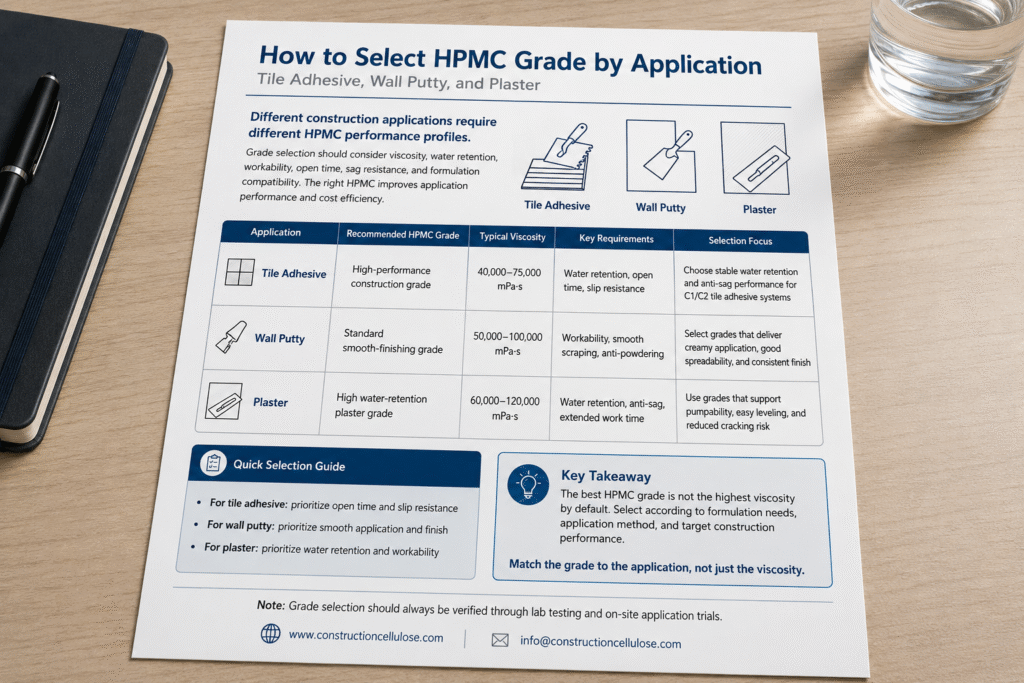
Different construction applications place completely different demands on HPMC. A grade that works perfectly in wall putty may be entirely wrong for tile adhesive. Yet I still see buyers ordering one "universal" HPMC grade and trying to use it everywhere. That's a recipe for mediocre performance across the board.
The smarter approach is to select HPMC based on the specific requirements of each application. Tile adhesive needs high water retention and extended open time. Gypsum plaster needs controlled setting and smooth workability. Wall putty needs crack resistance and easy sanding. Each application has a different performance priority, and that means a different HPMC grade.
Application-Specific HPMC Selection Guide
Here's how different applications break down in terms of HPMC requirements:
| Application | Key Performance Needs | Typical Viscosity Range | Critical HPMC Properties |
|---|---|---|---|
| Tile Adhesive (C1/C2) | Open time, sag resistance, adhesion | 100,000–200,000 mPa·s | High water retention (>97%), controlled gel temp |
| Wall Putty | Workability, crack resistance, sanding | 40,000–100,000 mPa·s | Moderate water retention, smooth film formation |
| Dry-Mix Mortar | Cohesion, pumpability, water retention | 30,000–100,000 mPa·s | Consistent viscosity, good thickening |
| Gypsum Plaster | Setting control, surface finish | 50,000–150,000 mPa·s | Low ash content, thermal stability |
| Self-Leveling Compound | Flow control, defoaming compatibility | 15,000–40,000 mPa·s | Low viscosity, excellent dissolution speed |
Why "Universal" HPMC Fails
When a buyer uses 200,000 mPa·s HPMC in both tile adhesive and self-leveling compound, the tile adhesive might be acceptable — but the self-leveling compound will be too thick, flow poorly, and trap air bubbles. The viscosity is simply wrong for that application.
Conversely, a low-viscosity HPMC designed for self-leveling will provide almost zero sag resistance in tile adhesive. Your tiles slide down the wall. Your contractor calls you. You call your HPMC supplier. Everyone's unhappy.
The Right Selection Process
A responsible HPMC manufacturer should help you through this process:
- Tell them your application — not just a viscosity number.
- Share your base formulation — cement type, filler ratio, other additives.
- Define your performance targets — open time in minutes, water retention percentage, sag resistance class.
- Receive a recommended grade — with dosage guidance and supporting test data.
- Test and validate — in your own lab or production line.
This is how we work with our long-term partners in Saudi Arabia, India, Brazil, and beyond. We don't just ship powder. We help you find the right powder for your specific system. That's the difference between a commodity supplier and a technical HPMC manufacturer.
Frequently Asked Questions
How do I verify if a Chinese HPMC factory's certifications are real?
Contact the certification body listed on the document directly. ISO certifications can be verified through the accreditation body's online database. At Kehao, we encourage buyers to verify our ISO and CE certifications independently — genuine suppliers welcome this scrutiny.
What's a reasonable MOQ when testing a new HPMC manufacturer?
Most factories accept 1–2 ton trial orders. This gives you enough material for lab testing and a short production trial. Avoid suppliers who insist on full container loads (18–20 tons) for a first order — they may not be confident in repeat business.
Can an HPMC factory customize packaging for my brand?
Yes, established HPMC manufacturers in China offer custom packaging — private labeling, different bag sizes (20kg, 25kg), and custom palletizing. At our factory, custom packaging is standard for long-term partners. Just confirm lead times, as custom print adds 3–5 days.
How long does shipping take from a Chinese HPMC factory to the Middle East?
Ocean freight from major Chinese ports to Jeddah or Dubai typically takes 18–25 days. Add 5–7 days for production and 3–5 days for customs clearance. Plan for a 30–40 day total lead time from order confirmation to warehouse delivery.
What payment terms should I expect from a Chinese HPMC manufacturer?
Standard terms for new buyers are typically 30% T/T deposit with 70% before shipment, or irrevocable L/C at sight. After establishing trust through several orders, some factories offer more flexible terms. Always use payment methods that provide documentation and traceability.
Conclusion
Finding the right HPMC factory in China isn't about chasing the lowest price or the highest viscosity number on a spec sheet. It's about understanding cost-in-use, selecting HPMC by application rather than a single parameter, and verifying that your manufacturer delivers consistent quality across every commercial batch — not just a perfect sample.
At Kehao, we run 6 German-imported production lines with ISO and CE certification, producing up to 80 tons of HPMC daily. We serve large distributors, building material wholesalers, and mortar manufacturers across the Middle East, South Asia, Latin America, and Southeast Asia. If you're looking for an HPMC manufacturer that offers technical support, batch consistency, and competitive cost-in-use — not just a low unit price — reach out to our team for a sample and formulation consultation today.
-
"What Does CMC 'Degree of Substitution' (D.S.) Actually Mean ...", https://xhhpmc.com/what-does-cmc-degree-of-substitution-d-s-actually-mean-for-your-final-product-quality/. The cost-in-use concept, widely applied in industrial procurement, evaluates the total expenditure associated with a raw material by incorporating dosage efficiency, processing costs, reject rates, and end-product performance, rather than relying solely on unit purchase price (cf. Baily et al., Procurement Principles and Management, Pearson). Evidence role: definition; source type: other. Supports: That cost-in-use (total cost accounting for dosage efficiency, performance outcomes, and waste) is a recognized evaluation framework in industrial procurement of construction chemical additives. Scope note: The general procurement literature describes cost-in-use as a framework; specific validated case studies for HPMC in dry-mix mortar applications are limited in the public domain. ↩
-
"The Ultimate Guide to HPMC – Properties, Uses, and Benefits - Your ...", https://whhpmc.com/the-ultimate-guide-to-hpmc-properties-uses-and-benefits/. Research on cellulose ethers in cementitious mortars has demonstrated that the degree of substitution (DS) and molar substitution (MS) significantly affect water retention capacity and rheological properties, independent of molecular weight or viscosity grade (see, e.g., Patural et al., Cement and Concrete Research, 2011). Evidence role: mechanism; source type: paper. Supports: That the degree of methoxyl and hydroxypropyl substitution in HPMC influences water retention and rheological behavior in cement-based systems. Scope note: Most studies examine a limited range of DS/MS values and specific cement compositions, so direct quantitative extrapolation to all mortar formulations may not be appropriate. ↩
-
"What Are the Key Applications and Properties of HPMC? - KEHAO ...", https://xhhpmc.com/what-are-the-key-applications-and-properties-of-hpmc/. Studies on cellulose ether dissolution behavior have shown that finer particle fractions dissolve more rapidly in water, accelerating the development of viscosity and water retention in fresh mortar mixes, while coarser particles can lead to localized undissolved agglomerates (Bülichen & Plank, Journal of Applied Polymer Science, 2012). Evidence role: mechanism; source type: paper. Supports: That particle size distribution of HPMC influences its dissolution kinetics and consequent effect on mortar workability and consistency. Scope note: Dissolution behavior is also affected by mixing energy, water temperature, and mortar composition, so particle size alone does not fully predict field performance. ↩
-
"What Factors Affect the Performance of HPMC in Construction ...", https://whhpmc.com/what-factors-affect-the-performance-of-hpmc-in-construction-materials/. HPMC solutions exhibit a characteristic thermal gelation point, typically between 55–75°C depending on substitution levels, above which the polymer loses its hydration shell and precipitates, significantly diminishing water retention and workability in mortar systems (Pourchez et al., Cement and Concrete Research, 2006). Evidence role: mechanism; source type: paper. Supports: That HPMC undergoes thermal gelation at elevated temperatures, reducing its effectiveness as a water retention agent and thickener in cementitious systems. Scope note: Laboratory gelation temperatures measured in aqueous solution may not directly correspond to performance thresholds in complex mortar matrices under field conditions. ↩
-
"How Temperature Affects Cement-Based Tile Adhesives", https://xhhpmc.com/how-temperature-affects-cement-based-tile-adhesives-strength-curing-performance/. According to World Meteorological Organization climate data, cities such as Riyadh, Dubai, and Ahmedabad routinely record summer maximum temperatures exceeding 40°C, with peak values frequently surpassing 45°C during June–August (WMO World Weather Information Service; National Center of Meteorology, UAE). Evidence role: statistic; source type: government. Supports: That summer ambient temperatures in Saudi Arabia, the UAE, and parts of India regularly exceed 40°C. Scope note: Brazil's climate is more variable; while parts of the northeast can exceed 40°C, many major construction markets in Brazil experience lower peak temperatures, making the claim less uniformly applicable. ↩
-
"What Is Methyl Hydroxyethyl Cellulose (MHEC) And Why Is It ...", https://whhpmc.com/what-is-methyl-hydroxyethyl-cellulose-mhec-and-why-is-it-essential-for-construction-projects/. Efflorescence in cement-based products is well documented as resulting from the migration and crystallization of soluble salts; impurities introduced through additives, including cellulose ethers with elevated ash content, can increase the pool of soluble ions available for transport (Dow, 'Efflorescence and its Prevention,' Building Research Establishment reports). Evidence role: general_support; source type: paper. Supports: That residual inorganic salts in cellulose ether additives can contribute to efflorescence in cementitious mortars. Scope note: Efflorescence is a multifactorial phenomenon influenced by cement chemistry, curing conditions, and environmental exposure; isolating the contribution of HPMC ash content alone is difficult. ↩
-
"High Performance Mortar: Key Properties, Applications, and ...", https://whhpmc.com/high-performance-mortar-key-properties-applications-and-how-to-formulate-it/. ASTM C1506, 'Standard Test Method for Water Retention of Hydraulic Cement-Based Mortars and Plasters,' provides a standardized procedure for evaluating water retention performance, which is influenced by the type, dosage, and physicochemical properties of cellulose ether additives used in the mortar mix. Evidence role: definition; source type: institution. Supports: That ASTM C1506 is the standard test method for water retention of hydraulic cement-based mortars and plasters, and that cellulose ether properties beyond viscosity influence measured water retention values. Scope note: The standard defines the test procedure but does not itself characterize the expected range of variation between different HPMC products at equivalent viscosity grades. ↩
-
"High Performance Mortar: Key Properties, Applications, and ...", https://whhpmc.com/high-performance-mortar-key-properties-applications-and-how-to-formulate-it/. EN 1346:2007, 'Adhesives for tiles — Determination of open time,' specifies the procedure for measuring the period during which a cementitious adhesive retains adequate wetting capability for tile installation after application to a substrate. Evidence role: definition; source type: institution. Supports: That EN 1346 is the European standard test method for determining the open time of cementitious tile adhesives. Scope note: The standard defines test methodology but does not specify the role of individual admixtures like HPMC in determining open time outcomes. ↩
-
"What's the Difference Between C1 and C2 Adhesive? - Your ...", https://whhpmc.com/trusted-tile-adhesive-oem-solution-whats-the-difference-between-c1-and-c2-adhesive/. EN 12004:2017, 'Adhesives for ceramic tiles — Requirements, assessment and verification of constancy of performance, classification and marking,' defines C1 as a cementitious adhesive meeting fundamental tensile adhesion strength requirements (≥0.5 MPa), with C2 denoting improved adhesion (≥1.0 MPa). Evidence role: definition; source type: institution. Supports: That C1 is a classification under EN 12004 for cementitious tile adhesives meeting standard (normal) performance requirements. ↩
-
"What is the raw material of HPMC? - KEHAO Chemical-Expert Cellulose ...", https://xhhpmc.com/what-is-the-raw-material-of-hpmc/. Hydroxypropyl methylcellulose (HPMC) is produced by treating purified cellulose — typically sourced from cotton linters or wood pulp — with sodium hydroxide followed by etherification with methyl chloride and propylene oxide (cf. 'Hypromellose,' Wikipedia; Rowe et al., Handbook of Pharmaceutical Excipients). Evidence role: general_support; source type: encyclopedia. Supports: That HPMC is synthesized from purified cellulose derived from cotton linters or wood pulp through etherification with methyl chloride and propylene oxide. Scope note: General descriptions of the manufacturing process do not quantify the specific impact of raw material source variability on final product consistency in construction applications. ↩
-
"IAF CertSearch: IAF Certification Validation", https://www.iafcertsearch.org/. The International Accreditation Forum (IAF) maintains the CertSearch database (www.iafcertsearch.org), which allows buyers to verify whether an ISO management system certification was issued by an accredited certification body, providing a safeguard against fraudulent or unaccredited certificates. Evidence role: general_support; source type: institution. Supports: That ISO 9001 certifications issued by accredited bodies can be independently verified through the IAF CertSearch database or directly through the certification body. Scope note: The IAF database covers certifications issued by IAF MLA signatories; certificates from non-accredited bodies or those outside the IAF network may not appear in the system. ↩