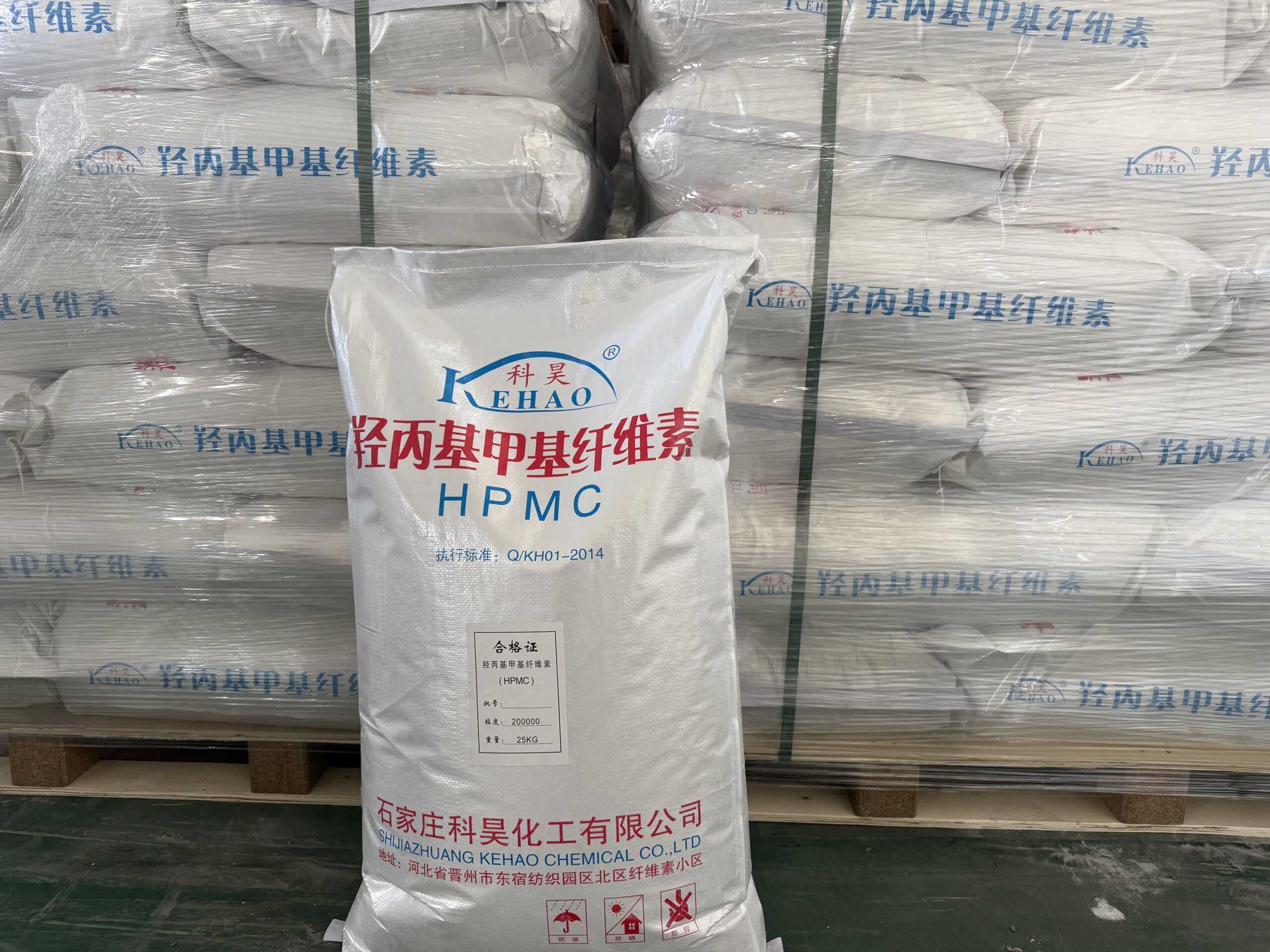
Construction grade HPMC can make or break a dry mix mortar formula, especially when your customer expects stable water retention, smooth workability, and reliable open time. If the grade is wrong, the mortar may sag, dry too fast, or feel inconsistent on site. I prefer to evaluate HPMC by application performance, not by viscosity alone.
A reliable construction grade HPMC manufacturer in China should help buyers match HPMC to the final application, such as tile adhesive, wall putty, skim coat, plaster, or self-leveling mortar. The right grade should be tested in the real formulation, with COA data used as a baseline, not the final decision.
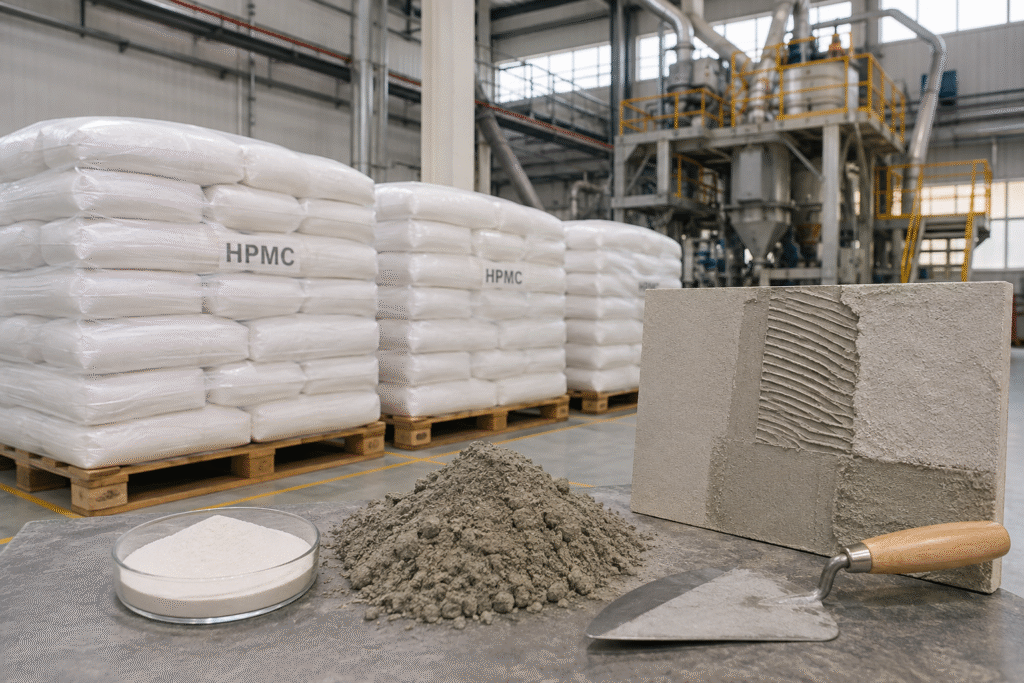
Many buyers start with one simple question: “What viscosity do you have?” I understand why. Viscosity is easy to compare. But in real mortar production, water retention, workability, anti-sagging, open time, and batch stability1 usually matter more than one number on a COA.
What Does Construction Grade HPMC Do in Construction Materials?
HPMC looks like a small ingredient in a dry mix formula, but it has a big influence on site performance. If the wrong cellulose ether is used, the mortar may feel sticky, lose water too fast, or become difficult to apply. The right construction grade HPMC helps the formula behave in a more controlled way.
Construction grade HPMC mainly improves water retention, workability, thickening, open time, adhesion support, and anti-sagging performance2 in cement-based and gypsum-based materials. It does not replace cement, polymer powder, or fillers. Instead, it helps the full formula perform better during mixing, application, and curing.
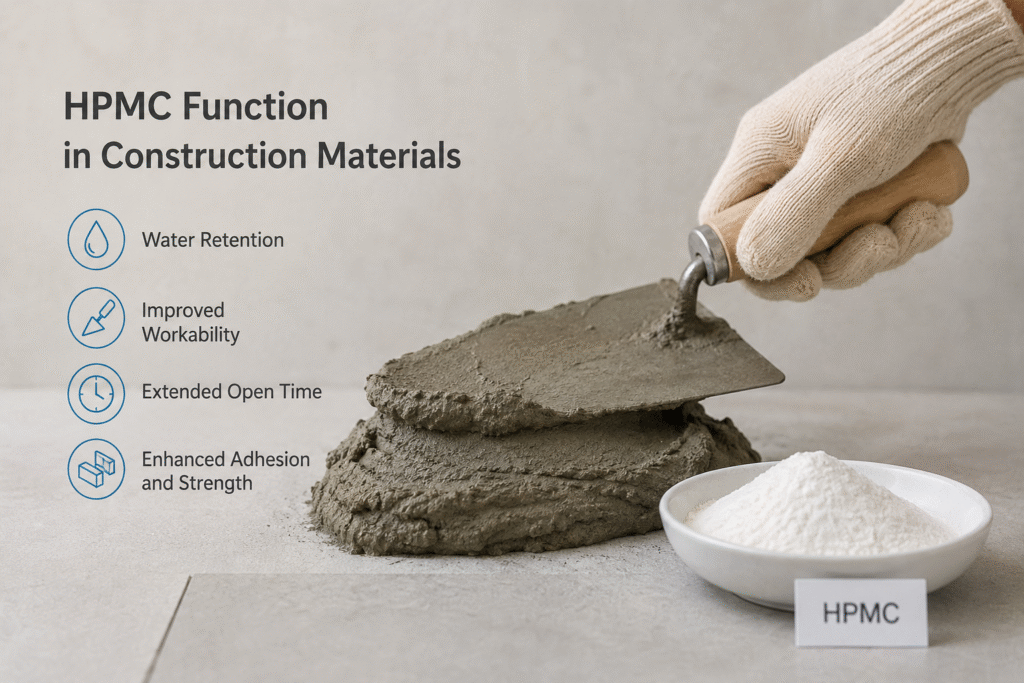
Why HPMC matters in mortar performance
In my experience, good buyers do not only ask whether HPMC is “high viscosity.” They ask what the mortar does after HPMC is added. That is the correct way to evaluate it.
Construction grade HPMC is commonly used in:
- Tile adhesive
- Wall putty
- Skim coat
- Cement plaster
- Gypsum plaster
- Masonry mortar
- Repair mortar
- EIFS mortar
- Self-leveling compounds
- Joint filler and crack filler
Each application uses HPMC for a slightly different purpose. For example, tile adhesive needs strong water retention and open time. Wall putty needs smooth scraping and good surface finish.3 Plaster may need pumpability and stable hanging performance.
Main functions of HPMC in construction formulas
| Function | What it means in real application | Why buyers care |
|---|---|---|
| Water retention | Keeps water in mortar for cement hydration | Reduces fast drying and improves curing |
| Workability | Makes mortar easier to mix and apply | Improves worker acceptance on site |
| Thickening | Adjusts consistency and body | Helps the material stay stable |
| Open time | Extends workable time after spreading | Important for tile adhesive and skim coat |
| Anti-sagging | Reduces slipping or sliding on vertical surfaces | Important for wall applications |
| Lubrication | Makes scraping or troweling smoother | Important for putty and plaster |
| Stability | Keeps performance more predictable | Important for factories and distributors |
I always remind buyers that HPMC is not selected for the laboratory report only. It must be selected for how the mortar behaves in the real formula.
Why viscosity is only one part of the story
Many buyers compare construction grade HPMC by viscosity: 40,000 mPa·s, 75,000 mPa·s, 100,000 mPa·s, or 200,000 mPa·s. This is useful, but it is not enough.
The final performance depends on several factors:
- HPMC viscosity
- Substitution type and degree
- Particle size
- Dissolution speed
- Gel temperature
- Dosage
- Cement quality
- Sand grading
- Polymer powder and other additives
- Climate and jobsite conditions
A 100,000 mPa·s HPMC from one supplier may not behave exactly like a 100,000 mPa·s HPMC from another supplier. Even if both COAs look similar, the mortar may feel different.
That is why I prefer to discuss the application first. If a customer says, “I need HPMC for tile adhesive in a hot market,” I will not only talk about viscosity. I will ask about open time, slip resistance, cement type, dosage, and local temperature. This makes the recommendation much more practical.
Construction Grade HPMC for Different Applications
Some customers want one HPMC model for every dry mortar product. I understand the reason. It makes inventory easier. But this can create performance problems. Tile adhesive, wall putty, plaster, and self-leveling mortar do not need the same balance of water retention, workability, and viscosity.
Construction grade HPMC should be selected according to the application, not only according to viscosity. Tile adhesive usually needs open time and anti-slip performance. Wall putty needs smooth workability and surface finish. Plaster needs stable hanging and easy application. Each formula should be tested separately.
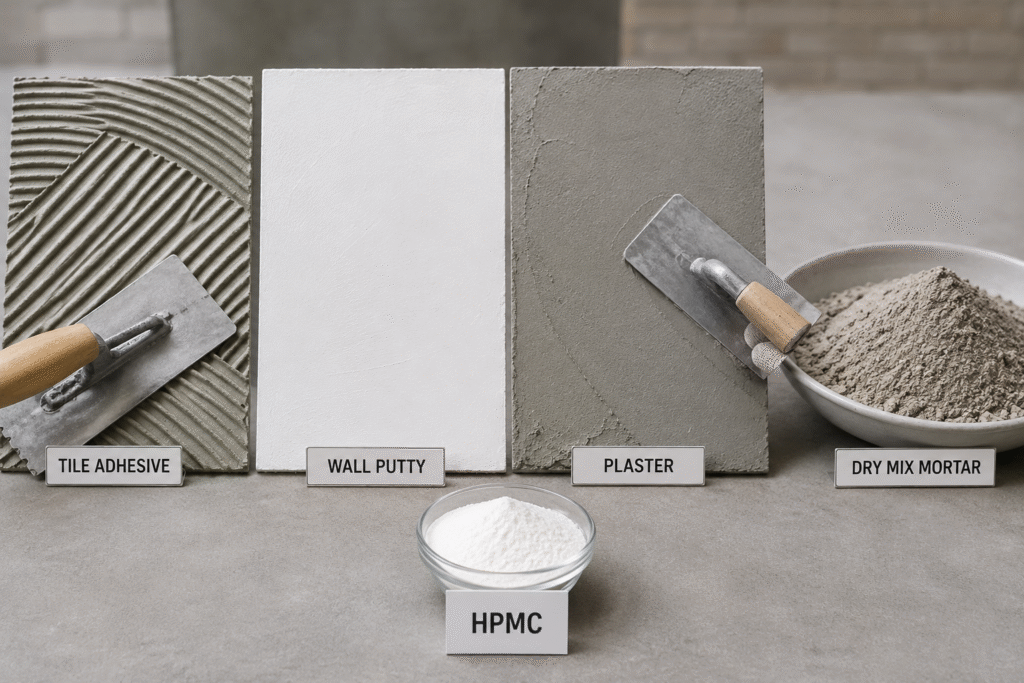
Application decides the grade
A large dry mix mortar factory may produce many products under one roof. The purchasing team may want to simplify procurement. That is normal. However, using one construction grade HPMC for every application can create hidden costs.
For example:
- A tile adhesive may pass viscosity expectations but fail on open time.
- A wall putty may have enough water retention but feel too sticky.
- A plaster may look stable in the bucket but sag on a vertical wall.
- A self-leveling mortar may lose flow if the HPMC grade is too thickening4.
So, I prefer this rule:
Do not ask only, “What is the viscosity?” Ask, “What is the application and target performance?”
Typical HPMC priorities by application
| Application | Main HPMC performance focus | Common buyer concern |
|---|---|---|
| Tile adhesive | Water retention, open time, anti-slip | Tile sliding, short open time |
| Wall putty | Smooth scraping, water retention, surface finish | Poor workability, rough surface |
| Skim coat | Lubrication, open time, easy troweling | Fast drying, drag marks |
| Cement plaster | Consistency, hanging, pumpability | Sagging, poor application feel |
| Gypsum plaster | Workability, water retention, setting control support | Drying too fast, poor spread |
| Self-leveling mortar | Controlled viscosity, flow stability | Loss of flow, poor leveling |
| Repair mortar | Water retention, adhesion support, consistency | Cracking, low workability |
Tile adhesive vs. wall putty
Tile adhesive and wall putty both use construction grade HPMC. But they are not the same.
Tile adhesive needs:
- Good open time
- Strong water retention
- Anti-slip performance
- Stable consistency after mixing
- Good wetting on tile and substrate
Tile adhesive is often used in hot climates, especially in markets like Saudi Arabia, UAE, India, Pakistan, Vietnam, and the Philippines. In these markets, water can evaporate quickly5. If the HPMC cannot hold water well, the adhesive may skin too fast. Workers may place tiles after the open time has already dropped.
Wall putty needs:
- Smooth scraping
- Good lubrication
- Fine surface finish
- Easy sanding in some systems
- Stable workability during application
Wall putty is more sensitive to hand feel. A contractor may reject a formula if it feels heavy, sticky, or rough, even when the laboratory data looks acceptable.
Why dosage also matters
Most dry mix formulas use construction grade HPMC at relatively low dosage. The exact amount depends on the formula and local raw materials. A small adjustment can change workability.
For example, in many cement-based products, HPMC dosage may be roughly around 0.1% to 0.5%6 of the formula, but this is not a universal rule. Higher dosage does not always mean better performance.7 It may increase stickiness, slow drying, or reduce flow in some systems.
I usually suggest that buyers test at different dosage levels, such as:
- Current dosage
- Current dosage minus 10–15%
- Current dosage plus 10–15%
This gives a more realistic comparison than testing one dosage only.
How We Test Construction Grade HPMC
A COA is useful, but it is not enough. Buyers have been burned by suppliers who showed good documents but shipped unstable products. I take this concern seriously. A responsible construction grade HPMC supplier should test both laboratory indicators and application performance before recommending a grade.
We test construction grade HPMC by checking key laboratory parameters such as viscosity, moisture, ash, pH, particle condition, and gel behavior8, then comparing the grade in real mortar formulas. The final judgment should come from application testing, because dry mix mortar performance depends on the full formulation9.
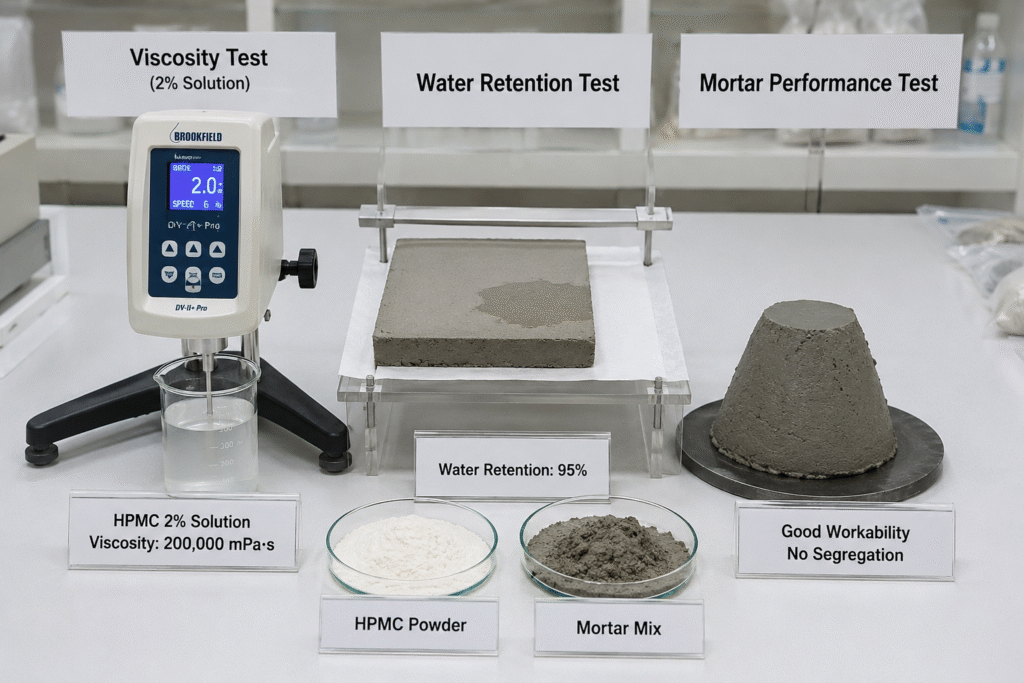
Laboratory tests are the starting point
In procurement, documents matter. A buyer should request a COA, technical data sheet, safety data sheet, and certification documents when needed. At Kehao, we can provide ISO and CE-related documents for buyer verification. I also encourage customers to verify certificates carefully, especially before large-volume orders.
However, a laboratory test is only the beginning. HPMC is a functional additive. Its true value appears in the mortar.
Common laboratory checks include:
- Viscosity
- Moisture content
- Ash content
- pH value
- Particle appearance
- Dissolution behavior
- Gel temperature
- Bulk density
- Consistency of production lot
Example of HPMC test focus
| Test item | Why it matters | Procurement note |
|---|---|---|
| Viscosity | Shows thickening level under test condition | Compare only under same method |
| Moisture | Affects storage and active content | Too high moisture can be risky |
| Ash | Reflects inorganic residue | Useful for quality comparison |
| pH | Helps check compatibility | Important for formulation stability |
| Particle size | Affects dispersion and dissolution | Poor dispersion may cause lumps |
| Gel temperature | Important in cement systems | Helps predict behavior in warm conditions |
| Application test | Shows real mortar performance | Most important for final approval |
Application testing is the real decision
My strongest opinion is simple: construction grade HPMC must be evaluated in the real formula.
A buyer can compare COA values and still choose the wrong product. This happens because mortar performance is not controlled by HPMC alone. Cement type, filler, sand, redispersible polymer powder, starch ether, retarder, accelerator, and water demand all influence the final result.
For example, if a customer tests HPMC for tile adhesive, I would suggest checking:
- Mixing condition
- Initial consistency
- Wet density
- Open time
- Slip resistance
- Adjustability time
- Water retention
- Tensile adhesion strength, if the lab has the equipment
- Workability after 10, 20, and 30 minutes
- Performance under local temperature if possible
For wall putty, I would look at different points:
- Scraping smoothness
- Knife marks
- Surface finish
- Water retention
- Cracking tendency
- Sanding behavior, if applicable
- Worker feedback
Why the same viscosity can behave differently
A common problem in supplier comparison is method difference. One factory may test viscosity by one concentration, temperature, spindle, and instrument. Another factory may use a different method. The number may look similar but not mean the same thing.
That is why I like to ask customers for their current product information:
- Current HPMC viscosity
- Test method if available
- Current dosage
- Application
- Formula type
- Required performance
- Local climate
- Main complaint from workers or customers
This gives me a practical starting point. Then we can recommend a sample grade for trial, instead of guessing.
How We Control Construction Grade HPMC Batch-to-Batch Consistency
For large distributors and mortar factories, one good sample is not enough. The real question is whether the next container performs the same. If construction grade HPMC changes from batch to batch, the customer may face complaints, reformulation work, and delayed deliveries during peak season.
We control construction grade HPMC consistency by managing raw material selection, production parameters, in-process checks, final inspection, retained samples, and shipment documentation. Buyers should compare pre-shipment samples, COA data, and application test results before scaling up to regular container orders.
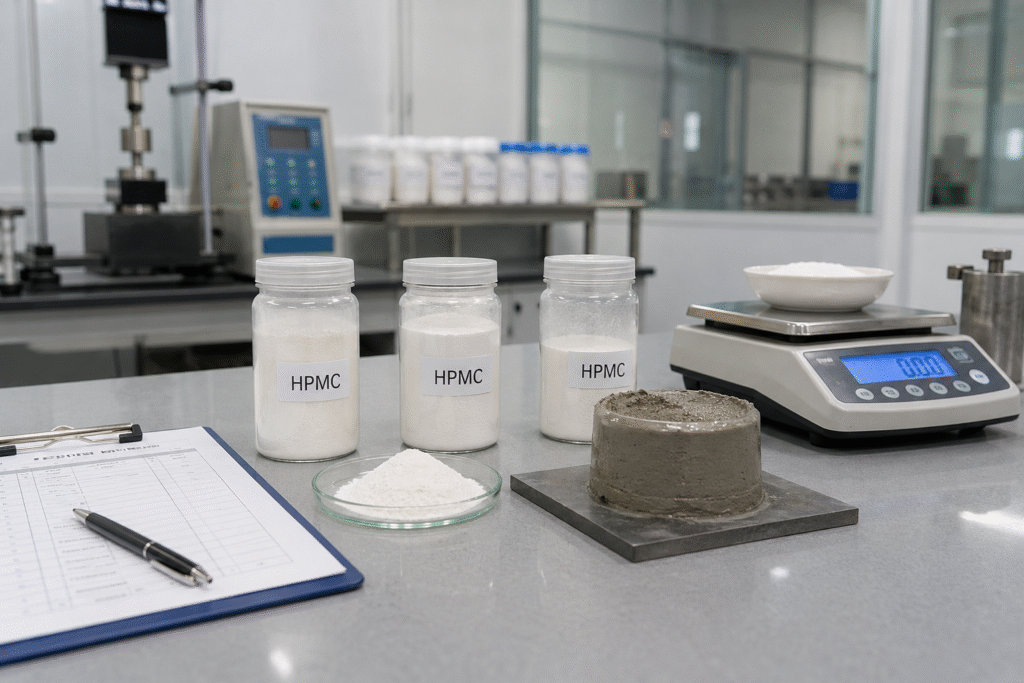
Consistency is a procurement priority
Many experienced buyers care less about the lowest price and more about stable quality. I agree with them. A small saving on HPMC can become expensive if the mortar factory receives complaints or needs to adjust the formula every month.
In our factory context, we operate six German-imported production lines and have a daily output capacity of up to 80 tons. This supports stable supply for large dry mix mortar factories, coating factories, distributors, and building material wholesalers. Still, I believe buyers should verify performance through samples, trial orders, and regular QC checks.
What batch consistency means
Batch consistency does not mean every number is mathematically identical. Industrial production always has controlled tolerances. Batch consistency means the product stays within agreed specifications and performs similarly in the customer’s formula.10
Important control points include:
- Stable raw material sourcing
- Controlled etherification process
- Consistent drying and milling
- Particle size control
- Lot-by-lot viscosity testing
- Moisture and ash testing
- Final COA review
- Retained sample management
- Packaging and storage inspection
Practical QC flow for HPMC supply
| Stage | Control action | Buyer benefit |
|---|---|---|
| Raw material check | Confirm material quality before production | Reduces unexpected variation |
| In-process control | Monitor key production parameters | Keeps batch within target range |
| Final lab test | Check viscosity, moisture, ash, pH, appearance | Supports COA accuracy |
| Retained sample | Keep sample from production lot | Allows later comparison |
| Pre-shipment sample | Send sample before bulk shipment if needed | Helps buyer confirm quality |
| Shipment documents | Provide COA and relevant documents | Supports procurement records |
| Buyer application test | Test in real formula | Confirms suitability before full use |
Why buyers should keep their own control sample
I always recommend that serious buyers keep a sealed reference sample from the approved batch. This is a simple habit, but it helps a lot.
A buyer can keep:
- Approved sample from supplier
- Sample from first trial order
- Sample from each container
- Application test records
- COA copies
- Photos or videos of mixing and application
If a problem happens later, these records make the discussion much easier. Instead of saying, “This batch feels different,” the buyer can compare actual samples and test results.
Logistics consistency also matters
For many of our export markets, timing is a major issue. Customers in Saudi Arabia, UAE, India, Pakistan, Brazil, Mexico, Vietnam, the Philippines, and other developing markets often plan orders around construction seasons. A late shipment can cause missed sales.
So, construction grade HPMC supplier evaluation should include more than product testing. Buyers should also check:
- Production capacity
- Lead time
- Export experience
- Packaging strength
- Container loading plan
- Payment terms
- Communication speed
- Document accuracy
- After-sales response
A good supplier should not disappear after payment. A good supplier should support sampling, order follow-up, document preparation, and problem analysis when needed.
How Can You Request a Construction Grade HPMC Sample?
Choosing HPMC from a catalog can feel easy, but it can also be misleading. A sample request should include more than “send me 100,000 viscosity.” If I know your application and performance target, I can recommend a construction grade HPMC sample that is closer to your real need.
To request a construction grade HPMC sample, send your application, current HPMC viscosity, current dosage, formula type, and target performance requirements. Useful details include water retention needs, open time, anti-sagging performance, workability problems, climate, and whether the product is for tile adhesive, wall putty, plaster, or another mortar.

What information helps us recommend faster
When a buyer only asks for a price, I can give a basic quotation. But when a buyer gives application details, I can give a better recommendation. This saves time for both sides.
Please share:
- Application name
- Current HPMC viscosity
- Current HPMC dosage
- Current supplier grade, if you can share it
- Cement-based or gypsum-based system
- Main formula ingredients
- Target market climate
- Main problem you want to solve
- Required packaging
- Estimated monthly quantity
- Destination port
- Certification or document requirements
Sample request checklist
| Information | Example | Why it helps |
|---|---|---|
| Application | Tile adhesive C1/C2, wall putty, plaster | Helps select performance direction |
| Current viscosity | 75,000 or 100,000 mPa·s | Gives a comparison point |
| Dosage | 0.25% of formula | Helps estimate performance and cost |
| Main issue | Short open time, sagging, sticky feel | Helps target the right grade |
| Local climate | Hot and dry, humid, cold | Affects water retention and open time |
| Packaging need | 25 kg bags, custom label | Supports distributor planning |
| Quantity | 1 ton trial, 20 tons monthly | Helps plan supply and price |
| Documents | COA, TDS, SDS, ISO/CE documents | Supports procurement verification |
How I suggest testing the sample
A common mistake is testing only one HPMC sample at one dosage. A better method is to compare the sample with your current product under the same formula and same water addition.
Here is a simple testing plan:
-
Prepare your control formula
- Use your current HPMC.
- Keep the formula and water amount fixed.
- Record mixing time and temperature.
-
Test the new HPMC at the same dosage
- Compare mixing feel.
- Check consistency after mixing.
- Record workability at different times.
-
Adjust dosage slightly
- Test minus 10%.
- Test plus 10%.
- Look for best performance-cost balance.
-
Check real application
- Apply on substrate.
- Check open time, sagging, scraping, or leveling.
- Ask workers for feedback.
-
Keep records
- Take photos and videos.
- Record water demand.
- Keep samples after curing if possible.
What buyers should not do
I have seen buyers reject a good sample because they tested it in the wrong way. I have also seen buyers approve a sample too quickly without checking real formula performance. Both situations create risk.
Avoid these mistakes:
- Do not compare two HPMC samples with different water addition.
- Do not judge only by dry powder appearance.
- Do not test tile adhesive performance in a wall putty formula.
- Do not assume higher viscosity always means better quality.
- Do not skip trial production before bulk use.
- Do not ignore worker feedback from the jobsite.
- Do not approve a supplier only because the certificate looks good.
What Kehao can support
As a construction grade HPMC manufacturer in China, Kehao focuses on stable quality, application-oriented recommendation, and export support for large buyers. Our typical customers include dry mix mortar factories, building material wholesalers, coating factories, and distributors.
We can support:
- Construction grade HPMC sample recommendation
- COA, TDS, SDS, and certificate document support for verification
- Custom packaging discussion
- Trial order support
- Bulk order planning
- Export documentation
- Application communication before testing
Not sure which construction grade HPMC fits your formulation? Send us your application, current HPMC viscosity, dosage, and performance requirements. We can recommend a suitable grade for testing.
Frequently Asked Questions
Is higher viscosity construction grade HPMC always better?
No. Higher viscosity is not always better. The right construction grade HPMC depends on the application, dosage, formula, and target performance. Tile adhesive, wall putty, and plaster may need different balances of water retention, workability, open time, and anti-sagging behavior.
How should I compare HPMC samples from different suppliers?
You should compare HPMC samples in the same formula, with the same dosage, same water addition, same mixing time, and same test conditions. COA data is useful, but real mortar testing is more important for supplier approval and long-term procurement.
What documents should I request from an HPMC manufacturer?
You can request a COA, technical data sheet, safety data sheet, and relevant ISO or CE documents if required by your market. Buyers should verify certification documents carefully and confirm that the shipped batch matches the approved sample and agreed specification.
Can one HPMC grade be used for all dry mix mortar products?
One HPMC grade can sometimes cover several basic products, but it is not ideal for every application. Tile adhesive and wall putty both use HPMC, but they focus on different performance points. Application-specific testing is the safer procurement method.
What information should I send before requesting a sample?
You should send your application, current HPMC viscosity, dosage, formula type, performance requirements, local climate, packaging needs, and estimated quantity. This information helps the supplier recommend a construction grade HPMC sample that is closer to your actual production needs.
Conclusion
Construction grade HPMC should be selected by application performance, not by viscosity alone. A good supplier should help you evaluate water retention, workability, open time, anti-sagging behavior, and batch consistency in your real formula. At Kehao, we support large mortar factories, distributors, and building material buyers with stable production, export experience, and sample-based recommendations. If you are comparing HPMC suppliers in China, send us your formula requirements and current grade. We will recommend a suitable sample for testing.
-
"High-Quality HPMC for Dry Mix Mortar Enhance Water Retention", https://xhhpmc.com/hpmc-for-dry-mix-mortar/. Technical studies of cellulose ethers in cement-based mortars describe HPMC performance in terms of water retention, rheology/workability, open time, and anti-sag or slip behavior, supporting the view that viscosity is only one indicator of field performance. Evidence role: expert_consensus; source type: paper. Supports: A neutral technical source should show that cellulose ethers such as HPMC are evaluated by multiple application properties, including water retention, workability/rheology, open time, and sag or slip resistance, rather than viscosity alone.. Scope note: The source may support the general technical principle rather than ranking these factors for every commercial mortar formulation. ↩
-
"Dry Mix Mortar: How Can HPMC and RDP Transform Your ...", https://xhhpmc.com/dry-mix-mortar-how-can-hpmc-and-rdp-transform-your-construction-projects/. Research on cellulose ethers in cementitious building materials reports that HPMC modifies water retention and rheological behavior, which can affect workability, open time, adhesion-related performance, and sag resistance. Evidence role: mechanism; source type: paper. Supports: A source should explain that HPMC/cellulose ethers modify water retention and rheology in cementitious or gypsum-based systems and can influence open time, adhesion-related performance, and sag resistance.. Scope note: The source may describe mechanisms and observed effects in tested formulations, not guarantee the same magnitude of improvement in all commercial products. ↩
-
"HPMC for Wall Powder", https://xhhpmc.com/hpmc-for-wall-powder/. Studies of putty, skim-coat, and finishing mortars commonly evaluate application workability and surface quality, supporting the relevance of smooth scraping and finish in wall-putty performance. Evidence role: general_support; source type: paper. Supports: A neutral source should show that putty or skim-coat materials are assessed by application workability, troweling or scraping behavior, and resulting surface finish.. Scope note: The source may discuss finishing mortars or skim coats broadly rather than the exact commercial category called wall putty in every market. ↩
-
"High-Quality HPMC for Cement Self-Leveling Compounds", https://xhhpmc.com/self-leveling/. Research on self-leveling cementitious materials shows that viscosity-modifying polymers, including cellulose ethers, can increase mixture viscosity and reduce flow when overdosed or when an overly thickening grade is used. Evidence role: mechanism; source type: paper. Supports: A source should show that cellulose ethers increase viscosity or yield stress and that excessive viscosity can reduce the flowability of self-leveling cementitious systems.. Scope note: The source may demonstrate the rheological relationship under laboratory conditions rather than provide a universal threshold for all self-leveling mortar formulas. ↩
-
"How Temperature Affects Cement-Based Tile Adhesives", https://xhhpmc.com/how-temperature-affects-cement-based-tile-adhesives-strength-curing-performance/. Hot-weather concreting and cementitious-material guidance identifies high temperature, low relative humidity, wind, and solar radiation as factors that increase evaporation from fresh materials, providing context for faster water loss and shorter workable time in hot climates. Evidence role: mechanism; source type: institution. Supports: A source should explain that temperature, humidity, wind, and solar exposure affect evaporation from fresh cementitious materials and can accelerate water loss.. Scope note: Guidance may be written for concrete rather than tile adhesive specifically, so the support is contextual for mortar applications. ↩
-
"High-Quality HPMC for Dry Mix Mortar Enhance Water Retention", https://xhhpmc.com/hpmc-for-dry-mix-mortar/. Published mortar-formulation studies commonly use cellulose ether or HPMC dosages in low fractions of the dry mix, with reported ranges that overlap approximately 0.1%–0.5% by mass. Evidence role: statistic; source type: paper. Supports: A source should provide typical HPMC or cellulose ether dosage ranges in cement-based mortars or dry-mix construction products that overlap with 0.1% to 0.5%.. Scope note: The cited range is formulation-dependent and should be treated as contextual support rather than a universal recommended dosage. ↩
-
"High-Quality HPMC for Dry Mix Mortar Enhance Water Retention", https://xhhpmc.com/hpmc-for-dry-mix-mortar/. Experimental studies on HPMC-modified cement mortars show dosage-dependent trade-offs, where increased cellulose ether can improve water retention while also altering rheology, flow, setting, or strength-related properties. Evidence role: mechanism; source type: paper. Supports: A source should show that HPMC dosage changes mortar properties in nonlinear or trade-off ways, such as improving water retention while increasing viscosity or reducing flow.. Scope note: The exact trade-off depends on the mortar system, cement chemistry, water demand, and other admixtures. ↩
-
"What Makes a Reliable Hydroxypropyl Methylcellulose Manufacturer ...", https://xhhpmc.com/what-makes-a-reliable-hydroxypropyl-methylcellulose-manufacturer/. Authoritative specifications and testing references for HPMC identify viscosity, moisture or loss on drying, ash or residue, pH, particle characteristics, and thermal gelation behavior as relevant quality-control parameters. Evidence role: general_support; source type: institution. Supports: A source should identify common specification or quality-control tests for HPMC/cellulose ethers, including viscosity, moisture or loss on drying, ash or residue, pH, particle properties, and thermal gelation behavior.. Scope note: Some sources may be written for pharmaceutical or general chemical grades, so the support is contextual for construction-grade procurement. ↩
-
"What Are The Advantages Of Dry-Mix Mortar?", https://xhhpmc.com/1640-2/. Mortar-materials research describes fresh and hardened performance as the result of interactions among binder chemistry, aggregate grading, fillers, water, polymers, and chemical admixtures, supporting the need to evaluate HPMC within the complete formulation. Evidence role: expert_consensus; source type: paper. Supports: A source should explain that mortar properties arise from combined effects of binder, aggregate grading, fillers, water, and chemical admixtures rather than one additive alone.. Scope note: The source may not address every listed ingredient but should support the general formulation-dependence principle. ↩
-
"China Hydroxypropyl Methyl Cellulose Supplier: Is It Worth ...", https://whhpmc.com/china-hydroxypropyl-methyl-cellulose-supplier-is-it-worth-choosing-a-chinese-hpmc-manufacturer/. Quality-management standards define product quality in terms of meeting specified requirements and controlling production processes, supporting the interpretation of batch consistency as conformity to agreed specifications with comparable performance. Evidence role: definition; source type: institution. Supports: A source should support the concept that manufacturing quality control focuses on conformity to specified requirements and consistent product output.. Scope note: The source supports the quality-management concept rather than directly validating any individual HPMC supplier’s batch consistency. ↩