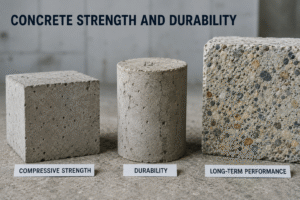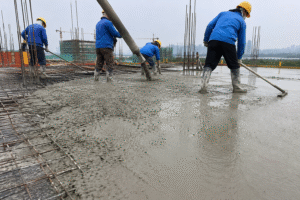
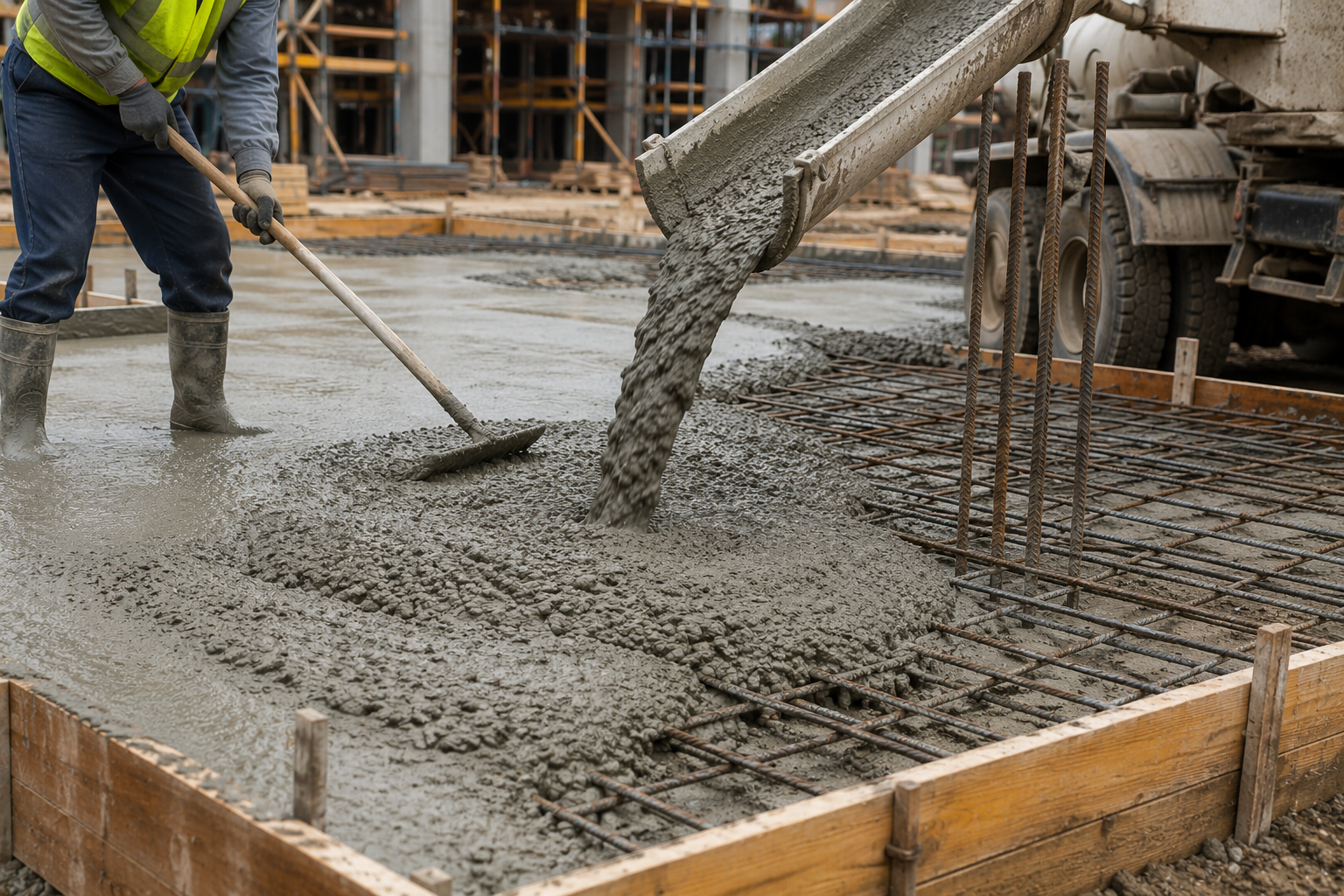
Your project is on a tight deadline, and waiting for concrete to cure feels like losing money. Accelerators seem like a magic solution, but will they let you walk on the surface sooner?
Yes, accelerators significantly shorten the wait time, but you cannot walk on the concrete immediately. You must wait until it reaches a minimum compressive strength, typically around 3.5 MPa (500 PSI), to prevent surface damage like footprints or loosened aggregate, even with a high-early-strength mix.

I remember a conversation with a client, Mark Chen from Saudi Arabia. He was in a rush for a large-scale project. He wanted to know if using our Kehao accelerators meant his team could get back to work on the slab the very next morning. It's a common question, and the answer is more detailed than a simple "yes" or "no." The temptation to speed things up is huge, but a small mistake early on can lead to big, costly repairs later. Let's break down the real timelines so you can plan your project with confidence.
What's the Wait Time With Accelerators (High Early Strength Mix)?
You added accelerators to your concrete mix, hoping to shave days off your schedule. But now the pressure is on, and you're not sure exactly when it's safe to step on it.
With accelerators, the initial set time can drop from 6-8 hours to just 2-3 hours.1 For light foot traffic, you should wait until the concrete reaches a minimum strength of 3.5 MPa (500 PSI). This can often be achieved within 8 to 12 hours under ideal conditions.2
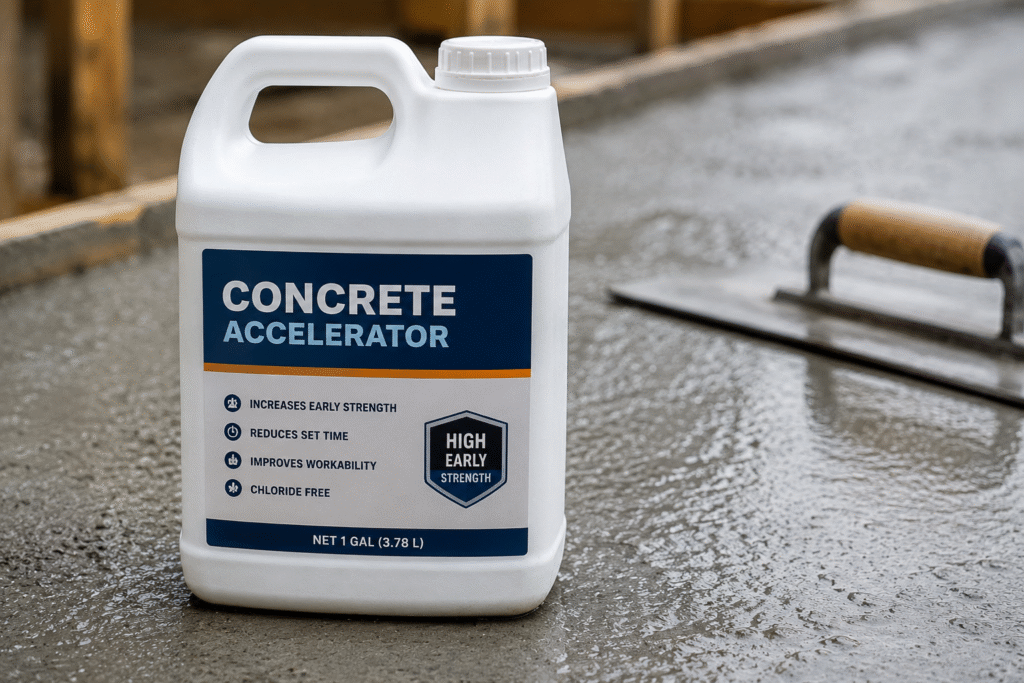
Accelerators, like calcium chloride, work by speeding up the chemical reaction of hydration.3 This is the process where water and cement react to form the hard, durable matrix that is concrete. In a standard mix, this process is steady. With an accelerator, it's like pressing the fast-forward button. The initial stiffening, or "initial set," happens much faster.
However, "set" does not mean "strong." Think of it like a cake just out of the oven. It looks solid, but if you press on it, you'll leave a mark. Concrete is the same. Even after 2-3 hours when it seems hard, it has not yet developed enough internal strength to support a person's weight without damage. Stepping on it too early can cause:
- Surface Indentations: Permanent footprints on your new slab.
- Loose Aggregate: Pushing the stones down into the mix, creating a weak, sandy surface.
The industry standard, ASTM C403, provides a method for testing this. It states that for most light-duty activities, a compressive strength of at least 3.5 MPa is needed. So, the real question isn't about time, but about strength.
What About Standard Concrete Without Accelerators?
You've poured a standard concrete mix and the clock is ticking. The wait seems endless, and you're tempted to check if it's hard yet, but one wrong step can ruin the whole job.
For standard concrete without any accelerators, you should wait at least 24 hours before allowing any light foot traffic.4 For anything heavier, or to be extra safe, waiting 48 hours is a better practice. This allows the concrete to gain enough strength to resist surface damage.
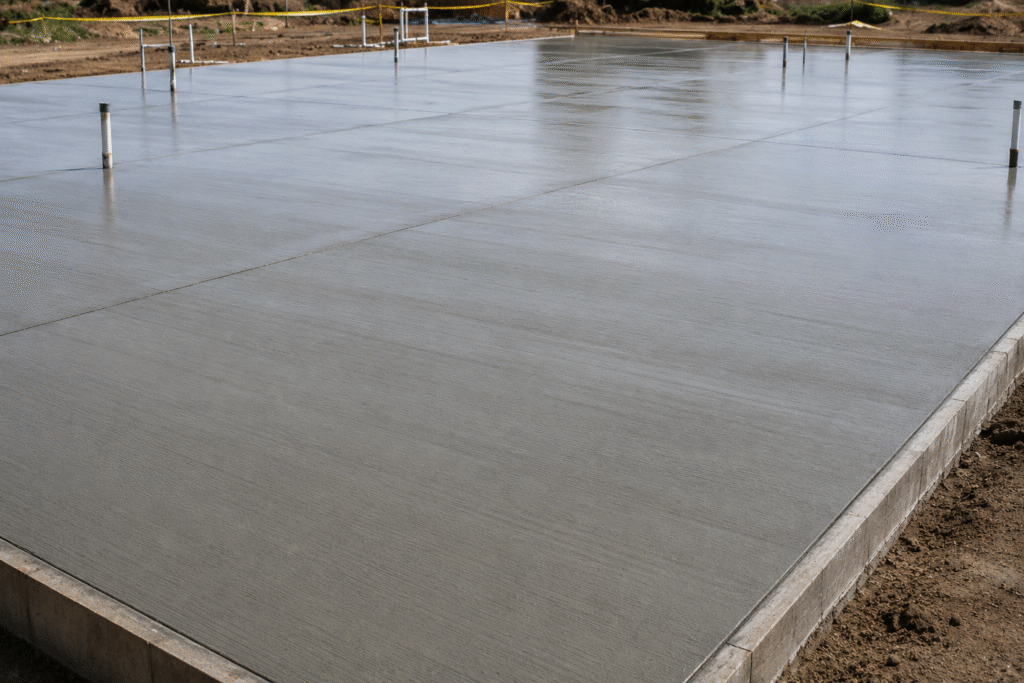
Without the boost from accelerators, standard concrete follows a more natural, slower curing timeline. The initial set, where it loses its plasticity, typically happens in about 6 to 8 hours. But at this stage, it's still very fragile. Walking on it would be a disaster.
Over the next 24 hours, the concrete gains strength more rapidly. By the end of the first day, it has usually developed enough compressive strength to handle a person walking carefully across it. I always tell my clients to use the "scratch test." If you can scratch the surface with a metal key, it's definitely too soft.
Here's a simple table to show the difference.
| Feature | With Accelerators | Standard Concrete (No Accelerators) |
|---|---|---|
| Initial Set Time | 2 - 3 Hours | 6 - 8 Hours |
| Walk-On Time (Light) | 8 - 12 Hours (requires strength check) | 24 - 48 Hours |
| Best For | Cold weather pours, tight deadlines | General purpose, non-urgent projects |
| Risk | Potential for false set, chloride corrosion | Slower project timeline |
So, while standard concrete takes longer, its timeline is often more predictable. The key is patience. Rushing this stage is one of the most common and costly mistakes I see people make.
What Factors Affect the Wait Time?
You followed the instructions, but your concrete seems to be setting faster or slower than expected. This unpredictability can throw your entire project schedule off balance and create new risks.
The true waiting time isn't just about the mix. It is heavily influenced by the surrounding environment and the specifics of your concrete. Key factors include ambient temperature, humidity, the concrete's water-cement ratio, and the type of cement used. Your wait time can change a lot because of these.
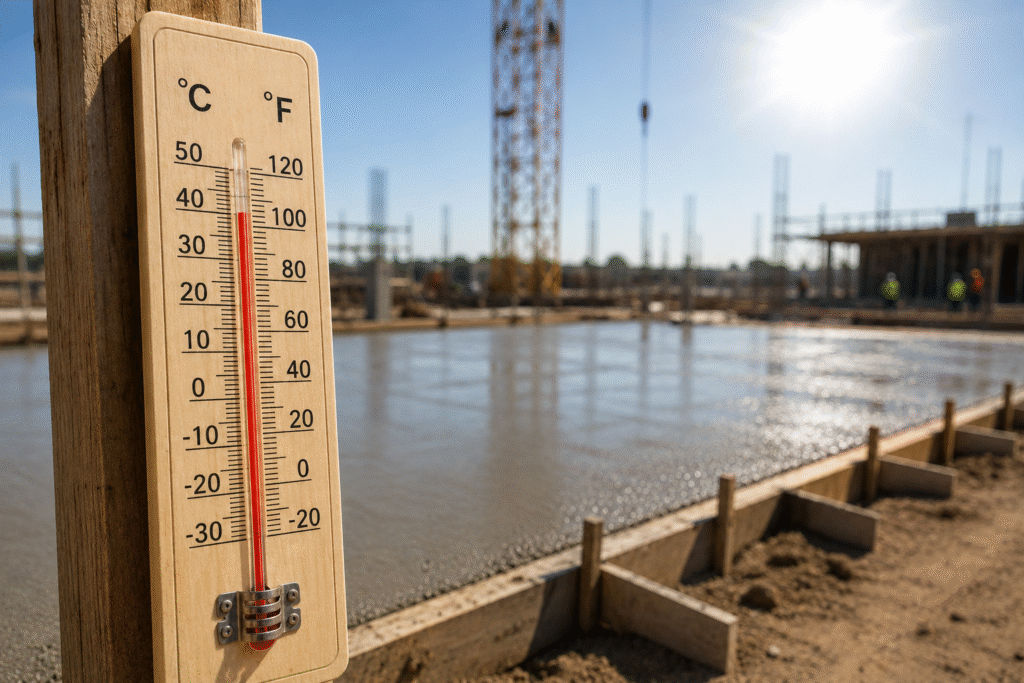
Let's look deeper into these factors. They all work together, which is why just relying on the clock is a bad idea.
Temperature is King
High ambient temperatures (above 30°C or 86°F) an dramatically speed up the curing process, especially with accelerators. I explained this to Mark for his Saudi Arabian projects, where heat is a constant factor. However, this comes with a huge risk: "false set." This is when the surface hardens very quickly, looking ready, while the concrete underneath is still soft and weak. Pushing on it can cause it to break. In cold weather (below 10°C or 50°F), the opposite happens, and curing can slow down or even stop.
Humidity and Wind
High humidity slows down the evaporation of water from the surface, which can slow the initial drying time. Conversely, a dry, windy day will pull moisture out of the concrete very fast. This might seem good, but if it dries too quickly before it has a chance to hydrate properly, the surface can crack and be weak.
The Mix Itself
- Water-Cement Ratio: A lower water-cement ratio (less water for the amount of cement) generally leads to stronger concrete that sets faster.5
- Cement Type: Different types of cement (e.g., Type III for high early strength) are designed to set at different rates.
Because of all these variables, the best practice is to test the actual concrete on-site. Using a tool like a penetration resistance meter is the professional way to measure strength in real-time.
How Long Should I Wait Before Walking on Fresh Concrete?
You need a clear, simple answer to this question. There's a lot of conflicting advice out there, and choosing the wrong time could mean redoing the entire job, wasting time and money.
As a safe general rule, plan on waiting 24 hours for standard concrete and about 8-12 hours for a mix with accelerators, assuming ideal conditions. Always test the surface before you walk on it. If you can scratch it, it's not ready.
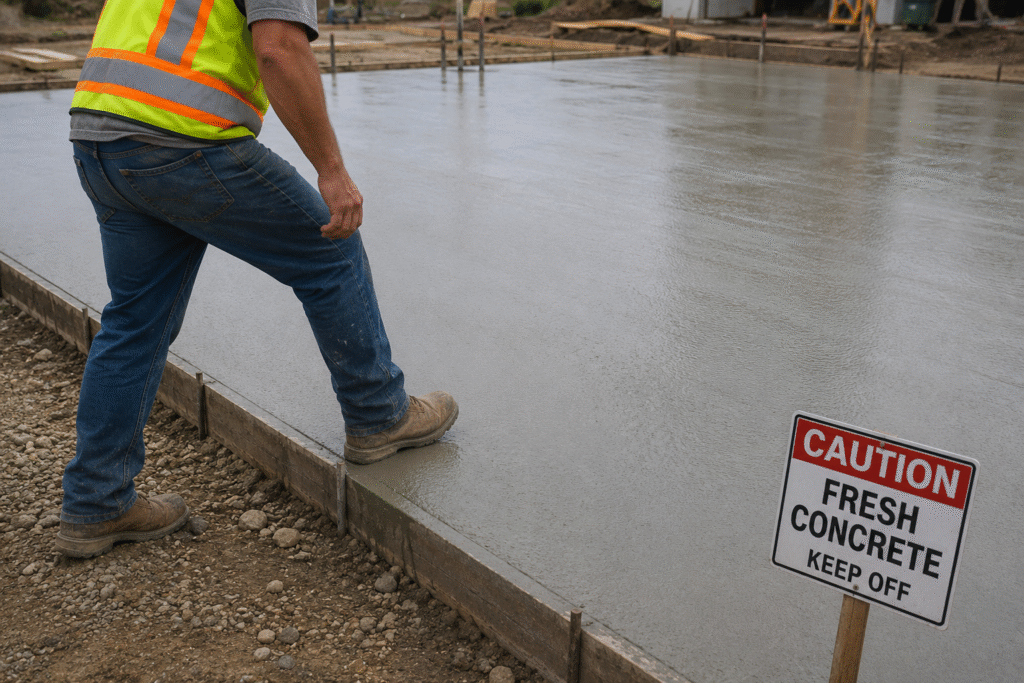
The amount of weight you plan to put on the concrete is the most important factor. The requirements for one person walking are very different from those for a forklift or heavy machinery. This is where we must talk about strength in megapascals (MPa).
| Load Type | Required Compressive Strength (Minimum) | Typical Wait Time (Ideal Conditions) |
|---|---|---|
| Light Foot Traffic | ≥ 3.5 MPa (500 PSI) | 8-24 Hours |
| Heavy Foot Traffic / Tools | ≥ 10 MPa (1500 PSI) | 1-3 Days |
| Vehicle Traffic (Forklift) | ≥ 15 MPa (2200 PSI) | 3-7 Days |
| Full Design Strength | 25-30 MPa (3600-4300 PSI) | 28 Days |
For very demanding, fast-track projects where both speed and strength are critical, there are better options than just adding chloride-based accelerators. I often recommend a combination of sulfoaluminate cement with a retarder. This system can achieve an impressive 10 MPa in just 12 hours. More importantly, it avoids the risk of chloride ions, which can corrode steel rebar—a major concern for structures like bridges or parking garages.
What is the 90-Minute Rule for Concrete?
You've probably heard logistics teams talking about a "90-minute rule." It sounds strict and important, but it's easy to misunderstand what it's really for and who it applies to.
The 90-minute rule is a guideline for the concrete supplier and placement team. It states that ready-mix concrete should be discharged from the truck within 90 minutes of being batched (mixed with water at the plant). This ensures the concrete is still workable when it's poured.

This rule is not about when you can walk on the concrete. It's about the concrete's lifespan before it's placed. Once water is added to cement, the hydration process begins. The 90-minute window is the "sweet spot" where the concrete is still fluid enough to be pumped, poured, and finished properly.
If you go past this time, several problems can occur:
- Loss of Workability: The concrete becomes stiff and hard to move, leading to poor consolidation and voids.
- Cold Joints: If there's a delay between pours, the first batch might have already started setting, preventing it from bonding correctly with the next batch.
- Reduced Strength: Trying to "re-temper" old concrete by adding more water is a terrible practice that significantly weakens the final product.
As the B2B customer or project owner, this rule is important because it impacts the quality of the raw material arriving at your site. You need to ensure your site is ready for the truck, so the concrete can be placed well within this 90-minute window. It's all about ensuring the concrete starts its life on your project in the best possible condition.
What is the 1-2-3 Rule for Concrete?
You've heard of the "1-2-3 rule" for concrete and it sounds simple. But when you're dealing with structural elements, you worry if a simple recipe is good enough for your professional project.
The 1-2-3 rule is a basic recipe for mixing concrete by volume, not for professional jobs. It stands for 1 part cement, 2 parts sand, and 3 parts aggregate (like gravel).6 You then add water until you get a workable consistency. It is only suitable for small, non-structural tasks.

This rule is fantastic for DIY projects. If you're setting a fence post, making a small garden path, or filling a post hole, the 1-2-3 rule is a reliable way to get a decent result without needing complex equipment or calculations. It's a volumetric mix, meaning you measure with a container like a bucket or a spade. A "shovel" an be your unit of measure: one shovel of cement, two shovels of sand, three shovels of gravel.
However, for my clients like Mark who run large factories and work on major construction projects, this rule is completely inappropriate. Professional construction requires concrete with guaranteed, predictable performance. This is achieved with a "mix design," which is specified by weight, not volume, and is engineered to achieve a specific compressive strength (e.g., 30 MPa at 28 days).
Using a volumetric mix like 1-2-3 for a structural slab or foundation is a huge risk because:
- Inconsistent Strength: The moisture content in sand can vary, throwing off the true water-cement ratio.
- No Quality Control: It doesn't account for the specific properties of the aggregates or cement.
- Liability: It will not meet building codes or engineering specifications.
So, remember the 1-2-3 rule for small fixes, but always rely on a professional mix design from a reputable supplier for anything important.
Conclusion
Accelerators definitely speed up concrete curing, but time is not the only measure of readiness. Always prioritize checking for strength over simply watching the clock to ensure a durable, flawless finish.
-
"Effect of Accelerators on the Workability, Strength, and ... - PMC", https://pmc.ncbi.nlm.nih.gov/articles/PMC8746175/. Technical literature and manufacturer data report that common concrete accelerators can reduce initial set times from 6-8 hours to as little as 2-3 hours under typical conditions. Evidence role: statistic; source type: paper. Supports: With accelerators, the initial set time can drop from 6-8 hours to just 2-3 hours.. Scope note: Actual set times depend on mix design and environmental conditions. ↩
-
"Development and Promotion of Concrete Strength at Initial 24 Hours", https://pmc.ncbi.nlm.nih.gov/articles/PMC10304378/. Industry guidelines suggest that with accelerators and favorable conditions, concrete may reach 3.5 MPa (500 PSI) in 8-12 hours, allowing for light foot traffic. Evidence role: statistic; source type: institution. Supports: For light foot traffic, you should wait until the concrete reaches a minimum strength of 3.5 MPa (500 PSI). This can often be achieved within 8 to 12 hours under ideal conditions.. Scope note: Time to reach this strength varies with temperature, mix, and accelerator type. ↩
-
"Cement accelerator - Wikipedia", https://en.wikipedia.org/wiki/Cement_accelerator. Calcium chloride and other accelerators are known to increase the rate of cement hydration, thereby reducing set time and increasing early strength. Evidence role: mechanism; source type: encyclopedia. Supports: Accelerators, like calcium chloride, work by speeding up the chemical reaction of hydration.. Scope note: Other types of accelerators may act differently. ↩
-
"How Long Before You Can Walk on Concrete?", https://www.concretenetwork.com/curing-concrete/how-long-before-walk.html. Construction guidelines commonly recommend waiting at least 24 hours before permitting light foot traffic on standard concrete without accelerators. Evidence role: expert_consensus; source type: institution. Supports: For standard concrete without any accelerators, you should wait at least 24 hours before allowing any light foot traffic.. Scope note: Actual wait time may vary with environmental conditions and mix design. ↩
-
"Water–cement ratio - Wikipedia", https://en.wikipedia.org/wiki/Water%E2%80%93cement_ratio. A lower water-cement ratio is associated with higher strength and faster setting times in concrete, as established in materials science literature. Evidence role: mechanism; source type: education. Supports: A lower water-cement ratio (less water for the amount of cement) generally leads to stronger concrete that sets faster.. Scope note: Excessively low water-cement ratios can negatively affect workability. ↩
-
"CHAPTER 3 REVIEW OF CONCRETE MIX DESIGNS", https://dot.ca.gov/-/media/dot-media/programs/engineering/documents/structureconstruction/ctm/sc-ctm-chpt3-a11y.pdf. The 1-2-3 concrete mix is a traditional volumetric recipe (1 part cement, 2 parts sand, 3 parts aggregate) commonly used for small, non-structural applications. Evidence role: definition; source type: education. Supports: The 1-2-3 rule is a basic recipe for mixing concrete by volume, not for professional jobs. It stands for 1 part cement, 2 parts sand, and 3 parts aggregate (like gravel).. Scope note: Not suitable for structural or code-compliant work. ↩