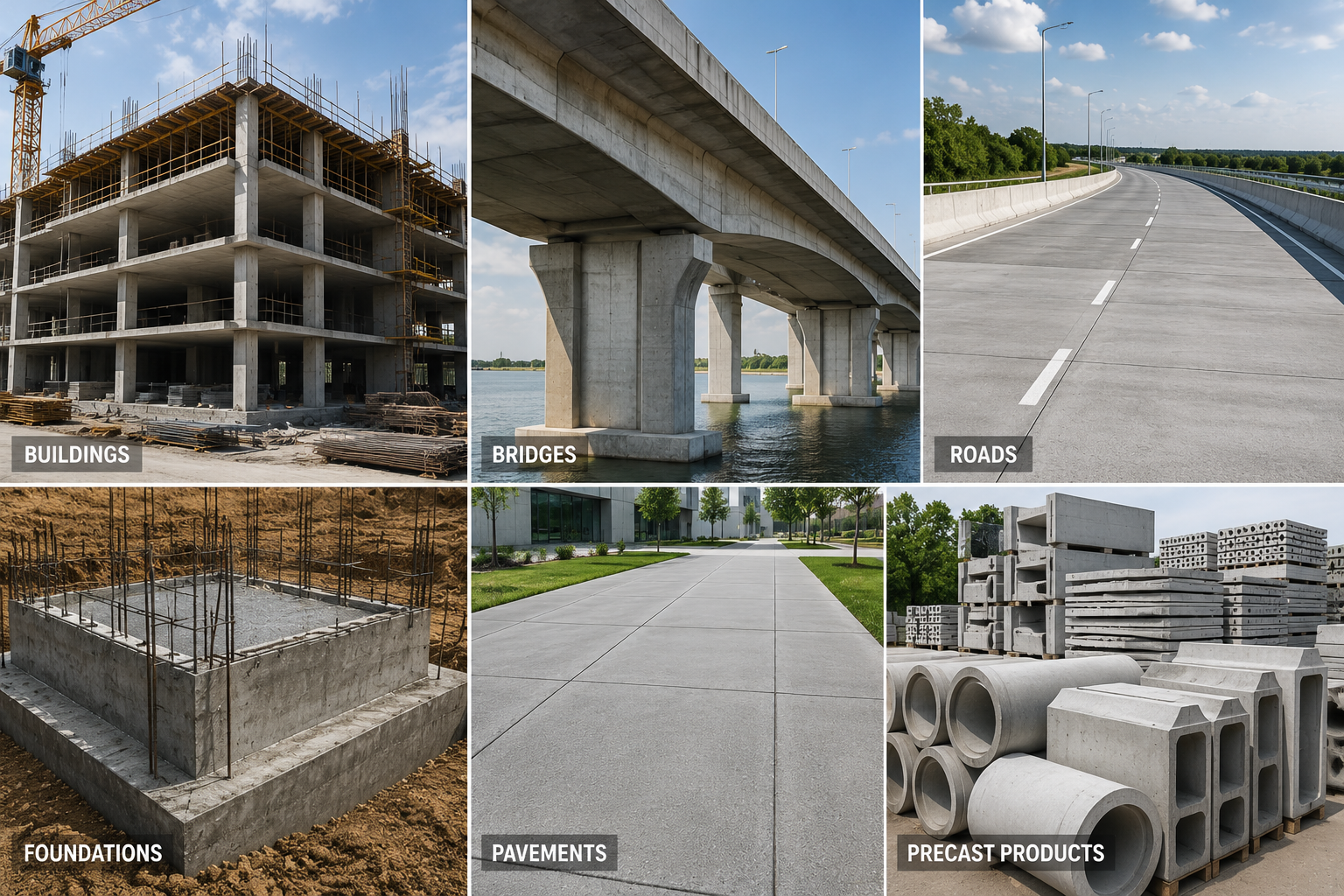
I watched concrete crack on my first construction site. The contractor rushed to remove forms after just two days.
Concrete needs 28 days to reach full strength1. Initial hardening happens in 24-48 hours2. The critical curing period lasts 7-28 days when concrete gains 70-100% of its design strength3.
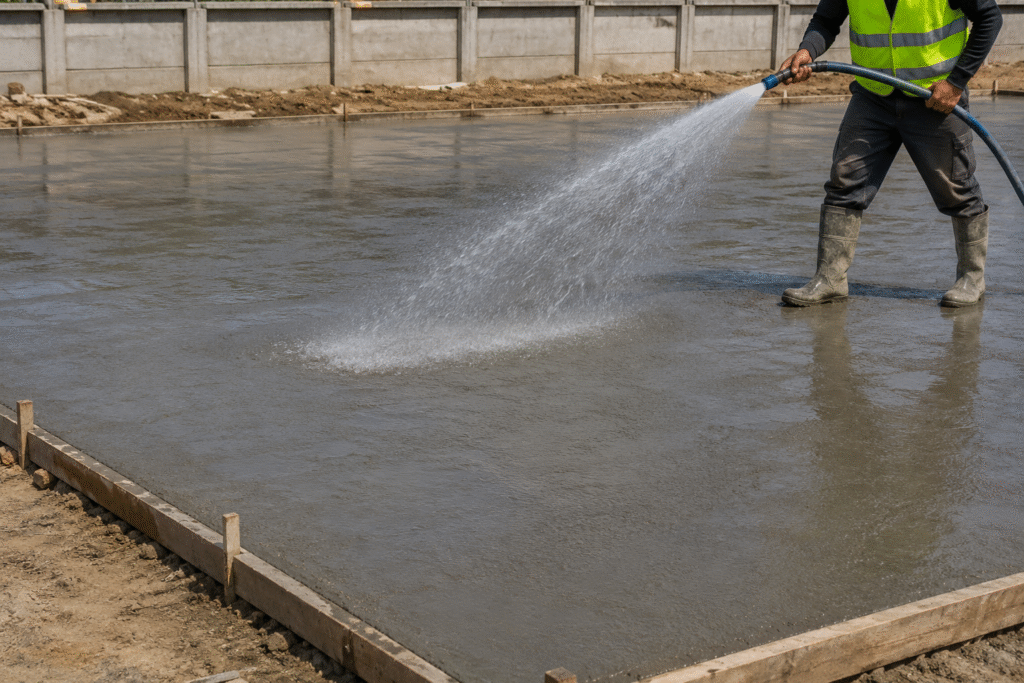
I learned this lesson the hard way. My client in Saudi Arabia lost thousands of dollars because workers walked on fresh concrete too early. The surface cracked everywhere. We had to redo the entire floor.
What Are The Main Concrete Curing Stages?
Many contractors ask me about curing stages. They want to know when they can start the next work phase.
Concrete curing has three main stages: initial set (24-48 hours), strength development (7-28 days), and long-term hardening (months to years)4. Each stage needs different care methods.
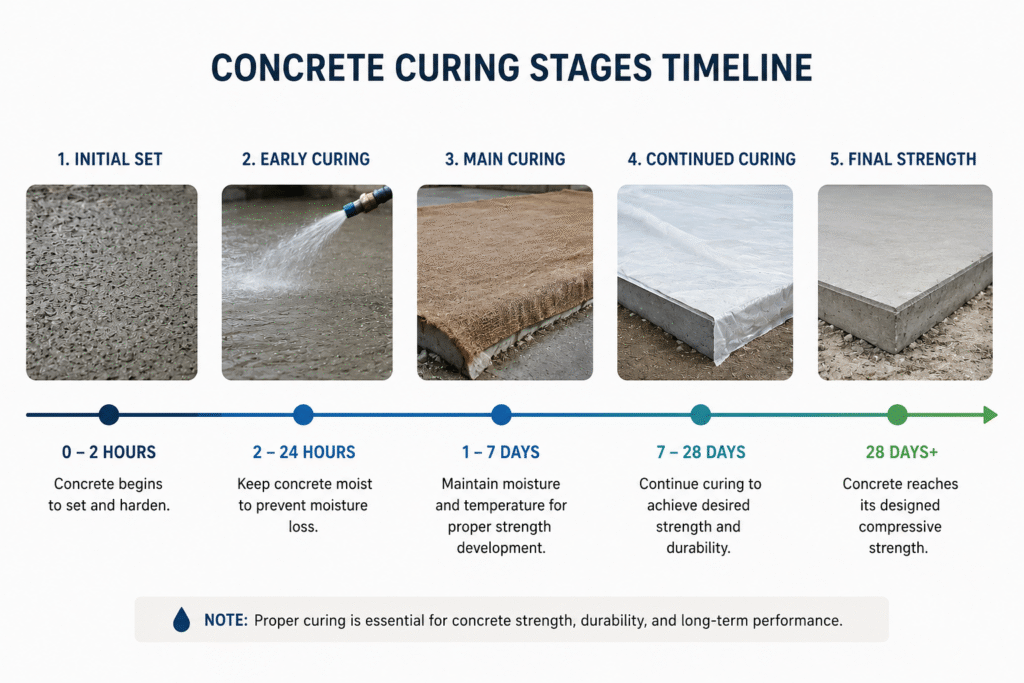
I divide concrete curing into three clear stages based on my factory experience. The first stage starts right after pouring. In 24-48 hours, concrete becomes hard enough to walk on. But the strength is only 25-30% of the final design strength. I tell my customers to keep heavy equipment away during this time.
The second stage is the most important. From day 3 to day 28, concrete gains most of its strength. After 7 days, it reaches about 70% strength5. Standard concrete gets close to 100% design strength at 28 days. This is why engineers test concrete samples at 7 and 28 days.
The third stage continues for months or even years. The cement keeps reacting with water deep inside the concrete. But for practical work, we use the 28-day strength as our standard. Only special projects like nuclear plants need 90-day strength data.
| Curing Stage | Time Period | Strength Achieved | What You Can Do |
|---|---|---|---|
| Initial Set | 24-48 hours | 25-30% | Light foot traffic |
| Strength Development | 7 days | 70% | Light loads |
| Strength Development | 28 days | 95-100% | Full service loads |
| Long-term Hardening | Months-Years | >100% | Continuous strength gain |
How Does Thickness Affect Concrete Curing Time?
I get questions about slab thickness every week. Clients want to know if thick slabs need more curing time.
Thicker concrete slabs take longer to cure completely. A 4-inch slab needs standard 28 days. Slabs over 12 inches may need 35-45 days for full strength development throughout the thickness.
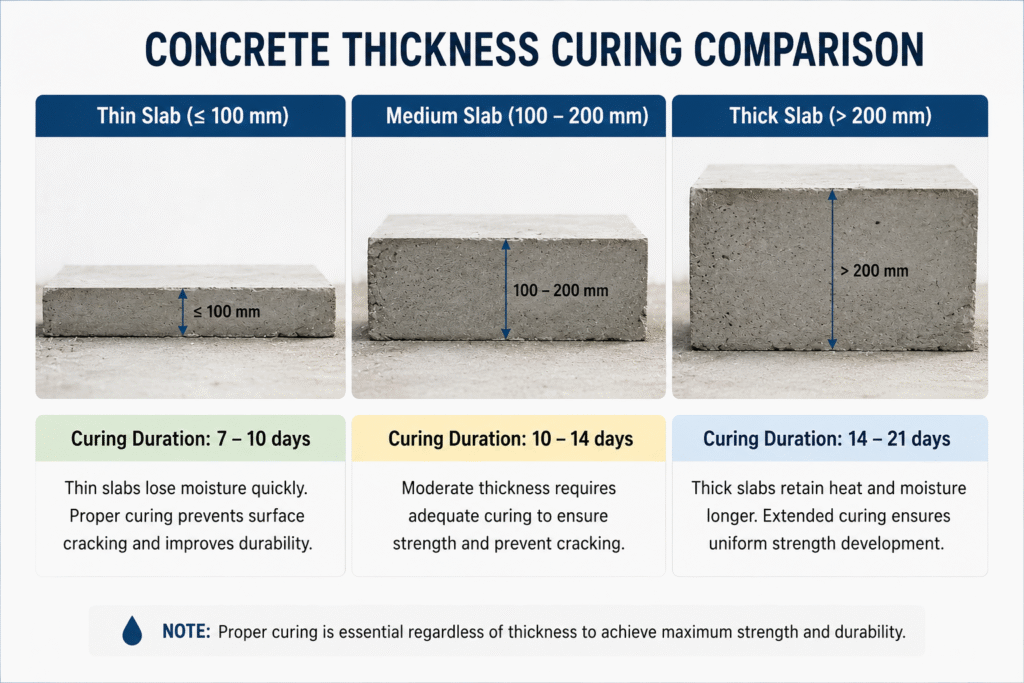
Thin slabs dry faster on the surface. This can cause problems. I saw a 3-inch driveway crack badly because the top dried while the bottom stayed wet. The uneven drying created stress. Now I tell customers to keep thin slabs wet for at least 7 days.
Thick slabs have different challenges. Heat builds up inside during curing. A 24-inch foundation I worked on reached 160°F in the center. This high temperature can cause thermal cracking. We used cooling pipes to control the temperature.
Mass concrete needs special attention. When concrete is thicker than 3 feet, we change our approach completely. The curing time extends because the inner concrete cures slower. I recommend temperature monitoring for any pour over 3 feet thick.
| Concrete Thickness | Minimum Curing Period | Special Requirements |
|---|---|---|
| 3-4 inches | 7 days | Keep surface moist |
| 6-12 inches | 14 days | Monitor surface drying |
| 12-24 inches | 21-28 days | Check internal temperature |
| Over 24 inches | 35-45 days | Use cooling methods if needed |
What Curing Times Do Different Applications Need?
Every concrete project has different requirements. My paint factory customers often ask about specific applications.
Residential driveways need 7 days before car traffic and 28 days for heavy vehicles. Industrial floors require 28 days minimum. Structural concrete must cure 28 days before removing supports.
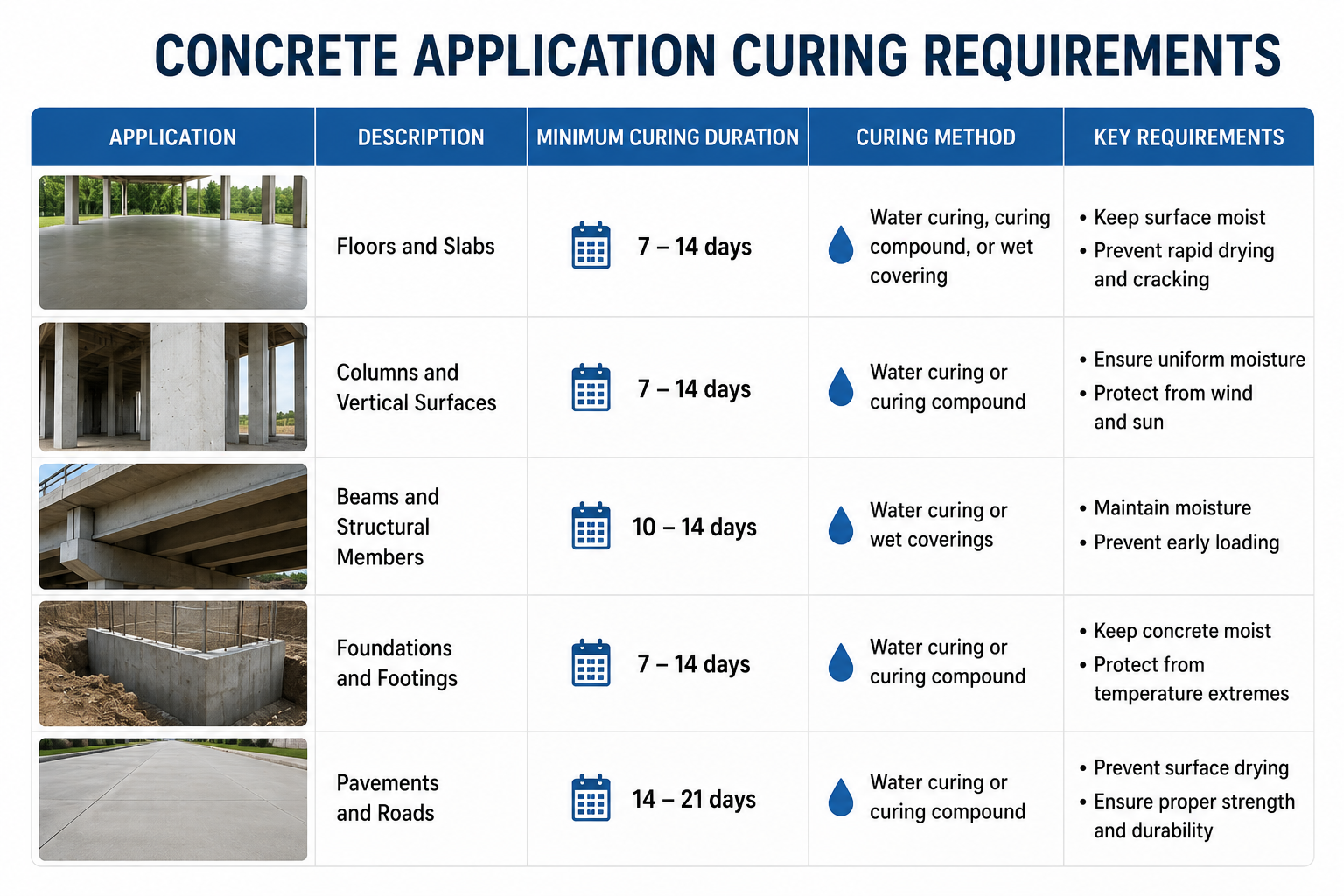
I worked on a warehouse floor last year where the owner wanted to install heavy machinery after just 14 days. We tested the concrete and found only 75% strength. Moving the equipment early would have caused permanent damage. The owner waited another 14 days and saved his investment.
Sidewalks and driveways seem simple but need proper curing too. I tell homeowners to wait 24-48 hours before walking and 7 days before parking cars. One customer drove on his new driveway after 3 days. The concrete cracked under the tire weight. Small cracks grew into big problems later.
Foundation concrete has the strictest requirements. Building codes require 28 days before placing heavy loads. Some engineers specify longer periods for critical structures. I supplied additives for a hospital foundation that required 45-day strength tests. Patient safety demanded extra caution.
| Application | Foot Traffic | Light Vehicle | Heavy Load | Full Service |
|---|---|---|---|---|
| Sidewalk | 24-48 hours | Not applicable | Not applicable | 7 days |
| Driveway | 48 hours | 7 days | 14 days | 28 days |
| Industrial Floor | 48 hours | 14 days | 28 days | 28-35 days |
| Foundation | 48 hours | Not applicable | 28 days minimum | 28-45 days |
How Do Environmental Conditions Change Curing Time?
Weather affects concrete more than most people realize. I ship products to different climates and see big differences.
Hot weather above 90°F speeds initial setting but can crack concrete. Cold weather below 50°F slows curing significantly. Ideal curing happens between 50-75°F with 80% humidity.
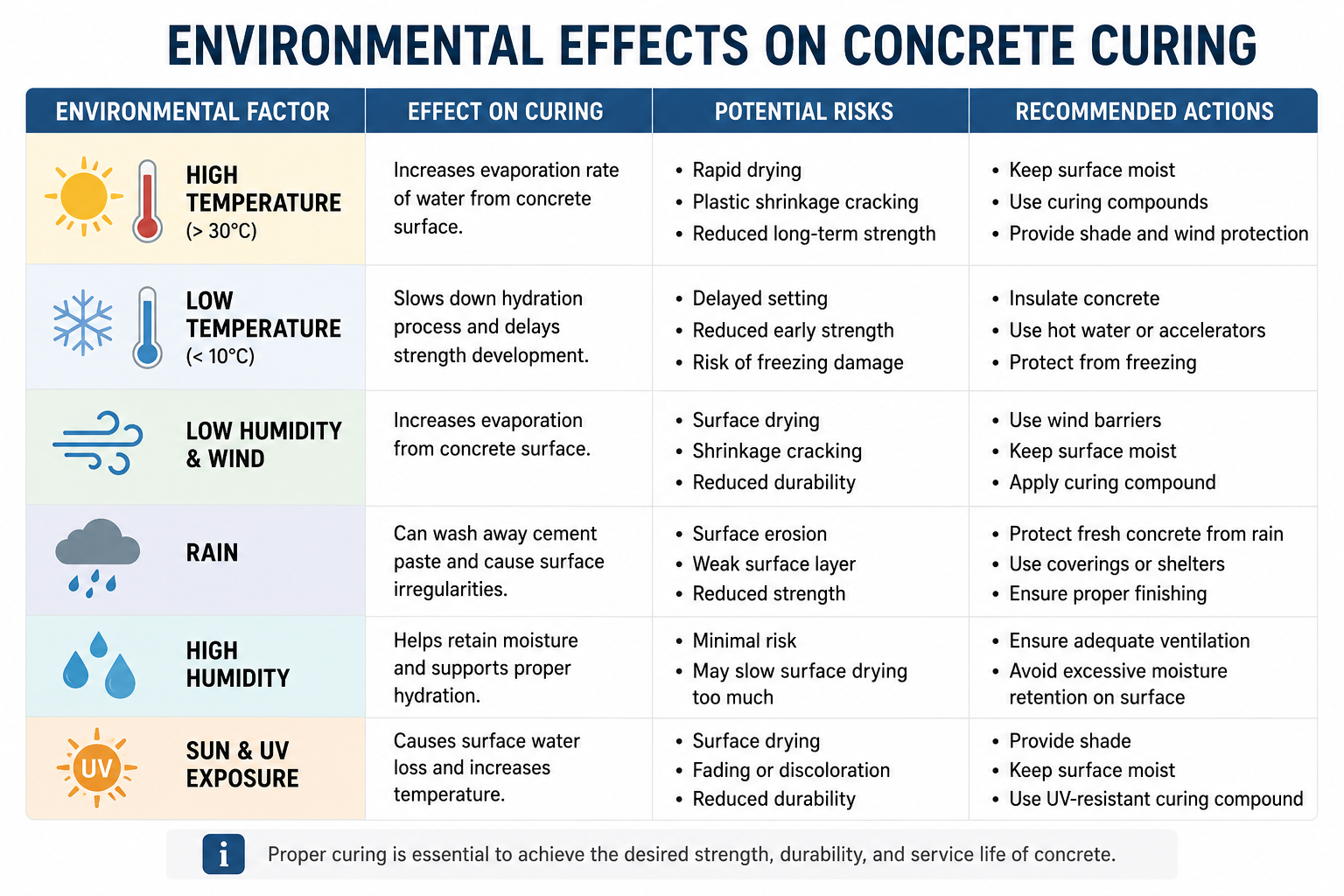
Hot weather creates unique challenges. In Saudi Arabia, summer temperatures reach 120°F. Concrete can set in 30 minutes instead of 2 hours. The fast setting traps air and reduces strength. We add retarders to slow the reaction. Surface water evaporates quickly too. I recommend continuous water spray or curing compounds in hot climates.
Cold weather slows everything down. Below 50°F, cement reactions nearly stop. I had a customer in Russia pour concrete at 40°F. After 7 days, the strength was only 40% instead of 70%. We had to use heated enclosures and special additives. Concrete can freeze before setting if temperatures drop below 32°F.
Wind and humidity matter too. High wind pulls moisture from concrete surfaces. Low humidity increases evaporation. I tell customers that a 10% humidity drop equals a 5°F temperature increase in drying effect. Proper curing becomes even more critical in dry, windy conditions.
| Temperature | Curing Time Adjustment | Special Measures Needed |
|---|---|---|
| Below 40°F | Add 50-100% more time | Heated enclosures, blankets |
| 40-50°F | Add 25-50% more time | Insulation, longer curing |
| 50-75°F | Standard curing time | Normal procedures |
| 75-90°F | Reduce by 10-15% | Extra moisture, shade |
| Above 90°F | Reduce by 20-25% | Continuous water, retarders |
Which Concrete Products Have Different Curing Times?
Different concrete mixes cure at different rates. My customers use various products for specific needs.
Rapid-set concrete hardens in 20-40 minutes and reaches usable strength in 2-4 hours. High-early strength concrete achieves 70% strength in 3 days. Self-leveling concrete sets in 4-6 hours.
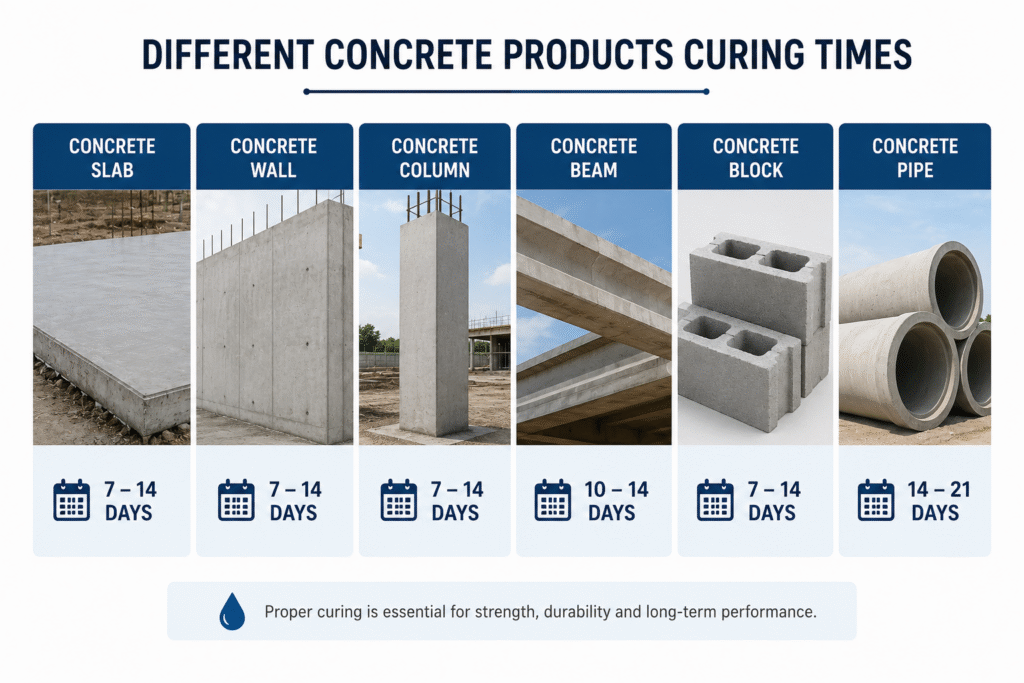
Rapid-set products save time on repairs. I supplied a project where workers fixed airport runways overnight. The concrete gained driving strength in just 4 hours. Planes landed safely the next morning. These products cost more but time savings justify the price.
High-early strength concrete helps in cold weather or tight schedules. Regular concrete might take 7 days to reach stripping strength. High-early mixes do it in 3 days. I worked with a contractor who saved 4 days per floor on a 20-story building. The time savings added up to months.
Self-leveling compounds need special attention. They flow like water but set quickly. The thin application dries fast on top. I always recommend curing compound application within 30 minutes. One customer skipped this step and the surface cracked into a map pattern. Repairs cost more than proper curing would have.
| Product Type | Initial Set | Walk-On Time | Light Load | Full Strength |
|---|---|---|---|---|
| Rapid-Set | 20-40 minutes | 2-4 hours | 24 hours | 7 days |
| High-Early Strength | 4-6 hours | 24 hours | 3 days | 14-21 days |
| Standard Mix | 6-8 hours | 24-48 hours | 7 days | 28 days |
| Self-Leveling | 30-60 minutes | 4-6 hours | 24 hours | 7 days |
How Can I Maintain Proper Concrete Curing?
Good curing methods make the difference between strong and weak concrete. I teach these methods to all my customers.
Keep concrete moist for 7 days minimum using water spray, wet burlap, or plastic sheets. Maintain temperature between 50-75°F. Apply curing compound within 30 minutes of finishing.
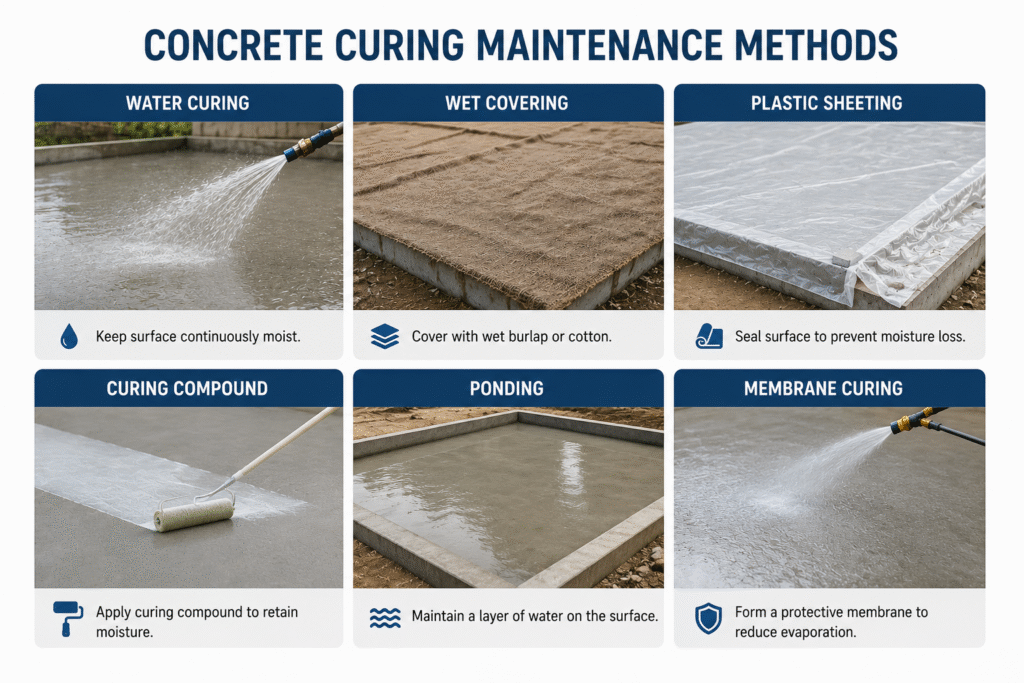
Water curing works best but needs attention. I prefer ponding water on flat slabs when possible. The constant moisture prevents all surface drying. For vertical surfaces, I recommend wet burlap covered with plastic. One customer tried spraying water once daily. The wet-dry cycles caused severe cracking.
Curing compounds offer convenience. Apply them right after finishing while the surface still looks damp. The compound forms a film that holds moisture inside. I tested many brands and found wax-based products work best in hot climates. Acrylic compounds suit cooler areas better.
Temperature control prevents many problems. In summer, I shade fresh concrete or work at night. White curing compound reflects heat too. In winter, insulated blankets keep concrete warm. I once saved a project by covering concrete with hay bales during an unexpected freeze. Simple methods often work best.
| Curing Method | Best Application | Duration Needed | Effectiveness |
|---|---|---|---|
| Water Ponding | Flat slabs | 7-14 days | Excellent |
| Wet Burlap | All surfaces | 7 days | Very good |
| Plastic Sheets | Protected areas | 7 days | Good |
| Curing Compound | Large areas | One application | Good |
| Insulated Blankets | Cold weather | Until strength gained | Very good |
Should I Use Concrete Curing Additives?
Curing additives help concrete gain strength faster or in difficult conditions. I recommend them for specific situations.
Accelerators reduce curing time by 30-50% in cold weather. Retarders slow setting in hot weather. Water reducers improve strength while using less water. Each additive serves a specific purpose.
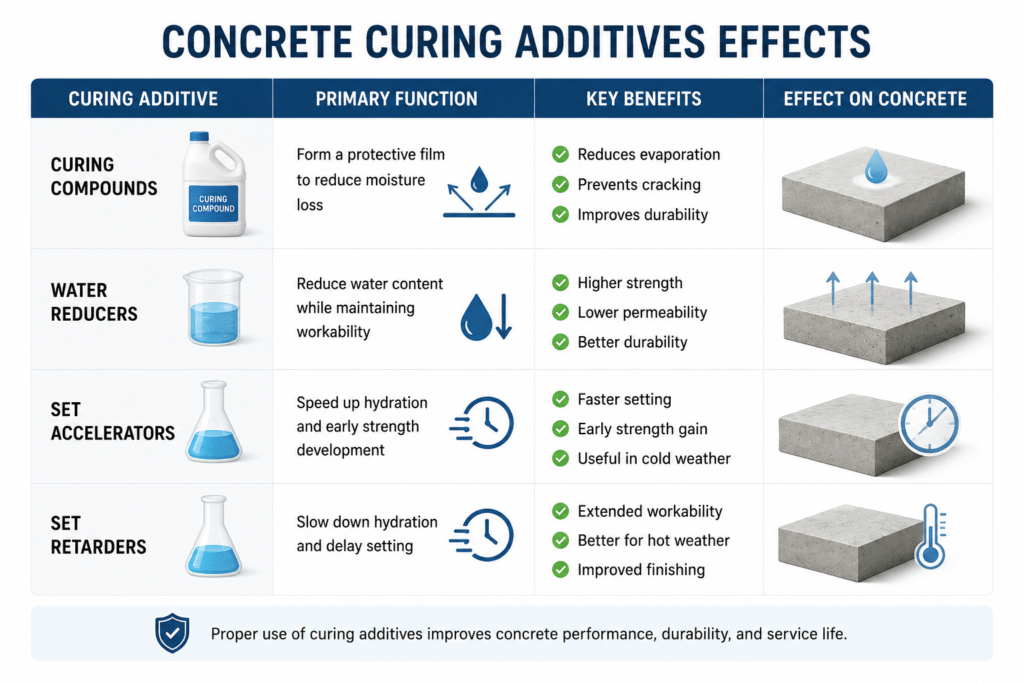
Accelerators save time and money in cold weather. Calcium chloride is common and cheap. It helps concrete gain strength 30% faster in the first 3 days. But never use it with steel reinforcement. The chloride causes rust. Non-chloride accelerators cost more but work safely with steel.
Retarders prevent problems in hot weather. They give workers extra time to place and finish concrete. I supplied retarder for a project in Dubai during summer. Without it, concrete would set in the truck. The retarder gave them 90 extra minutes of workability. This prevented cold joints between pours.
Water reducers improve everything about concrete. Less water means higher strength and less shrinkage. Modern superplasticizers reduce water by 30% while improving workability. I use them in all my own concrete work. The extra cost pays back through better quality and fewer cracks.
| Additive Type | Primary Benefit | Typical Dosage | Cost Impact |
|---|---|---|---|
| Accelerator (chloride) | 30-50% faster early strength | 1-2% by weight | Low |
| Accelerator (non-chloride) | 25-40% faster early strength | 1-3% by weight | Medium |
| Retarder | 1-3 hours extra working time | 0.1-0.5% by weight | Low |
| Water Reducer | 5-10% strength increase | 0.2-0.5% by weight | Low |
| Superplasticizer | 15-30% strength increase | 0.5-2% by weight | Medium |
Conclusion
Concrete needs 28 days to cure properly. Temperature, thickness, and application affect timing. Good curing methods ensure strong, crack-free concrete that lasts decades.
-
"Concrete - Wikipedia", https://en.wikipedia.org/wiki/Concrete. According to standard engineering practice and ASTM C39, concrete is typically considered to reach its design (full) compressive strength after 28 days of curing under standard conditions. Evidence role: expert_consensus; source type: encyclopedia. Supports: Concrete needs 28 days to reach full strength.. Scope note: This is a general standard for ordinary Portland cement concrete; some specialty mixes may differ. ↩
-
"Table 1 Setting Time of Concrete at Various Temperature", https://www.engr.psu.edu/ce/courses/ce584/concrete/library/materials/Admixture/Link-settime.htm. Engineering references indicate that concrete typically achieves initial set and can support light foot traffic within 24-48 hours after placement under normal conditions. Evidence role: expert_consensus; source type: encyclopedia. Supports: Initial hardening happens in 24-48 hours.. Scope note: Actual timing may vary with mix design and environmental conditions. ↩
-
"Development and Promotion of Concrete Strength at Initial 24 Hours", https://pmc.ncbi.nlm.nih.gov/articles/PMC10304378/. Technical sources report that concrete typically gains about 70% of its design strength in 7 days and approaches 100% by 28 days under standard curing conditions. Evidence role: statistic; source type: education. Supports: The critical curing period lasts 7-28 days when concrete gains 70-100% of its design strength.. Scope note: Strength gain rates can vary with cement type and curing environment. ↩
-
"[PDF] Stages of Hydration", https://www.intrans.iastate.edu/wp-content/uploads/2020/04/2019_hydration_poster.pdf. Civil engineering textbooks describe concrete curing as involving an initial set, a main strength development phase, and a long-term hardening process due to ongoing hydration. Evidence role: definition; source type: education. Supports: Concrete curing has three main stages: initial set (24-48 hours), strength development (7-28 days), and long-term hardening (months to years).. Scope note: Stage definitions may vary slightly between sources. ↩
-
"Development and Promotion of Concrete Strength at Initial 24 Hours", https://pmc.ncbi.nlm.nih.gov/articles/PMC10304378/. Standard references such as the Portland Cement Association state that concrete typically reaches approximately 70% of its 28-day strength after 7 days of curing. Evidence role: statistic; source type: institution. Supports: After 7 days, it reaches about 70% strength.. Scope note: This percentage is for standard mixes and may vary with admixtures or curing conditions. ↩